

Key takeaways about the sinfulness of looking at a woman's body
-
It is not a sin to notice a woman’s body or feel attraction; sin begins when attention is used to cultivate lust.
-
The Bible distinguishes between attraction and lust, with attraction being automatic and lust being a deliberate choice.
-
Jesus teaches that lust involves intentional, sustained looking to fuel sexual desire, not momentary awareness.
-
Temptation is not sin; sin occurs when a person chooses to entertain or act on the desire.
-
Lust begins when attention is intentionally prolonged through staring, fantasizing, or mentally replaying images.
-
Modern environments increase temptation by training attention toward sexualized content, making discipline more difficult.
-
Self-control is developed by noticing attraction, disengaging quickly, and redirecting attention rather than suppressing awareness.
-
Christian teaching focuses on intention and use of attention, not the initial experience of attraction.
Frequently asked questions about the sinfulness of looking at a woman's body
Is it a sin to look at a woman’s body?
No. Simply noticing or recognizing physical beauty is not considered sinful in the Bible. Sin begins when looking becomes intentional lust.
What did Jesus mean by “looking with lust”?
In Matthew 5:28, Jesus was referring to deliberate, sustained attention used to fuel sexual desire—not automatic attraction or noticing.
What is the difference between attraction and lust?
Attraction is an automatic awareness of beauty, while lust is the intentional choice to dwell on that awareness for sexual gratification.
Is temptation the same as sin?
No. Temptation is the presence of desire or opportunity, while sin is the decision to act on or entertain that desire.
How can I avoid lustful thoughts?
By recognizing triggers, redirecting attention early, avoiding prolonged focus, and practicing intentional discipline rather than trying to suppress awareness entirely.
Relay is a therapist-backed group recovery program for pornography and unwanted sexual behavior, combining daily accountability, real-time urge support, and a private peer community.

Is It a Sin to Look at a Woman’s Body? The Biblical Line Between Attraction and Lust
When people ask, “Is it a sin to look at a woman’s body?” they are usually not asking out of abstract curiosity. Most of the time, they are trying to understand whether something they’re experiencing—looking, noticing, or feeling attraction—has crossed a moral line.
Jesus directly addressed this concern in Matthew 5:28, where He said that looking at a woman with lustful intent is equivalent to committing adultery in the heart. That verse is clear. The confusion comes not from what Jesus said, but from how people apply it in real life.
Further reading: Does God Forgive Lust?—Yes, Even When You've Failed Repeatedly
The Bible does not teach that noticing beauty or feeling attraction is sinful. Human attraction is part of how we are created. The problem is not the initial awareness of someone’s appearance. The problem is what we choose to do with that awareness.
Scripture consistently draws a distinction between recognition and intent.
-
Noticing that someone is attractive is not a sin.
-
Appreciating beauty is not a sin.
-
Feeling an involuntary response is not a sin.
Sin enters when looking turns into lust—that is, when a person deliberately uses their attention to fuel sexual desire, fantasy, or mental possession of someone who is not their spouse.
Further reading: 32 Bible Verses About Masturbation and Lust: What Scripture Really Teaches About Desire And Self-Control
Lust is not accidental. It involves intention. It is the decision to linger, replay, imagine, or indulge sexual thoughts rather than redirect them.
This distinction matters, because many people—especially in a highly sexualized culture—feel constant guilt simply for noticing others. That guilt often comes from misunderstanding where the biblical line is actually drawn.
The question is not *“Did I notice?” *The question is “What did I choose to do with what I noticed?”
That is the boundary Jesus was pointing to.
The Difference Between Attraction and Lust
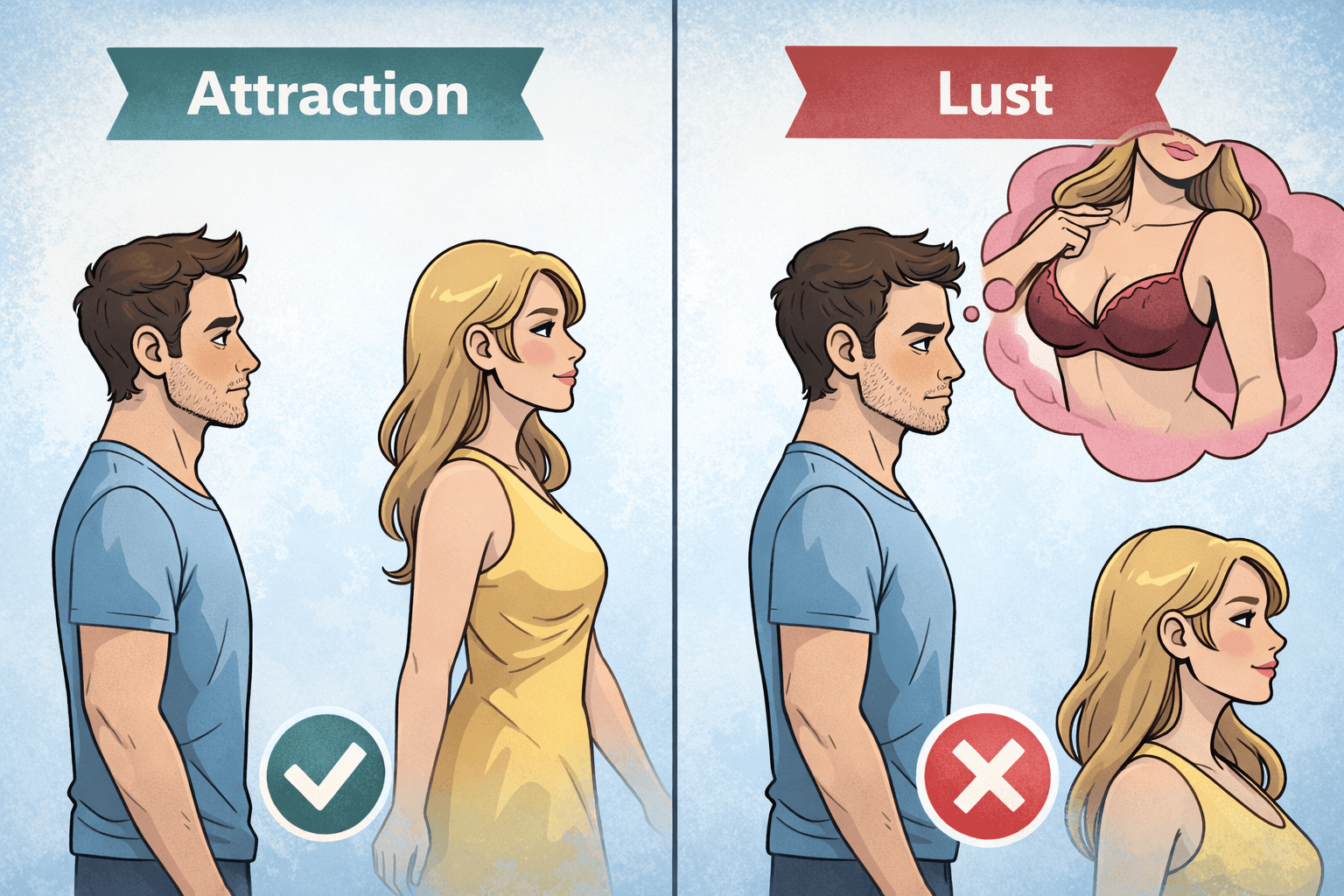
Most confusion around this topic comes from treating attraction and lust as the same thing. Biblically, they are not.
Attraction is awareness. Lust is use.
Attraction happens automatically. Lust requires participation.
A simple way to understand the difference is this:
-
Attraction is noticing that someone is physically appealing.
-
Lust is choosing to dwell on that appeal in a sexual way.
For a deeper explanation of the theology around this question, see our full guide to whether masturbation is a sin.
Attraction is passive. Lust is active.
Here are practical boundaries that help clarify where the line is crossed:
-
A brief glance or moment of awareness is not sinful.
-
Acknowledging that someone is attractive and moving on is not sinful.
-
An involuntary physical response is not sinful.
Lust begins when attention becomes intentional and sustained.
That includes:
-
Staring or repeatedly looking to stimulate desire
-
Mentally undressing someone
-
Imagining sexual scenarios
-
Replaying the image later for arousal
In other words, lust is not about what enters the mind first, but about what is invited to stay.
This is why Jesus focused on the heart. He was not condemning reflexes or biology. He was addressing the deliberate choice to use another person’s body as a source of sexual gratification in thought.
This distinction is especially important because many people confuse temptation with sin. Temptation is an invitation; sin is acceptance.
Recognizing this difference helps remove unnecessary guilt while still preserving responsibility. You are not morally at fault for noticing beauty. You are responsible for whether you turn that moment into lust.
Understanding this boundary makes it possible to practice self-control without living in constant shame.
Why This Feels Harder Than It Used to

Many people understand, in theory, the difference between attraction and lust—but struggle to apply it consistently. This is not because the biblical standard has changed. It is because the environment has.
Modern life constantly trains attention toward sexualized imagery. Advertising, social media, entertainment, and digital content are designed to capture and hold the eye. Over time, repeated exposure conditions the brain to associate visual stimulation with reward. This makes certain patterns of looking feel automatic rather than deliberate.
That conditioning does not remove responsibility, but it does explain why willpower alone often feels insufficient.
What once might have been an occasional temptation is now repeated hundreds of times a day. This repeated exposure lowers the threshold at which attention turns into desire. As a result, many people feel as though lust “just happens,” when in reality their attention has been trained to linger before conscious choice kicks in.
This is especially true for those who have spent years consuming sexually explicit material. That exposure can make the transition from noticing to fantasizing feel almost instantaneous. The mind learns to escalate quickly, even when the heart does not want to.
Further reading: Is Watching Porn A Sin? Understanding The Question Christians Are Really Asking
Understanding this matters because it reframes the struggle. Feeling tempted does not mean you are uniquely weak or broken. It means you are responding to a highly stimulating environment with habits that were learned over time.
The solution, then, is not simply to try harder, but to retrain attention.
Self-control is not just a moral stance; it is a practiced skill. Just as habits can be formed through repetition, they can also be weakened through intentional redirection.
Recognizing the role of conditioning allows people to pursue discipline without despair. It shifts the focus from shame to strategy—without lowering the standard or excusing sin.
Popular Recovery Guides
What to Do in the Moment: Practicing Sexual Discipline
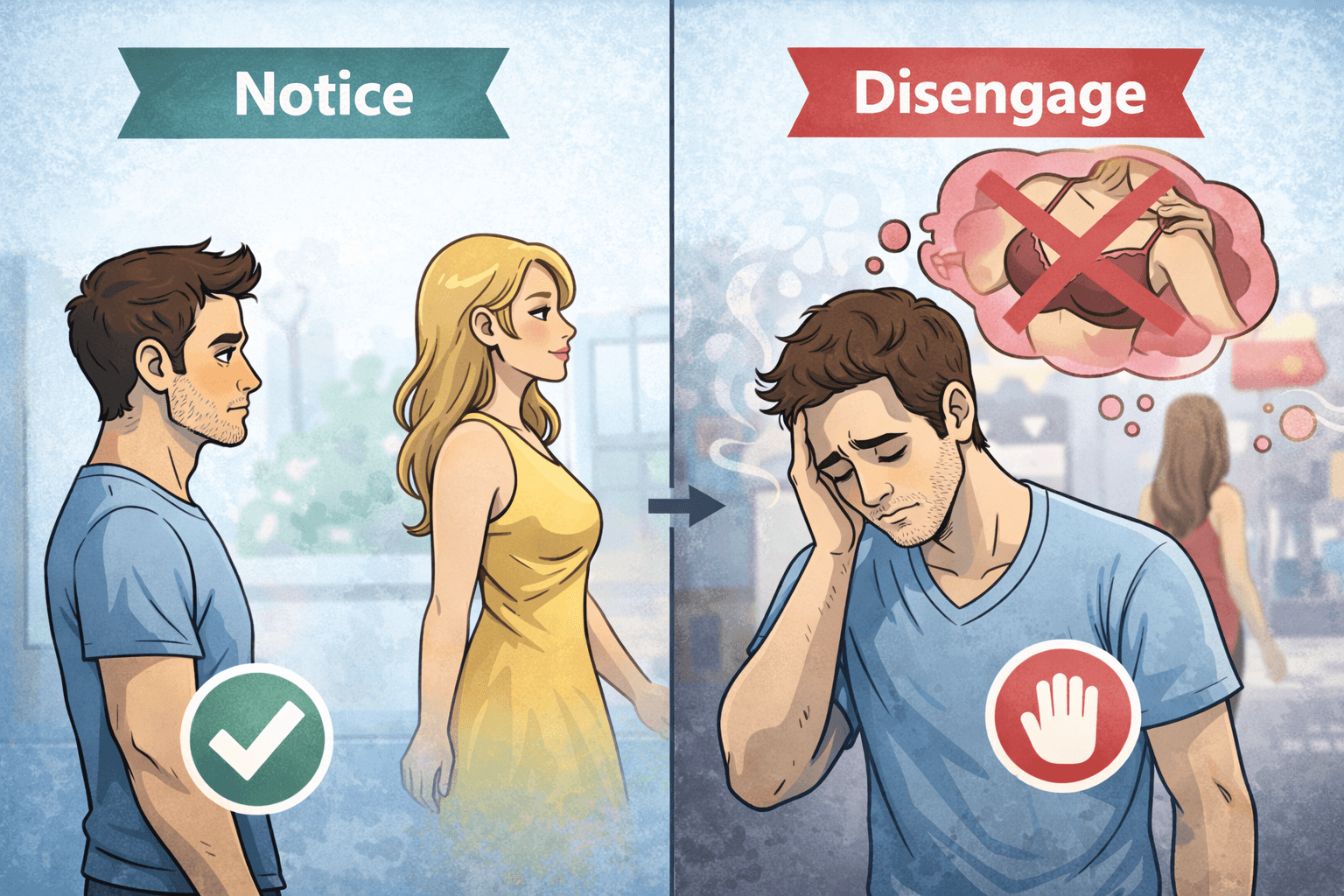
Knowing the difference between attraction and lust is important, but most people struggle at the point of action. The question becomes: What do you actually do when attraction shows up?
A helpful way to think about discipline is notice → disengage.
Attraction will happen. The goal is not to prevent noticing, but to prevent escalation.
Here are clear, practical rules that align with biblical teaching:
-
Notice, don’t linger. The first look is often automatic. The second look is usually a choice. If you catch yourself returning your gaze for stimulation, that is the moment to disengage.
-
Interrupt fantasy early. Lust grows through imagination. As soon as thoughts begin moving toward sexual scenarios, redirect them. Do not debate or justify the thought—replace it.
-
Do not rehearse the image later. Lust does not only happen in the moment. Replaying images or memories for arousal is the same misuse of attention, even when the person is no longer present.
-
Treat temptation as a signal, not a failure. Feeling desire is not sin. What matters is whether you entertain it or let it pass.
This process is not about repression; it is about training. Every time you choose not to linger, you weaken the habit of escalation. Over time, the pull loses intensity.
Discipline works best when it is proactive. Reducing exposure to highly sexualized content, guarding what you allow into your attention, and building routines that strengthen self-control all make these moments easier to handle.
Sexual discipline is not achieved by perfection. It is built through repeated, intentional decisions to redirect attention in small moments. Those moments add up.
So, Is It a Sin to Look at a Woman’s Body?
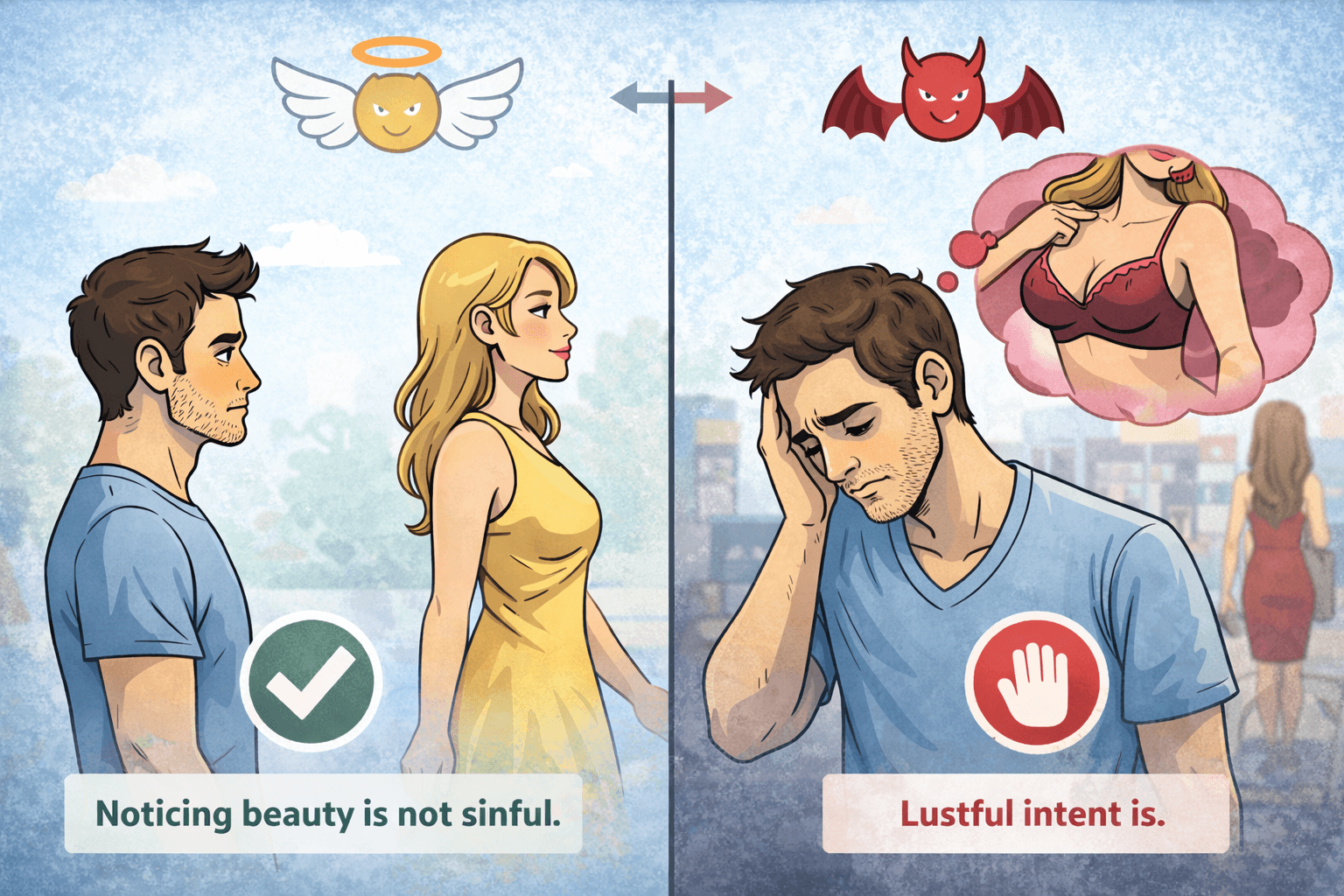
The Bible’s answer is clear—but often misunderstood.
No, it is not a sin to notice a woman’s body, recognize beauty, or feel attraction. Yes, it is a sin to intentionally look in order to arouse desire, fantasize, or use someone’s body for sexual gratification in the mind.
Jesus’ warning in Matthew 5:28 was not aimed at reflexes or awareness. It was aimed at the deliberate choice to turn another person into an object of desire in the heart. The issue is not seeing, but using.
This distinction matters because many people live under unnecessary guilt, assuming that every moment of attraction is a moral failure. Scripture does not support that conclusion. Attraction is part of being human. Lust is a choice about what we do with attraction.
At the same time, removing false guilt does not mean lowering the standard. Sexual discipline requires honesty, responsibility, and practice. When attention is repeatedly used to fuel desire, that is sin—even if no physical action follows.
The goal of Christian self-control is not constant self-policing, but a renewed way of seeing others. When people are viewed as whole persons rather than sources of stimulation, attraction no longer needs to turn into lust.
Progress in this area is not measured by never feeling temptation, but by responding to it differently over time. Redirecting attention, interrupting fantasy, and reducing exposure to triggers are all ways of aligning behavior with belief.
In short:
-
Noticing beauty is not sinful.
-
Lustful intent is.
-
Discipline is learned, not automatic.
-
Grace is available when you fall, and strength is available to grow.
That is the balance Scripture teaches—and the freedom it offers.