Key takeaways about whether masturbating will send you to hell
-
Masturbation does not send someone to hell, even if it is considered sinful in Christian teaching.
-
Salvation in Christianity is based on faith and relationship with God, not on perfect behavior or never struggling with sin.
-
Repeated struggle with masturbation does not mean someone has lost salvation or been rejected by God.
-
Christians distinguish between salvation and sanctification, meaning ongoing struggles are part of growth, not condemnation.
-
Guilt after masturbation often reflects an active conscience, not evidence of eternal judgment.
-
The Bible does not explicitly mention masturbation, which is why Christians apply broader principles like lust and self-control.
-
Fear of hell often comes from repeated habits and shame, not from accurate biblical teaching about salvation.
-
Lasting change comes from understanding triggers, building self-control, and seeking support rather than relying on fear or willpower alone.
Frequently asked questions about hell and masturbation
Will I go to hell for masturbating?
No. Christianity does not teach that a single act or repeated struggle is a mortal sin that automatically results in eternal condemnation.
Why do I feel so guilty after masturbating?
Because sexual behavior and sexual urges are closely tied to emotion, identity, and conscience, which can amplify guilt—especially when it conflicts with personal beliefs.
Is masturbation always considered a sin in Christianity?
Christians differ. While lust and pornography are widely considered sinful, views on masturbation itself vary depending on intent, context, and interpretation.
What if I keep failing over and over again?
Repeated struggle does not mean rejection by God. Christianity distinguishes between ongoing struggle and deliberate rejection of faith or repentance.
What should I focus on instead of fear of hell?
Focus on growth, self-control, understanding triggers, and aligning behavior with your values—not fear, which often worsens the cycle.
Relay is a therapist-backed group recovery program for pornography and unwanted sexual behavior, combining daily accountability, real-time urge support, and a private peer community.
Will I Go to Hell for Masturbating? A Calm, Biblical Answer for Christians
If you’re asking this question, you’re probably not curious—you’re scared. Take a breath.
No—masturbation by itself does not send someone to hell.
The Bible does not teach that a single act of masturbation, or even a repeated struggle, automatically condemns a person to eternal punishment.
Further reading: Does God Forgive Lust? Yes—Even When You've Failed Repeatedly
Many Christians worry about hell after masturbating because guilt feels overwhelming. But guilt and panic are not the same thing as being damned. Feeling distressed about sin is actually a sign that your conscience is active—not that God has abandoned you.
Christian teaching has always distinguished between salvation and sanctification. Salvation is about whether you belong to God. Sanctification is about growth, discipline, and learning self-control over time. Struggling in sanctification—even repeatedly—does not mean you have lost your salvation.
The fear that “I messed up again, so God must be done with me” is common, but it isn’t supported by Scripture, particularly the teachings of the apostle Paul found in Romans, Galatians, and Ephesians.
Christianity does not teach that God is waiting for you to fail so He can send you to hell.
It teaches that God knows human weakness and, through Jesus, provides forgiveness, grace, and time for growth. This does not mean masturbation is automatically harmless or wise. But it does mean that fear of hell is the wrong lens to view this struggle through.
If you’re worried about hell because you masturbated, the most important thing to understand is this: panic is not repentance, and fear is not faith. God does not use terror to draw people to Himself.
Why This Question Feels So Intense
Why does masturbation trigger so much fear for Christians?
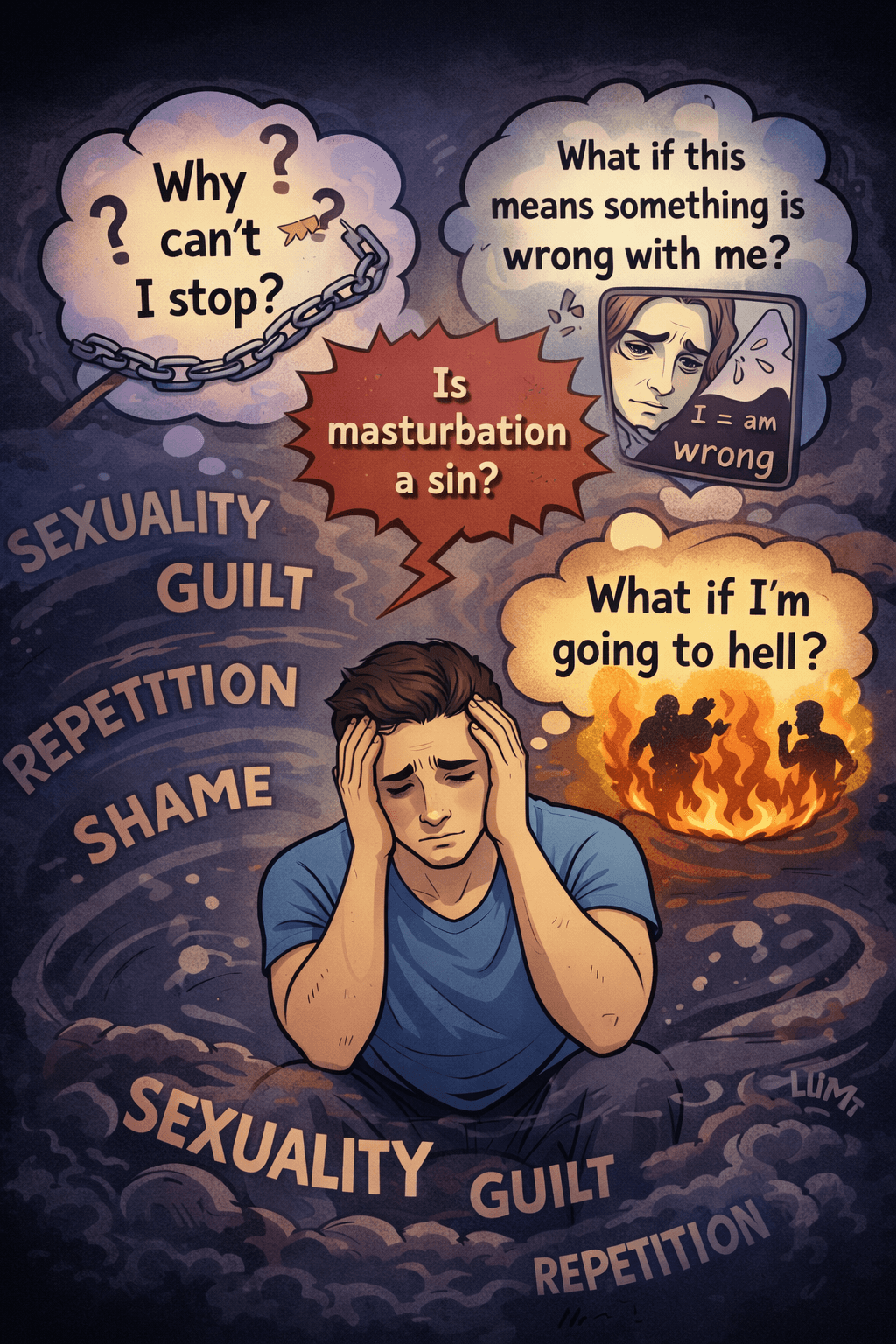
Because it sits at the intersection of sexuality, guilt, repetition, and shame—four things that easily spiral in the human mind.
Many people don’t ask, “Is masturbation a sin?”
They ask, “Why can’t I stop?” Then that turns into, “What if this means something is wrong with me?” And eventually: “What if I’m going to hell?”
That escalation happens fast.
Masturbation is often private, repetitive, and followed by regret. That combination creates a cycle where guilt doesn’t just point to a behavior—it starts to attack your identity. Instead of thinking, “I did something wrong,” people start thinking, “I am wrong.”
Christian teaching never equates repeated struggle with rejection by God. In fact, Scripture repeatedly describes people who wrestle with sin while still belonging to God. The presence of struggle does not mean the absence of faith.
It’s also important to understand that sexual guilt is especially loud. Because sex is tied to sexual desires, imagination, and emotion, failure here tends to feel more personal than other sins.
Someone may lie, gossip, or act selfishly without questioning their salvation—but a sexual sin feels uniquely damning.
That emotional weight explains why so many people search for reassurance online. You’re not weak for asking this question. You’re human.
Before trying to “fix” anything, it’s important to separate fear-driven conclusions from what Christianity actually teaches about sin, forgiveness, and growth.
Is Masturbation Even a Sin?
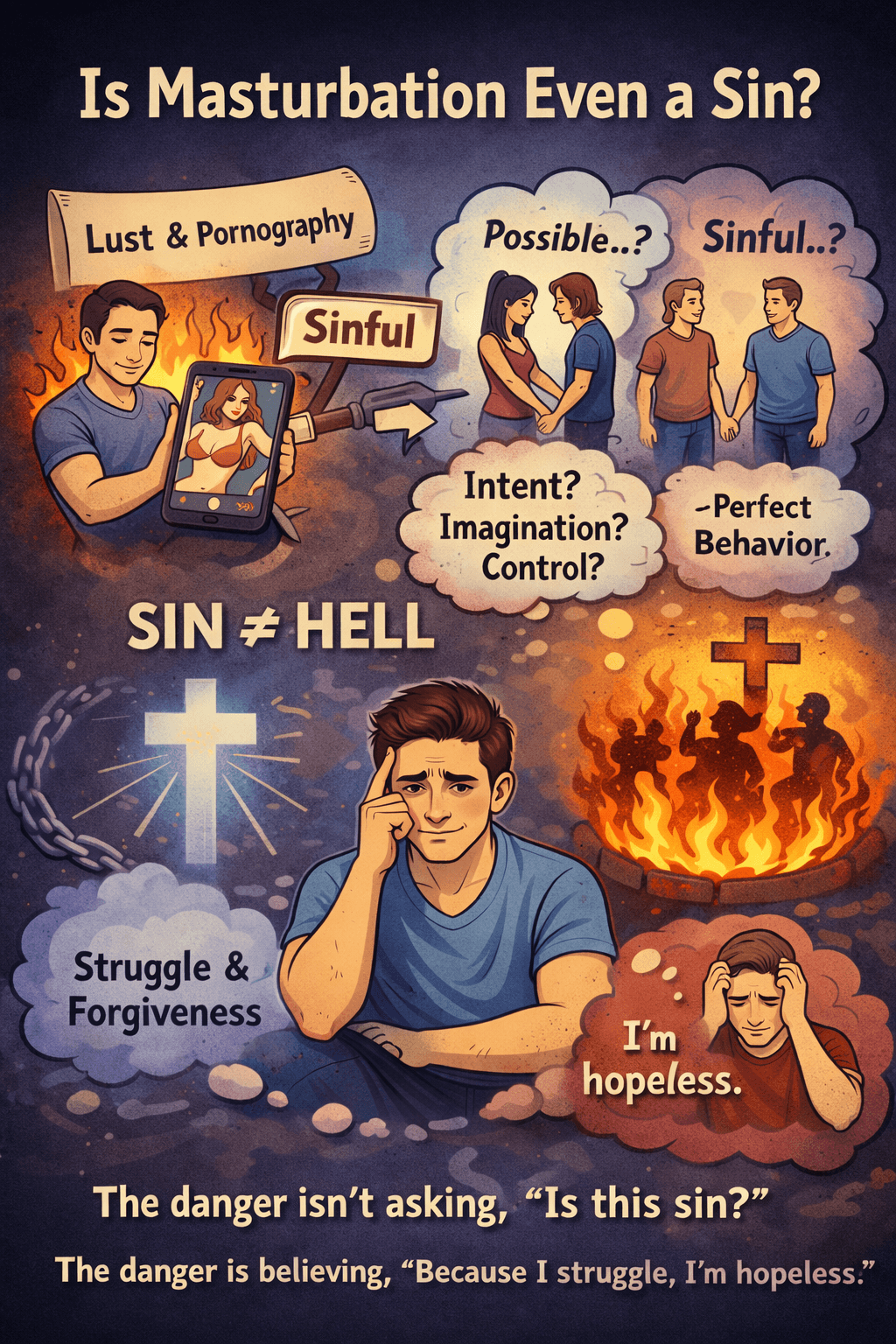
Christians disagree about whether masturbation itself is always sinful.
For a deeper explanation of the theology around this question, see our full guide to whether masturbation is a sin.
The Bible does not explicitly mention masturbation by name—even the story of Onan in the original Hebrew version refers to a different issue—nor does the bible say it is an unforgivable act.
Because of that, Christian teaching has historically relied on broader principles, such as those found in 1 Corinthians 6—especially those related to sexual immorality, lust, self-control, and sexual purpose.
Most Christian traditions agree on this much:
Lust and pornography are sinful, and masturbation often involves one or both.
When masturbation is fueled by lustful thoughts, fantasizing about someone who isn’t your spouse, or by pornographic material, it clearly falls under biblical warnings about lust.
Further reading: Is Watching Porn A Sin? Understanding The Question Christians Are Really Asking
Where Christians differ is whether masturbation without lust is possible—or sinful, often debating interpretations of passages like Genesis 38, Colossians, or laws in Leviticus.
Some believe any sexual activity outside marriage, often categorized as fornication, is wrong. Others believe the moral issue depends on intent, imagination, and control rather than the physical act alone.
What matters for this question is something many people miss:
Even if masturbation is considered sinful, sin does not automatically equal hell.
Christianity does not teach that salvation is maintained by perfect behavior. It teaches forgiveness, repentance, and growth. A person can recognize something as a violation of God's law, struggle with it, and still be fully within God’s grace.
The danger isn’t asking, “Is this sin?” The danger is believing, “Because I struggle, I’m hopeless.”
That belief leads to despair—not transformation.
Further reading: 32 Bible Verses About Masturbation and Lust: What Scripture Really Teaches About Desire And Self-Control
Repetition, Failure, and the Fear of Damnation
One of the most frightening thoughts people have is: “What if I keep doing this?”
Repeated failure feels different than a one-time mistake. It creates the fear that repentance isn’t real—or that God will eventually stop forgiving.
But Christianity does not teach that forgiveness runs out.
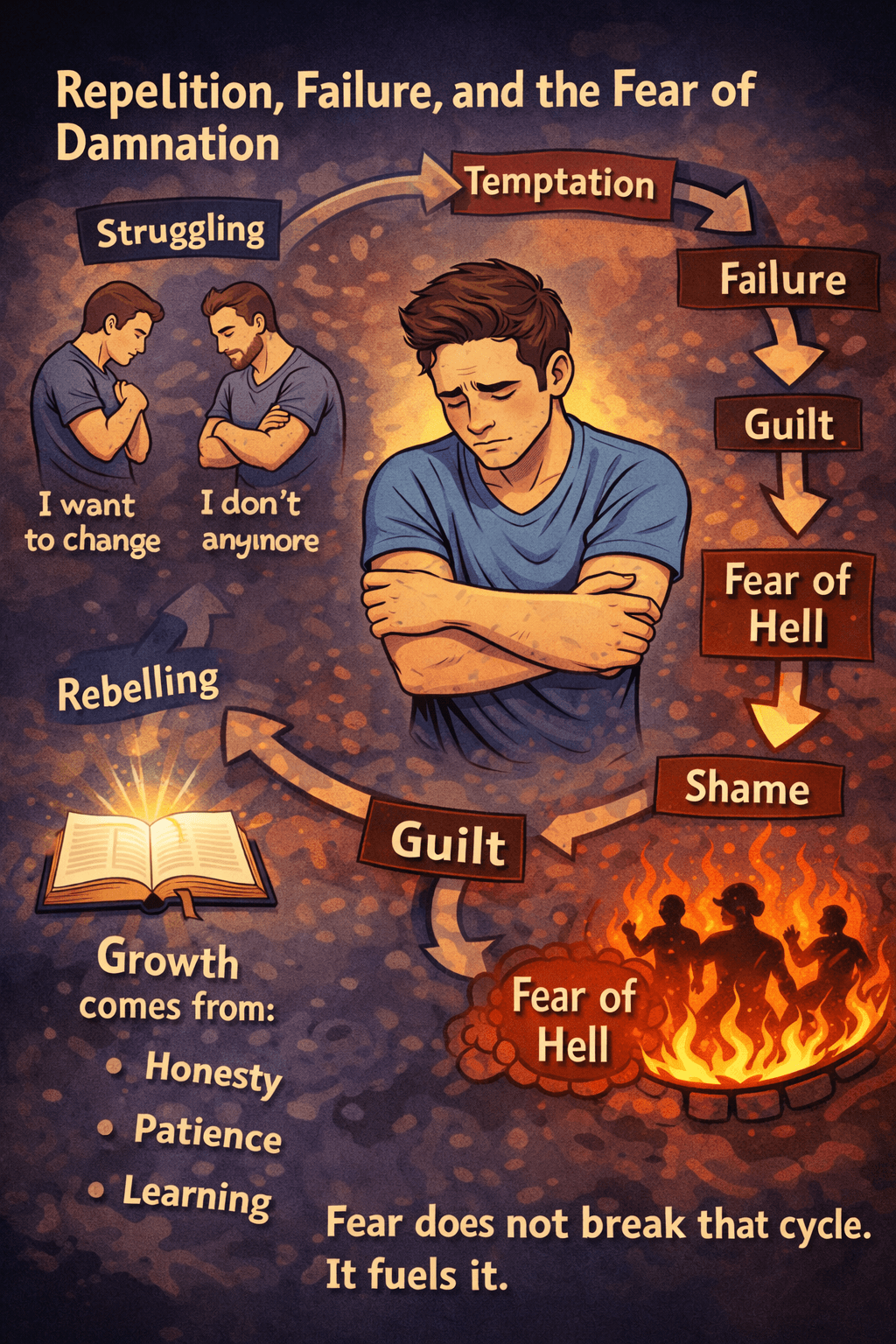
There is an important difference between struggling and rebelling. Struggling means you want to change but haven’t mastered self-control yet. Rebelling means you no longer care what God wants. Those are not the same thing.
Someone who feels grief, frustration, or disappointment after masturbating is not rejecting God—they’re wrestling with discipline. That wrestling is part of spiritual growth, not evidence of condemnation.
Many people fall into a harmful cycle:
-
Temptation
-
Failure
-
Guilt
-
Fear of hell
-
Shame
-
More temptation
Fear does not break that cycle. It fuels it.
Growth comes from honesty, patience, and learning new ways to respond to temptation—not from terrifying yourself into obedience.
If you are worried about hell because you keep failing, the issue is not that you’re doomed. The issue is that fear has replaced clarity.
And fear is a poor teacher.
What to Focus on Instead of Hell
If masturbation is something you want to change, hell should not be your motivation.
Fear-based change rarely lasts. It either collapses into despair or swings into denial.
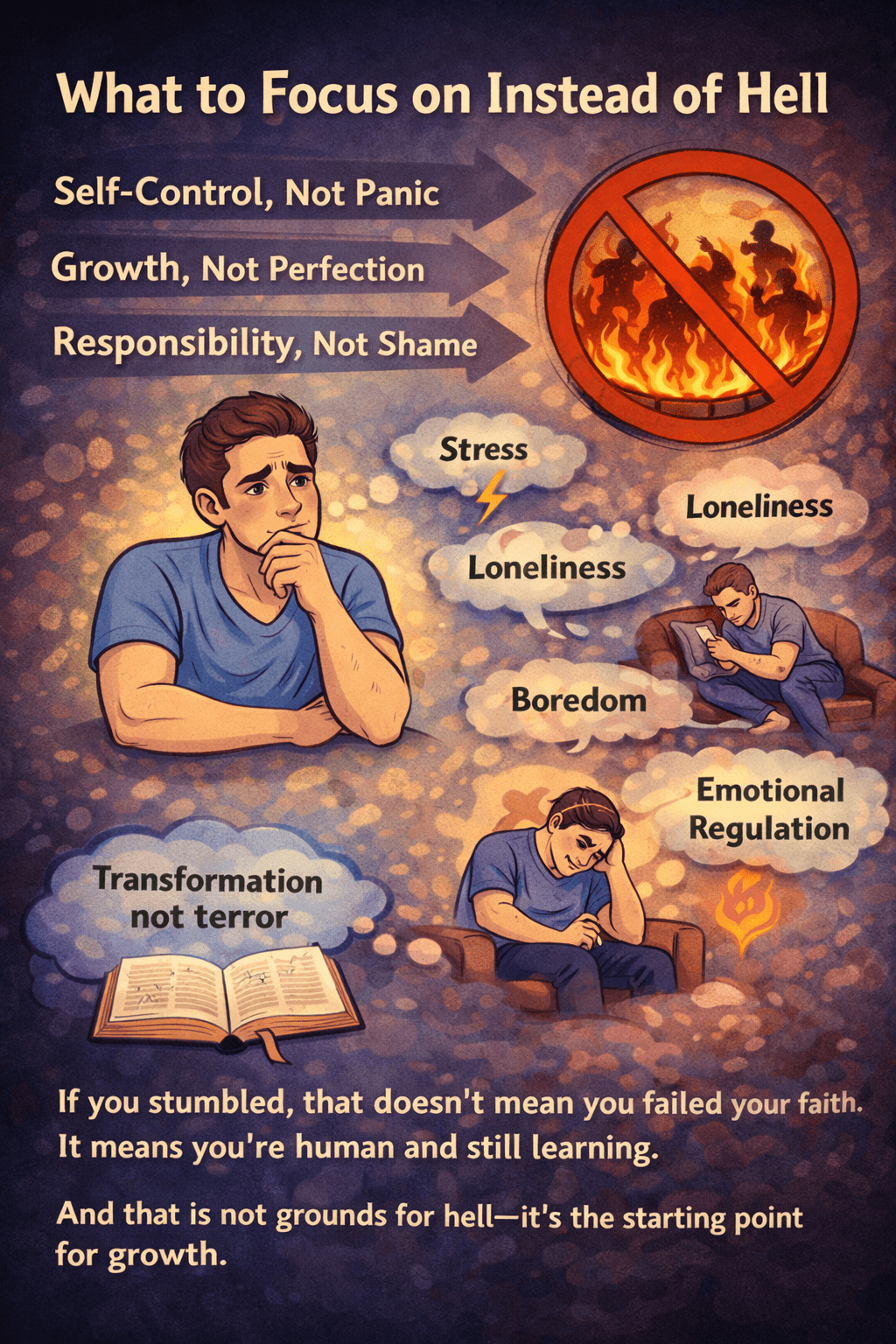
A healthier Christian framework focuses on:
-
self-control, not panic
-
growth, not perfection
-
responsibility, not shame
Instead of asking, “Am I going to hell?” a better question is “What role is this habit playing in my life?”
For many people, masturbation isn’t primarily about sex—it’s about stress, loneliness, boredom, or emotional regulation. Addressing those root causes is far more effective than obsessing over punishment.
Christianity teaches transformation through the Holy Spirit, not terror. It teaches that people change over time through truth, discipline, support, and grace.
If you stumbled, that doesn’t mean you failed your faith. It means you’re human and still learning.
And that is not grounds for hell—it’s the starting point for growth.
Relay is a therapist-backed group recovery program for pornography and unwanted sexual behavior, combining daily accountability, real-time urge support, and a private peer community.