You didn’t choose this — but healing is possible

If your partner’s pornography use has turned your world upside down — what clinicians call betrayal trauma — it is not your fault, you are not alone, and you deserve healing too. Relay gives your partner a proven path out, and gives you a way to see the work happening.

Trusted & featured by

You’re not alone

What you’re feeling has a name

Most partners spend the first weeks wondering whether they are allowed to feel this way. You are — and you deserve healing just as much as they do. Here is what the people who treat this every day want you to know first.

It's trauma, and it's real

Discovering a partner's secret sexual behavior is a betrayal of the person you trusted most. The shock, the replaying, the sleepless nights, the checking — those are trauma responses, not overreactions. Clinicians call it betrayal trauma, and they treat it as exactly that.

It is not your fault

Pornography habits almost always begin years before a relationship does. They are driven by conditioning, stress, and secrecy — not by how you look or what you've done. You did not cause this, and you cannot control it. Neither of those facts is a failure on your part.

Healing has a path

You get to heal whether or not your partner does. Safety, honesty, and clear boundaries come first; rebuilding trust comes later and only through consistent change over time, not promises. There are people who specialize in walking partners through this, and a growing community who have been where you are.

Understanding it

What is betrayal trauma?

Betrayal trauma is the emotional and physical injury that follows discovering that someone you depend on for safety and love has been living a hidden life — secret pornography use, infidelity, or any behavior that harms the integrity and safety of the relationship, and the lies that kept it hidden.

It is called traumadeliberately. For years, partners were told their pain was “codependency” — that they were part of the problem. Today, clinicians who specialize in this recognize the truth: your reactions are the normal responses of a healthy person to a deeply unsafe discovery. The hypervigilance, the sleepless replaying, the swings between rage and grief — that is your nervous system doing its job after a shock, not a character flaw.

The betrayal usually isn’t just the behavior. It is the months or years of secrecy, the moments you sensed something was off and were told you were imagining it, and the discovery that the story of your relationship had a chapter you never got to read. That is why “it’s just porn” doesn’t land: you are not grieving pixels, you are grieving trust.

The good news is that betrayal trauma is treatable, and it is treated well. There is an entire clinical specialty devoted to partners — therapists certified through APSATS, the Association of Partners of Sex Addicts Trauma Specialists, the organization that trains and certifies clinicians in partner betrayal trauma. Its president, Alana Gordon, LMFT, serves on Relay’s clinical advisory board. You are not improvising your way through this alone; there is a path, and people who have walked thousands of partners down it.

Signs you may be experiencing it

  • Intrusive thoughts and replaying what you found
  • Checking their phone, history, or whereabouts — and hating that you do
  • Trouble sleeping, eating, or concentrating
  • Waves of anger, grief, and numbness that don't follow a schedule
  • Doubting your own memory, judgment, or attractiveness
  • Feeling on guard, as if the next blow is coming

If several of these are familiar, that isn’t a sign something is wrong with you. It’s a sign something happened to you.

What healing looks like

  1. 1. Safety firstStabilizing your nervous system and setting the boundaries you need — before anyone talks about forgiveness.
  2. 2. Then understandingLearning what happened, how the habit works, and why it was never about you.
  3. 3. Then, if you choose, rebuildingTrust is rebuilt by consistent, verifiable change over time — and you get to set the pace.
For your partner

Why Relay can help your partner actually change

Willpower and apologies haven’t worked, because unwanted pornography use isn’t a willpower problem. Relay treats it like what it is — a habit rooted in isolation and shame — with a program built for the long road.

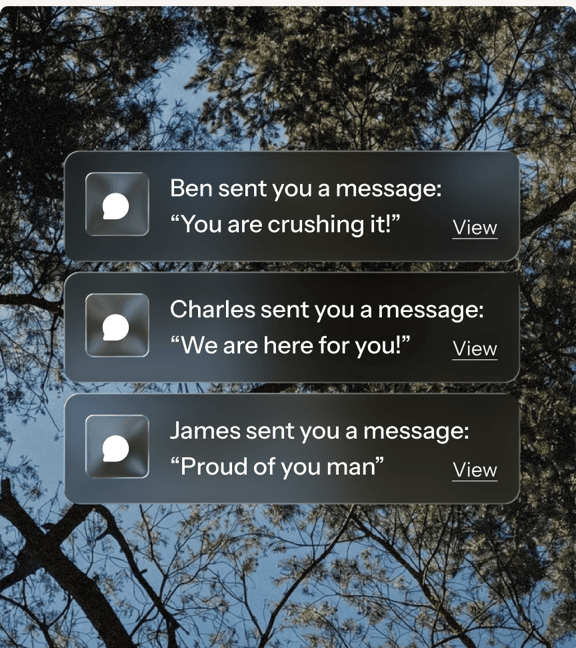
The Relay app showing encouraging messages from group members

They won't be doing it alone

Relay matches your partner with a small, private group of people working on the same thing. Secrecy is what kept this alive; connection is what breaks it.

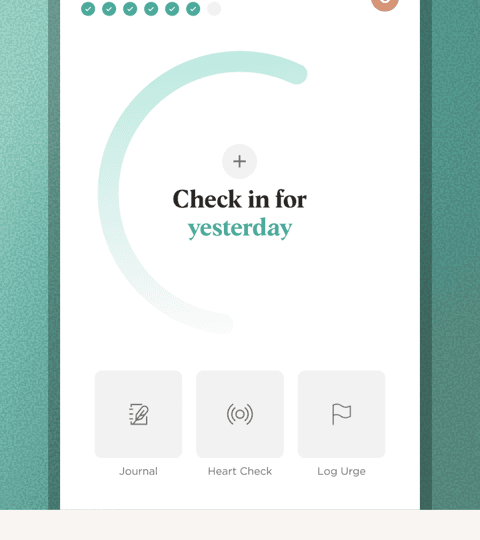
The Relay app daily check-in screen prompting the member to check in for yesterday

Accountability that isn't you

A daily check-in and a group that notices when they go quiet. The structure carries the weight so you don't have to police anything.

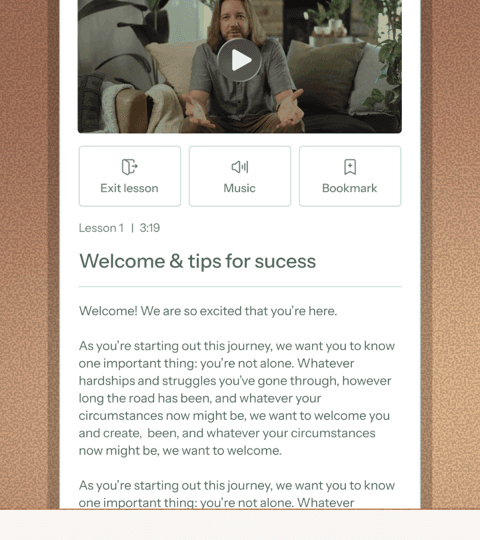
The Relay app showing a therapist-designed lesson with welcome and tips for success

Built by therapists, aimed at the root

Lessons designed by licensed clinicians address why the habit formed — shame, stress, disconnection — not just the behavior on the surface.

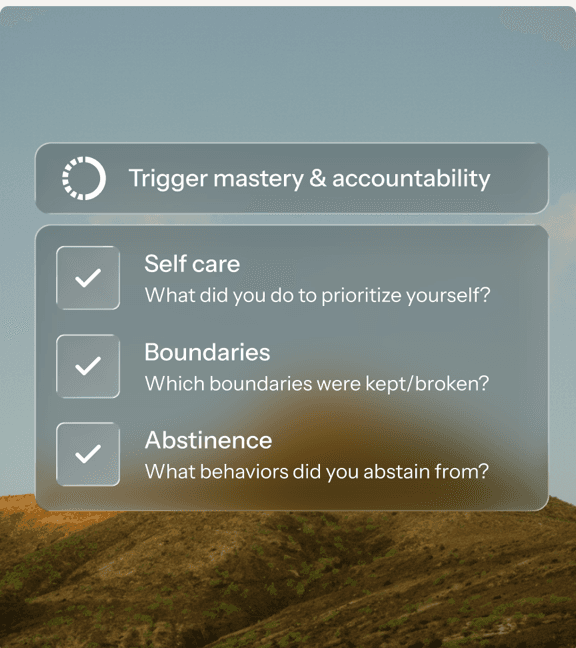
The Relay app showing a personalized recovery plan with trigger mastery, self-care, boundaries, and abstinence check-ins

A real plan, not a promise

Your partner builds a plan around their triggers, values, and boundaries — and works it daily. Progress you can point to, instead of another 'it won't happen again.'

For you

Peace of mind, on both your terms

You shouldn’t have to be your partner’s accountability partner, therapist, and spouse all at once. If you both choose it, Relay’s supporter role lets you see that they’re doing the work — without you having to check up on them.

  1. 1. Your partner chooses to invite you

    From inside Relay, your partner can add you as a supporter. It's their step to take — a concrete act of the honesty you've been asking for.

  2. 2. You choose to accept — it's free

    Nothing is shared until you say yes. Supporters never pay, and you get a view built for you, not a copy of their account.

  3. 3. You see the work happening

    An easy view of their progress and engagement — check-ins, milestones, the fact that they showed up today. Not screenshots. Not policing. Just proof.

What this gives you

  • Peace of knowing they're working a real program, not just promising to
  • Evidence they're engaged with a support system that isn't you
  • One less thing to carry — the accountability lives in the app
  • Room to focus on your own healing

Relay isn’t a replacement for therapy. Many members use it alongside a counselor, and it works with therapists who specialize in this — for both of you.

In their words

What changes at home

From members, in their own words, about what recovery did for the person they love.

  • The difference it's made to my life — especially my relationship with my wife — has been incredible. Life changing.
    IainSeven weeks in · by email
  • I wouldn't be where I am today in my marriage or mental health without Relay.
    Relay memberBy text message
  • Having my wife as a supporter now has given me added determination to see this through and keep putting in the daily reps.
    Relay memberTwo weeks in · by email
A next step

Put a real path in front of them

You can’t do your partner’s recovery for them — and you shouldn’t have to. What you can do is hand them something that works. Send the link, or ask them to look at it with you.

Share Relay

Opens your phone’s share sheet (text, email, whatever you use). On a computer, it copies the link.

See how it works
Meet the team

Clinical advisory board

Relay’s advisors include Alana Gordon, LMFT — President of APSATS, the clinical organization that trains and certifies the therapists who specialize in betrayal trauma — alongside a CSAT supervisor and a board-certified psychiatrist. The people who treat this every day helped shape how Relay works.

Share Relay with your partner
FAQs

The questions partners ask us

Honest answers, including where we don’t have something for you yet. Still have a question? Reach out — we’re real people and we’ll help.

Is it my fault that my husband or partner watches porn?

No. Pornography habits almost always begin years before a relationship does, often in adolescence, and they are driven by conditioning, stress, and secrecy — not by your body, your worth, or anything you did or didn't do. You did not cause this, and you cannot cure it. What you can do is take your own healing seriously and decide what you need. Both of those are fully within your power.

Is my partner's porn use cheating?

That depends on the boundaries of your relationship, and you get to define them. What most partners find is that the deepest wound isn't the content — it's the secrecy. Being lied to, sometimes for years, by the person you trusted most. Naming that clearly, for yourself and for your partner, is a legitimate and healthy place to start.

What if my partner doesn't want to change?

Then you have real information about where they are right now — and it is not a verdict on you or your future. You can put a path in front of your partner; only they can walk it. In the meantime, your healing does not have to wait for their readiness. Set the boundaries you need, get your own support, and keep the door open. Many people come to Relay months after a partner first mentioned it, once the reality of what they stand to lose sinks in.

Can a marriage recover from porn addiction?

Yes — and it happens more often than the internet would have you believe. Relationships recover when the person who caused the harm does consistent, verifiable work over time, and the partner who was hurt gets support for their own trauma rather than being asked to "just move on." It is not quick, and it is not guaranteed. But couples rebuild trust every day, and many describe the relationship on the other side as more honest than it ever was before.

How long does it take to heal from betrayal trauma?

There is no fixed timeline, and anyone who gives you one is guessing. Most partners describe stabilizing over months and healing over a year or more, with better and worse days along the way. Two things speed it up: a partner who is genuinely doing the work, and a therapist who specializes in betrayal trauma rather than treating it as a communication problem. Healing is not linear, but it is real.

Do I have to be my partner's accountability partner?

You shouldn't have to be. Being their therapist, their monitor, and their spouse all at once is a recipe for exhaustion and resentment — and it quietly puts their recovery on your shoulders. Relay puts the accountability on a group and a daily structure, so you can be their partner and decide, separately, how involved you want to be.

How does Relay's supporter role work? What will I see?

It's a dual opt-in: your partner chooses to invite you, and you choose to accept. Only then do you get your own free view of their progress and engagement — check-ins, milestones, whether they're showing up. Relay doesn't take screenshots or monitor their screen. The point is honesty you both agreed to, and the peace of knowing they're working a program, not just promising to.

Is there a Relay program for me, not just for my partner?

Not inside Relay today, and we won't pretend otherwise. What we can offer now is honest information about betrayal trauma, a clinical advisory board that includes the president of APSATS — the organization that certifies therapists who specialize in partner betrayal trauma — and a program that gives your partner a real shot at change. For your own healing, a therapist with APSATS certification (look for CCPS or CPS-P) is the best next step.

What kind of therapist should I look for?

One who treats betrayal trauma as trauma. Look for a Certified Clinical Partner Specialist (CCPS) or a therapist trained through APSATS; many CSATs (Certified Sex Addiction Therapists) also work with partners. A good fit will never tell you that you're overreacting, and will never make your partner's recovery your responsibility. Relay is designed to work alongside therapy for your partner, not replace it — and the same is true for you.

What will this cost us?

Less than one therapy session. Your partner can try Relay free for 7 days — the group, the daily check-ins, the lessons, all of it — so you can both see whether it's real before anything is charged. After that it's $149 for a full year of support. Your access as a supporter is always free.

I need to talk to someone now.

Email hello@joinrelay.app — real people read it and will point you toward help. If you are in immediate danger or crisis, please contact local emergency services or a crisis line in your country.