

Key takeaways of the Bible's stance on pornography
-
The Bible does not explicitly mention pornography but clearly teaches against lust and sexual immorality.
-
Pornography is considered sinful because it intentionally cultivates lust and separates desire from its intended context.
-
Jesus teaches that lustful looking is morally significant, equating it with adultery of the heart.
-
Scripture evaluates sexual behavior by intention and desire, not just physical actions.
-
Pornography trains the mind to engage in repeated sexual desire outside of relational commitment.
-
The Bible presents sexuality as purposeful and relational, designed for commitment rather than private consumption.
-
Habitual porn use can create patterns of secrecy, disconnection, and spiritual distance.
-
Christianity teaches that freedom from sexual sin comes through repentance, accountability, and aligning behavior with belief.
Frequently asked questions about the Bible's stance on pornography
Does the Bible explicitly mention pornography?
No. Pornography as a modern concept did not exist, but Scripture clearly addresses lust, sexual immorality, and intentional sexual desire, which pornography depends on.
Why do Christians consider pornography a sin?
Because it trains intentional lust, separates sexual desire from its intended context, and encourages repeated mental participation in sexual immorality.
What does Jesus say about lust and looking?
In Matthew 5:27–28, Jesus teaches that looking with lustful intent is equivalent to adultery in the heart, emphasizing intention rather than just physical action.
Can someone be forgiven for watching pornography?
Yes. The Bible consistently teaches forgiveness and restoration for those who repent, regardless of how many times they have struggled.
How can Christians overcome pornography use?
Through repentance, accountability, restructuring habits, reducing secrecy, and aligning daily actions with their beliefs—often with support rather than willpower alone.
Relay is a therapist-backed group recovery program for pornography and unwanted sexual behavior, combining daily accountability, real-time urge support, and a private peer community.

What Does the Bible Say About Pornography? Scripture, Sin, and Hope
The Bible does not directly mention pornography, as it was written long before modern forms of explicit media existed. However, Scripture speaks clearly and consistently about the desires, behaviors, and moral patterns that pornography depends on. For this reason, Christians across traditions have long understood pornography to fall under the Bible’s teachings on lust, sexual immorality, and adultery of the heart.
In short, while the word pornography does not appear in the Bible, the behaviors it encourages are repeatedly warned against.
Further reading: 32 Bible Verses About Masturbation And Lust: What Scripture Really Teaches About Desire and Self-Control
Jesus taught that sexual sin is not limited to physical acts. He addressed the inner life—desire, intention, and what we willingly allow our eyes and minds to dwell on. This is why Christians do not need a verse that names pornography explicitly to evaluate it morally. Scripture already provides the framework.
The Bible presents sexuality as purposeful, relational, and ordered toward marriage. Anything that trains desire away from that design—especially through intentional consumption of sexual imagery—stands in tension with biblical teaching. Pornography does not merely depict sexual behavior; it invites repeated participation through the imagination, shaping thought patterns and desires over time.
For people asking this question sincerely, the concern is often not abstract theology. It is personal. Many are trying to reconcile their faith with habits they feel conflicted about, ashamed of, or unable to break. The Bible does not approach these struggles with ambiguity, but neither does it approach them without hope.
To understand how Scripture applies to pornography, we must look at the principles the Bible emphasizes most clearly: how desire is formed, what lust is, why sexual immorality matters spiritually, and how freedom from habitual sin is possible.
How the Bible Evaluates Sexual Desire

Rather than listing every possible sexual behavior, Scripture evaluates sexuality through purpose and direction. The Bible consistently teaches that sexual desire is meant to operate within boundaries that protect both individuals and relationships.
Jesus’ words in Matthew 5:27–28 (NIV) are foundational to this understanding:
“You have heard that it was said, ‘You shall not commit adultery. But I tell you that anyone who looks at a woman lustfully has already committed adultery with her in his heart."
Here, Jesus identifies lust not as a fleeting thought, but as a cultivated gaze—a deliberate choice to dwell on sexual desire outside its proper context. Pornography is built entirely around this practice. It exists to provoke, sustain, and intensify lust through repeated visual engagement.
Further reading: Is Watching Porn A Sin? Understanding The Question Christians Are Really Asking
The New Testament frequently uses the Greek term porneia, commonly translated as “sexual immorality.” While it does not describe modern pornography specifically, it refers broadly to sexual behavior and desire that operate outside God’s design. Paul warns believers to “flee from sexual immorality” (1 Corinthians 6:18) and explains that the body is not meant for porneia, but for honoring God.
Scripture also emphasizes intentionality. Job describes making “a covenant with my eyes” (Job 31:1), recognizing that what we choose to look at shapes the inner life. Pornography removes neutrality from the act of looking—it is a chosen pursuit of sexual stimulation.
From a biblical perspective, the issue is not technology, novelty, or cultural change. The issue is training desire toward images and fantasies that separate sexuality from commitment, dignity, and self-control.
Understanding this framework clarifies why Christians have consistently viewed pornography as incompatible with biblical teaching—even without a single verse naming it directly.
Popular Recovery Guides
Why Pornography Affects the Spiritual Life
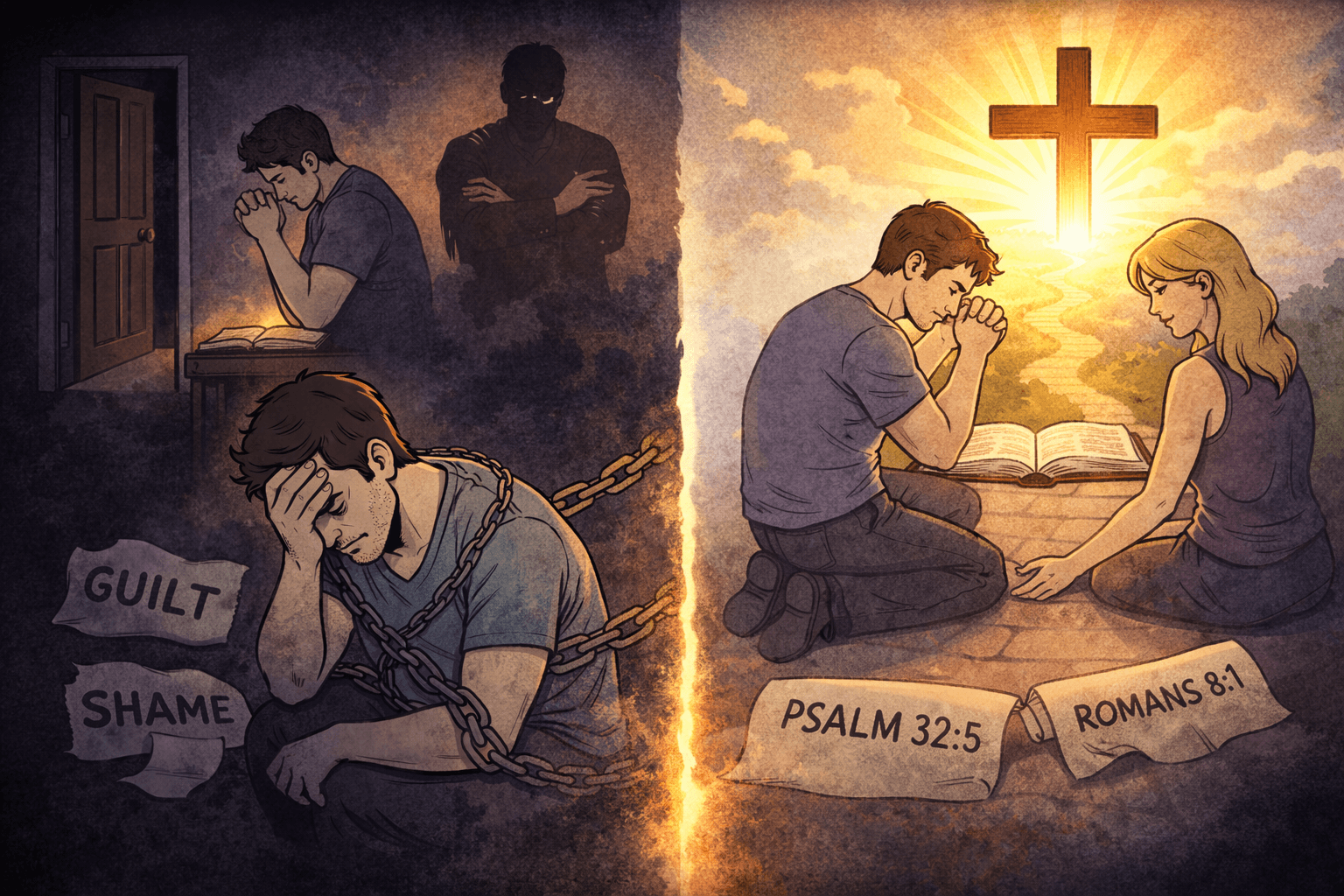
The Bible repeatedly links habitual sin with spiritual distance—not because God withdraws forgiveness, but because repeated patterns shape attention, priorities, and conscience. Sexual immorality is treated seriously because it does not remain isolated. It affects how a person thinks, prays, relates to others, and understands themselves before God.
Further reading: Does God Forgive Lust? Yes—Even When You've Failed Repeatedly
Many Christians describe similar experiences: decreased prayer, avoidance of Scripture, secrecy, and a growing sense of disconnection from God. Scripture explains this pattern plainly. Sin thrives in secrecy, while healing begins with truth brought into the light (Psalm 32:3–5; Proverbs 28:13).
At the same time, the Bible is unambiguous about forgiveness and restoration. “There is now no condemnation for those who are in Christ Jesus” (Romans 8:1). Struggle does not place someone beyond grace, and repeated failure does not exhaust God’s mercy. Repentance restores the relationship; wisdom supports change.
This is why Scripture pairs moral clarity with practical action. Believers are encouraged not only to resist temptation, but to structure their lives in ways that make obedience possible—through accountability, honesty, and community.
Many Christians find that private resolve alone is not enough. Patterns formed in isolation often require support to undo. Tools and accountability structures are not replacements for repentance; they are aids that help people live consistently with the convictions they already hold.
Relay exists to serve people at this exact intersection—those who agree with what Scripture teaches and want help living it out. By combining faith-aligned accountability groups with structured guidance, Relay supports individuals who are serious about breaking secrecy, rebuilding integrity, and walking forward in freedom.