Key takeaways about the sinfulness of masturbation
-
The Bible does not explicitly mention masturbation, so Christians evaluate it using principles like lust, self-control, and sexual purpose.
-
Many Christians conclude masturbation is sinful because it is typically driven by lust and focused on self-gratification.
-
The story of Onan does not condemn masturbation but addresses disobedience and exploitation, and is often misinterpreted.
-
Biblical teaching emphasizes that sexual desire should be directed toward relationships, not isolated self-stimulation.
-
Masturbation is often linked to pornography or fantasy, which reinforces patterns of lust the Bible warns against.
-
Scripture warns against behaviors that promote selfishness and weaken self-control, both commonly associated with masturbation.
-
The Bible calls believers to honor their bodies and pursue holiness, shaping how sexual behavior is evaluated.
-
Christianity teaches forgiveness and growth, meaning struggling with masturbation does not remove the possibility of change.
Frequently asked questions about the sinfulness of masturbation
Does the Bible directly say masturbation is a sin?
No. The Bible does not explicitly mention masturbation, which is why Christians evaluate it using broader principles about lust, self-control, and sexual morality.
What about the story of Onan—does it condemn masturbation?
No. Onan was punished for disobedience and exploitation, not for masturbation itself, and the passage is often misapplied.
Why do many Christians still consider masturbation a sin?
Because it is typically connected to lust, reinforces self-focused desire, and separates sexuality from its intended relational and spiritual purpose.
Is masturbation always connected to pornography?
Not always, but it is frequently associated with porn or lustful fantasy, which strengthens the argument that it conflicts with biblical teaching.
Can someone be forgiven for masturbating?
Yes. Christianity teaches that forgiveness is available through repentance, and that growth in self-control happens over time—not instantly.
If you want help with living in accordance to God's plan, try Relay for free for 7 days. Relay offers a faith-based porn recovery option, paired with sound psychological guidance, licensed counselors, and peer recovery specialists who know what it's like.
Is Masturbation A Sin? What The Bible Says—And Doesn't Say
Christians have found themselves in an interesting dilemma on the subject of masturbation.
The Bible never explicitly uses the word masturbation or any translation of it. With the notable exception of the story of Onan (which we’ll get to shortly), the Bible doesn’t even allude to the act of sexual self-gratification. For all intents and purposes, the Bible is silent on the act of masturbation, treating it almost as if it doesn’t exist.
And here lies the source of the dilemma.
If the Bible doesn’t mention it and God has not specifically forbade it in any commandments, is masturbation a sin?
Bible translations used: Scripture quotations in this article are primarily taken from the King James Version (KJV) for consistency. In select cases, the New International Version (NIV) is referenced for clarity or comparison of wording.
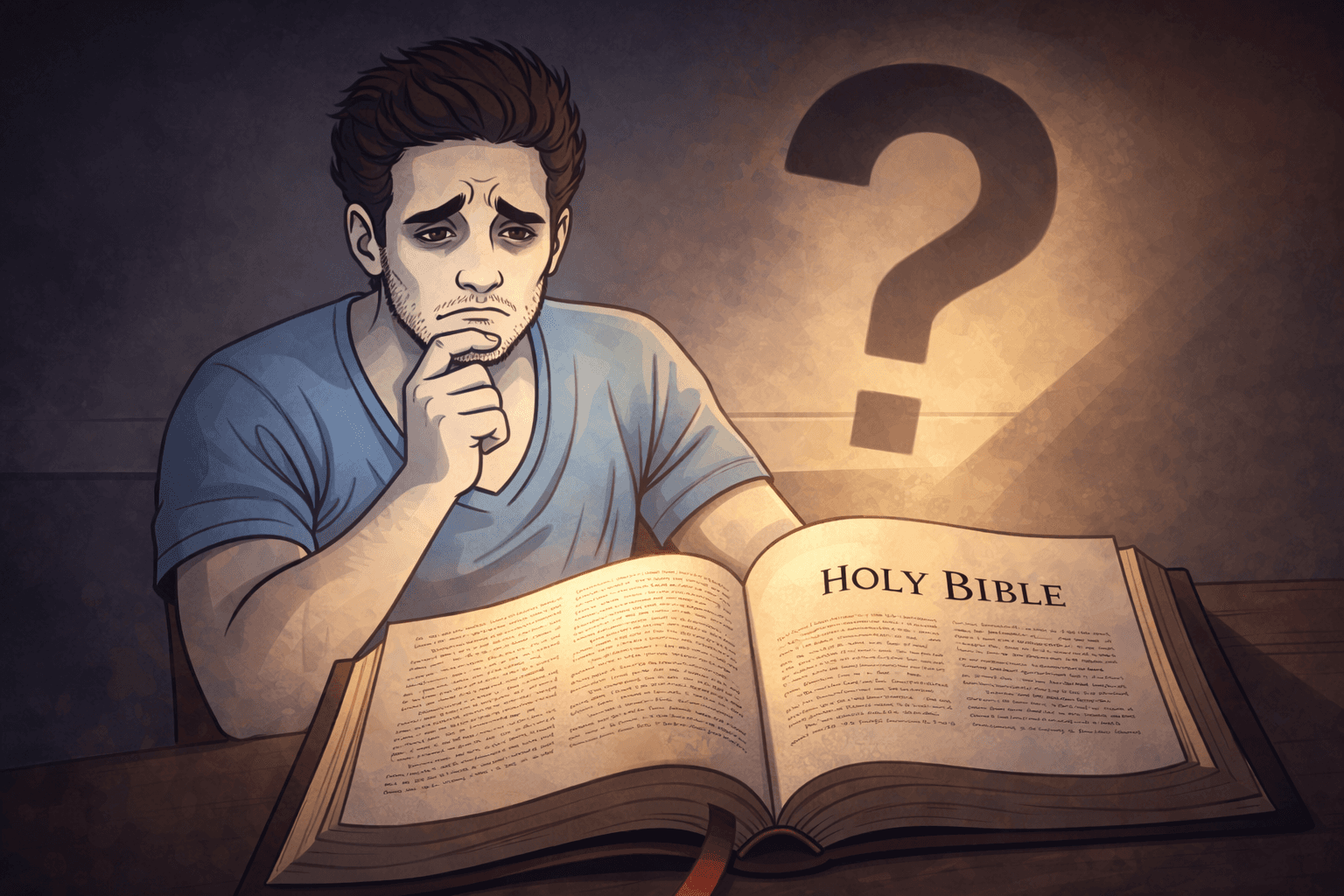
Some Christians argue it is “morally neutral”, while others believe it is sinful because of the desires and patterns it fosters.
The challenge is that Scripture rarely answers moral questions by naming every behavior. Instead, it instructs us through principles that we are supposed to use to life a life that is aligned with God’s design.
In the case of masturbation, our task is to evaluate the principles that God lays out regarding sexuality and to evaluate our actions in light of them..
As you’ll see in the rest of this article, when those principles are applied honestly and with the intention to follow God’s word, the biblical stance on masturbation becomes clear.
But first, we have to address the one area that many Christians misunderstand when it comes to interpreting God’s stance on masturbation.
What About Onan and “Spilling Seed”?
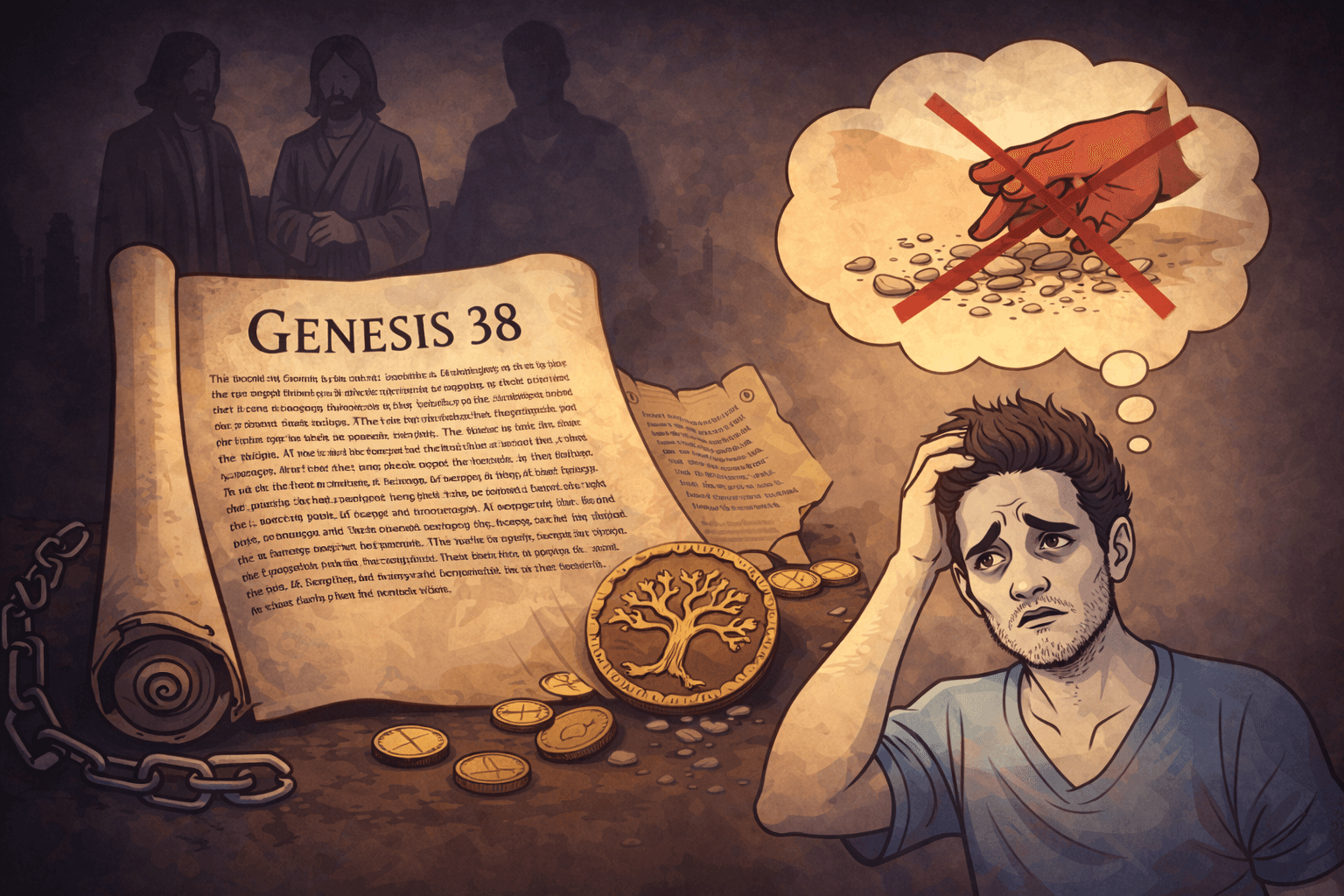
If you have enough discussions about masturbation with Christians, Genesis 38 and the story of Onan will inevitably come up. If you aren’t familiar, here’s a short primer:
In the passage, Onan is commanded to fulfill a covenant duty known as “levirate marriage.” His brother, Er, “was wicked in the Lord’s sight; so the Lord put him to death.” God then told Onan to impregnate his brother’s widow to ensure his brother’s family line continues.
Onan has another plan. Instead, “whenever he slept with his brother’s wife, he spilled his semen on the ground to keep from providing offspring for his brother.” Because Onan wanted to have his fun without the responsibility that comes along with it, God killed him too.
Poor Tamar was now a widow twice.
The story gets even crazier, but it’s beyond the scope of the masturbation argument. If you need a refresher, read it here. But even crazier than that story is that Christians interpret Onan’s actions as proof that masturbation is something that God punishes.
Onan’s sin was not masturbation.
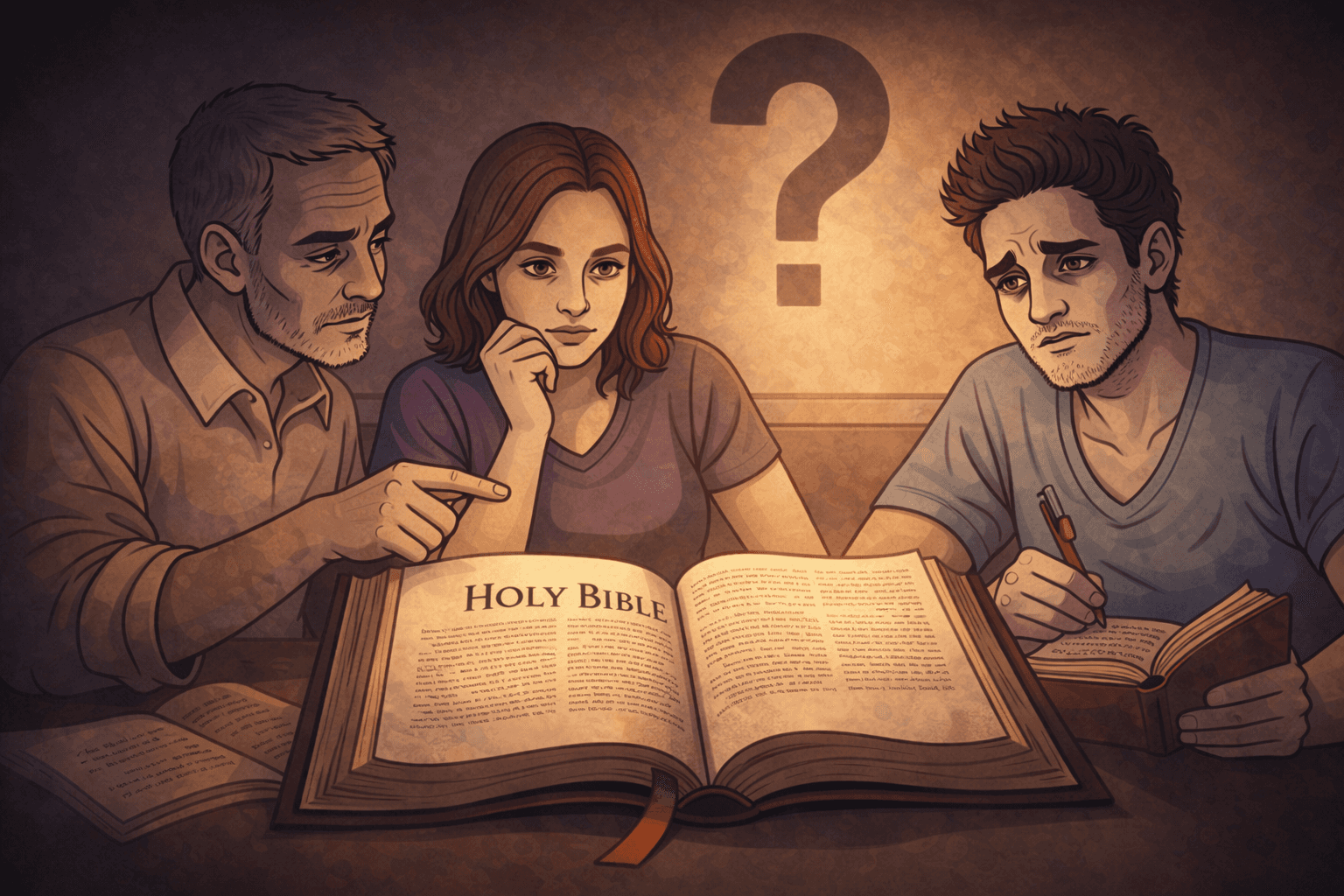
God didn’t strike him down for spilling his seed nor for engaging in sexual self-gratification. He was killed for intentionally disobeying a clear covenant responsibility, exploiting the woman involved, and placing his own inheritance and comfort above obedience to God’s command.
The passage is about rebellion, deception, and refusal to honor a sacred obligation—not a general prohibition against sexual acts performed in isolation.
So why does this passage still get linked to masturbation?
Part of the confusion comes from history. The term onanism eventually became associated with masturbation, even though that association is not grounded in the biblical text itself.
Over time, cultural and religious traditions attached meanings to the story that Genesis 38 never explicitly teaches. As a result, many sincere Christians were taught—often from a young age—that Onan’s story directly condemns masturbation.
This isn’t bad faith so much as it’s an inherited misunderstanding.
People are trying to take Scripture seriously, and Genesis 38 is one of the few passages that appears to involve sexual behavior outside of marriage. But when the passage is read carefully and in context, it doesn’t answer the question of masturbation one way or the other.
Keeping this in mind prevents us from building a moral argument on a shaky foundation.
Even though Onan doesn’t settle the question, it also doesn’t grant permission. The Bible’s silence on masturbation doesn’t mean God has no perspective on it.
Which is why, if we want a clear biblical answer, we have to move beyond Onan and look at Scripture's broader teaching. When we do, the picture becomes far clearer than Genesis 38 alone ever could.
Related Biblical Questions About Sexual Sin

5 Reasons Why Masturbating Is A Sin
If you’re questioning the holiness of masturbation, you’re not alone in wondering if it’s a sin to explore your body.
You’ve probably felt guilty after masturbating and, perhaps, may believe this is God speaking His answer to you.
But what has He told us in the bible about the sinfulness of masturbation? Is it even a sin? Based on Biblical teachings, the answer is yes.
But like any sin, the more grievous sin is to continue sinning, as we’re taught in Hebrews 10:26. Our message to you is that there is hope in Jesus to overcome masturbation, and He can enable you to “Go and sin no more.”
Let’s look to the Bible to understand why the answer to “Is masturbating a sin?” is yes, and what you can do to find freedom in Christ.
-
Masturbating Is Rooted In Lust
One of the primary reasons God condemns masturbation is its connection to lust. The Bible teaches that lustful thoughts and actions are sinful; lust is a perverted version of love, which is pure and divine.
Jesus addresses the issue of lust in Matthew 5:28, saying, "But I tell you that anyone who looks at a woman lustfully has already committed adultery with her in his heart."
This verse highlights the importance of controlling our thoughts and desires, directing them toward selflessly learning to honor and respect others, nearly the direct opposite of masturbation.
Because masturbation often accompanies the use of pornography, it is inherently lustful. Pornography not only fuels lustful thoughts and fantasies but also demeans God’s children, reducing them to objects of sexual gratification.
The Bible strongly condemns pornography, warning against its detrimental effects on our spiritual well-being. Proverbs 6:25-27 advises, "Do not lust in your heart after her beauty or let her captivate you with her eyes…Can a man scoop fire into his lap without his clothes being burned?"
Why is lust so important to avoid? Because it can cause spiritual death. In James 1:15 we learn, “After desire has conceived, it gives birth to sin; and sin, when it is full-grown, gives birth to death."
-
Masturbating Is Selfish
Another aspect of the biblical argument against masturbation lies in its inherent selfishness. Self-gratification through masturbation focuses solely on personal pleasure, disregarding the relational and emotional aspects of sexual intimacy.
Also, masturbation is a false imitation of what is divinely meant to be the purest expression of love and selflessness: sexual relations in marriage. Masturbation’s focus on selfish gratification disregards the emotional, relational, and spiritual aspects of healthy sexual intimacy.
Philippians 2:3-4 counsels us to "Do nothing out of selfish ambition or vain conceit. Rather, in humility value others above yourselves, not looking to your own interests but each of you to the interests of the others."
Galatians 5:16 urges us as believers to "walk by the Spirit, and you will not gratify the desires of the flesh." But masturbation prioritizes personal desires over intimacy and mutual satisfaction within a committed relationship, contradicting God calling us to selflessness.
-
Masturbating Turns Us Away From God
We were all created in the image of God and are called to reflect His character in all areas of life, including sexuality. Masturbation leads to a distorted view of sexuality, separating it from God's intended purpose and design.
The Bible teaches that our bodies are meant to be used for righteousness and holiness. Romans 6:19 teaches, "Just as you used to offer yourselves as slaves to impurity and to ever-increasing wickedness, so now offer yourselves as slaves to righteousness leading to holiness."
Masturbation, as a self-centered act outside the bounds of marriage, contradicts the call to live a holy and righteous life. By engaging in self-gratification instead of pursuing God's intended design for sexual expression within a committed relationship, we can distance ourselves from His presence and compromise our spiritual well-being.
For some people, this escalates beyond regular porn into more extreme forms like hentai addiction, which can be even harder to quit.
In addition, Jesus calls us to set our minds on things that are pure, noble, and praiseworthy. "Whatever is true, whatever is noble, whatever is right, whatever is pure, whatever is lovely, whatever is admirable—if anything is excellent or praiseworthy—think about such things." (Philippians 4:8)
Masturbation, especially when accompanied by pornography use, involves fixating on impure and lustful images, thoughts, and fantasies. Engaging in such behaviors can distract us from pursuing a pure and God-honoring mindset, hindering our spiritual growth and damaging our relationship with Him.
-
Masturbating Does Not Honor Our Body as a Temple
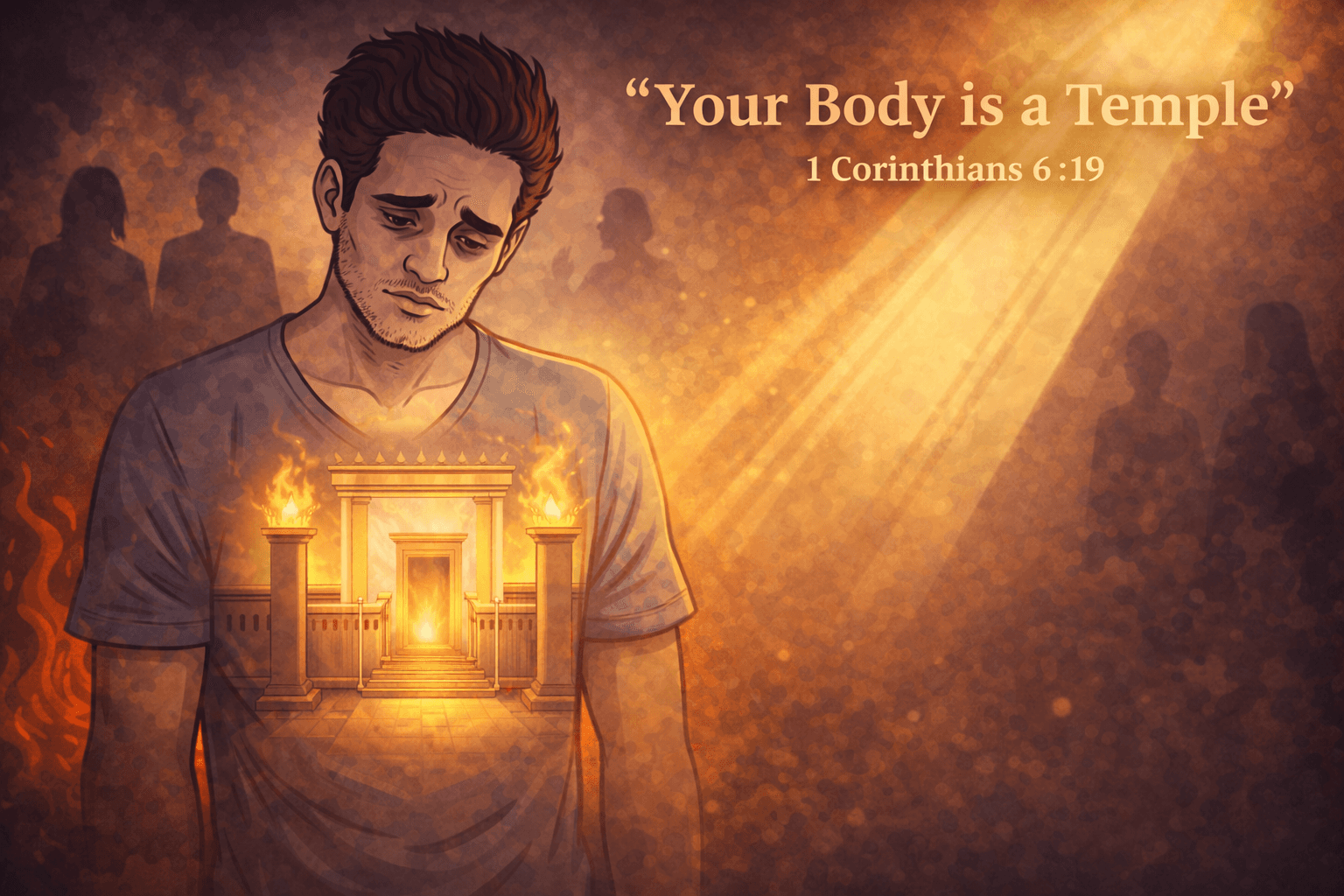
Our bodies are temples of the Holy Spirit. 1 Corinthians 6:18-20 is very clear: "Flee from sexual immorality.
All other sins a person commits are outside the body, but whoever sins sexually sins against their own body. Do you not know that your bodies are temples of the Holy Spirit, who is in you, whom you have received from God? You are not your own; you were bought at a price. Therefore, honor God with your bodies."
Masturbation is a sin not only because of its spiritual effect on our temples but also its physical effect.
Compulsive masturbation coupled with excessive pornography use can lead to porn-induced dysfunctions, which damage our bodies. For many, masturbation can make arousal during real sex more difficult and facilitate negative changes in mental health.
Our bodies belong to God and should be used to honor Him. Engaging in acts like masturbation undermines the purpose of our bodies and disrespects the sacredness that God has bestowed upon us.
Most people don’t realize how much changes after stopping masturbation. Here’s a full breakdown of the NoFap benefits timeline to learn more.
-
Masturbating Is Highly Habit-Forming
One other major consideration regarding masturbation is its ability to turn into a hard habit to break. Like any behavior that provides immediate pleasure, masturbation can lead to a cycle of dependency in our brains that hinders personal growth and healthy relationships.
God has repeatedly urged us as Christians to avoid becoming enslaved by any unholy thing that controls our lives. In 1 Corinthians 6:12, the apostle Paul writes, "’I have the right to do anything’ you say—but not everything is beneficial. ‘I have the right to do anything’—but I will not be mastered by anything."
By acknowledging the potential for addiction, we recognize the importance of seeking healthier ways to cope with our desires and emotions, aligning our lives with the biblical principle of self-control. Galatians 5:24-25 explains, "Those who belong to Christ Jesus have crucified the flesh with its passions and desires. Since we live by the Spirit, let us keep in step with the Spirit."
The Good News: We Can Be Forgiven
The Biblical perspective on masturbation is not meant to condemn or shame you, but to encourage reflection and spiritual growth. If you find yourself engaged in masturbation and are convicted by Biblical teachings, it is important to remember that Jesus offers forgiveness and a path to redemption.
God has promised us that there is a way out: in Christ.

1 Corinthians 10:13 reassures us, "No temptation has overtaken you except what is common to mankind. And God is faithful; he will not let you be tempted beyond what you can bear. But when you are tempted, he will also provide a way out so that you can endure it."
This verse emphasizes God's faithfulness in providing a way to resist the temptation to masturbate.
Resources to Help You Stop Masturbating
Repentance is the key, which involves acknowledging before God that our actions are sinful, seeking forgiveness, and striving to change our behavior.
1 John 1:9 explains, "If we confess our sins, he is faithful and just and will forgive us our sins and purify us from all unrighteousness." Through the grace and mercy of Jesus, we can find forgiveness, healing, and the strength to redirect our desires toward God's intended purpose for sexuality.
Seeking support from a community of believers, whether through counseling, accountability groups, or mentors, can be instrumental in the journey toward sexual purity.
Galatians 6:2 encourages us to "Carry each other's burdens, and in this way, you will fulfill the law of Christ." Together, we can provide support, encouragement, and accountability as we strive to live in accordance with God's principles.
If you’ve been doing your best to quit but still feel like you can’t quite kick the habit, Relay is the program for you. Relay is the #1 group-based recovery program, where you can be empowered to change sexual habits and addiction alongside other Christians.
Engineered by a team with more than thirty years of combined addiction recovery experience, Relay has been designed to help you finally learn how to beat even the most engrained of habits. Unlike other apps, this program is more than just a habit tracker.
Relay combines curriculum from highly specialized behavioral psychologists with the benefits of a group, and turns the data you report into powerful insights to help you change.

Conclusion
While social attitudes toward masturbation have shifted over time, our calling as Christians is to understand and live by God’s perspective on this topic as shown in the Bible.
The Bible confirms that masturbation is a sin due to its association with lust, selfishness, turning away from God, the potential for addiction, and its connection to pornography. Understanding these Biblical teachings provides an opportunity for self-reflection, growth, and aligning our lives with God's principles.
By seeking forgiveness in Jesus, embracing self-control, and striving for purity, we can honor God with our bodies and experience the joy and fulfillment that come from living in accordance with His design for sexuality.