

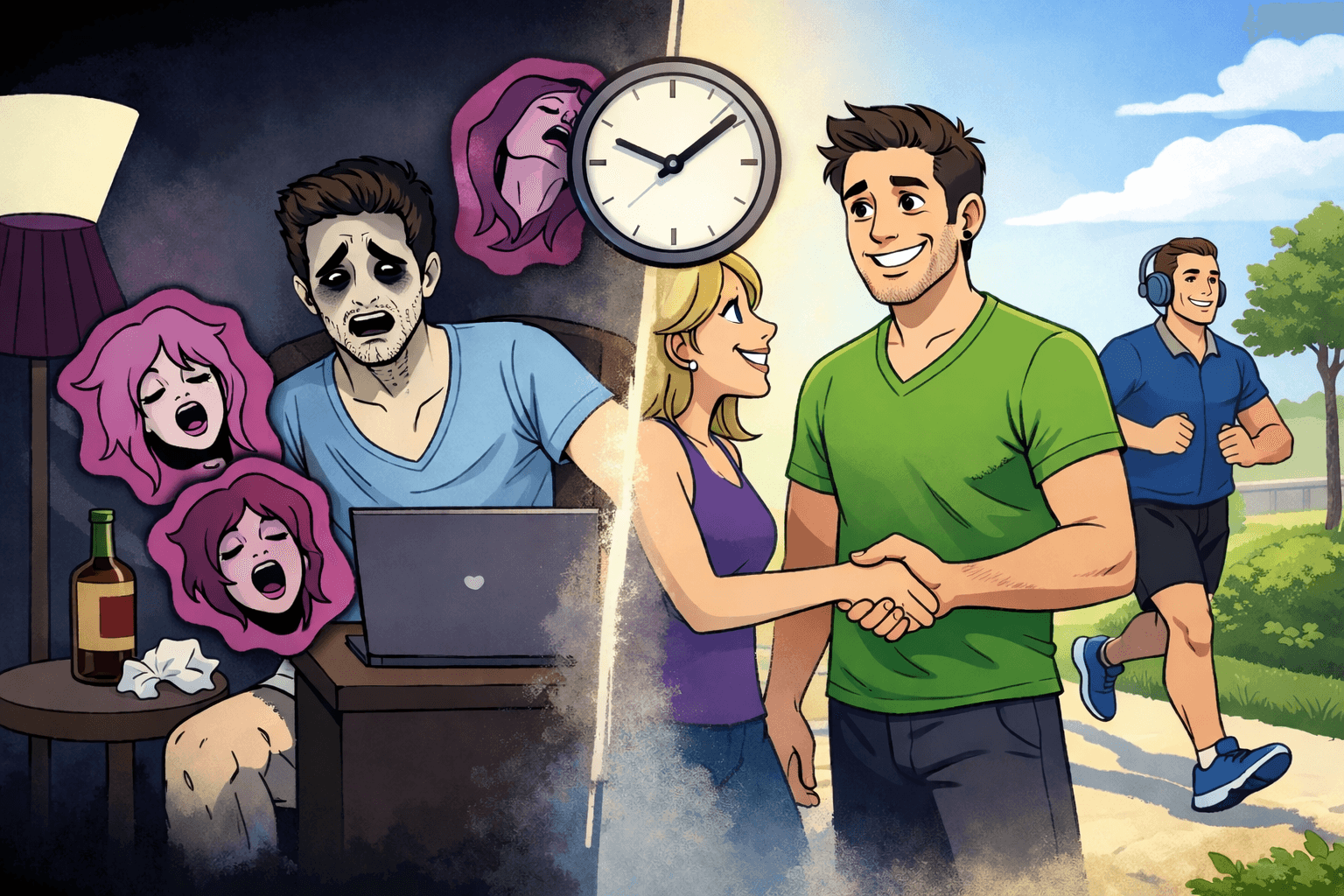
Quick Summary: Most people notice early improvements within 30–90 days. Deeper, more stable recovery typically takes 6–12 months or longer, depending on usage history, escalation, mental health, and support.
Porn addiction recovery timelines can widely from person to person for a variety of reasons. While general timelines can help set expectations, there is no universal recovery schedule that applies to everyone.
In his 30-Task Model and longitudinal research, sex addiction specialist Dr. Patrick Carnes describes recovery as a multi-year process, with significant quality-of-life improvements emerging after the first year and continuing over several years [1].
This variation is not random. It reflects differences in learning history, emotional regulation, mental health, and the role pornography played in someone’s life. Understanding why recovery differs helps prevent unnecessary discouragement and reduces the risk of relapse driven by unrealistic expectations.
Quick Porn Addiction Recovery Timeline (At a Glance)
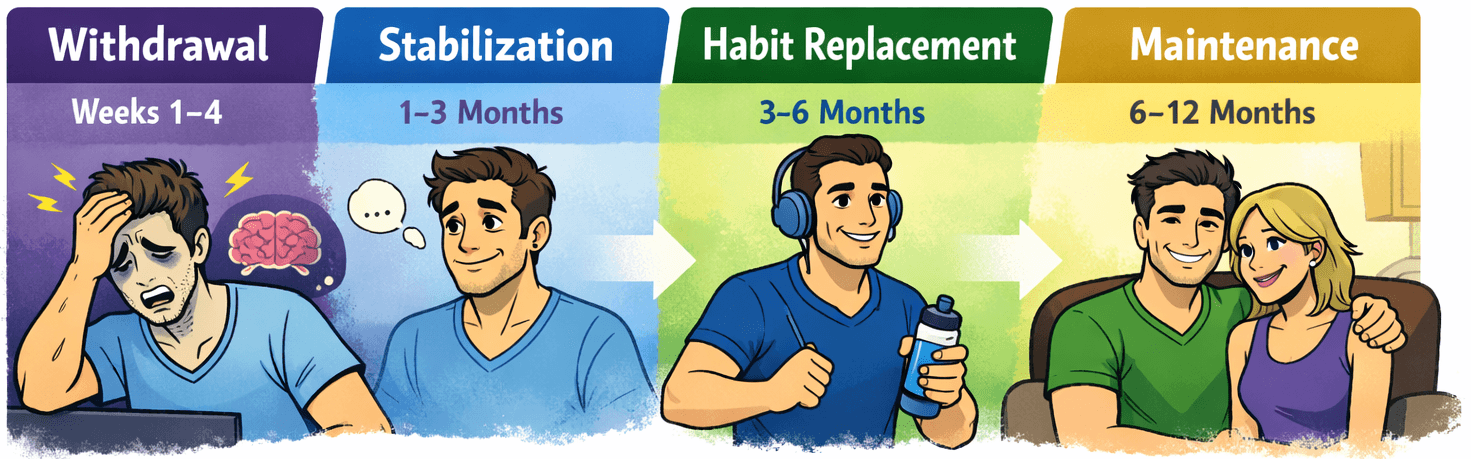
Timeframe | What Most People Experience |
First 2–4 weeks | Withdrawal symptoms, cravings, mood swings |
1–3 months | Better focus, emotional stability, fewer urges |
3–6 months | Stronger self-control, habit replacement |
6–12 months | Sustained behavior change, lower relapse risk |
1 year+ | Long-term maintenance and growth |
Why There Is No Universal Timeline
Porn addiction is a behavioral addiction, not a uniform medical condition with a fixed course of treatment [2]. The behavior develops over time through repetition, reinforcement, and emotional association—and it unwinds in the same way.
Recovery timelines vary because people differ in:
How often and how long they used porn
When the habit first formed
Whether porn functioned primarily as entertainment or emotional regulation
Their stress levels, mental health, and environment
The support systems they have in place
Two people can quit porn on the same day and have very different recovery experiences, even if their current habits look similar. This is why exact timelines—such as “90 days”—can be helpful benchmarks but unreliable predictors.
An In-Depth Look At Stages of Porn Addiction Recovery
A General Progression — Not a Fixed Schedule
Porn addiction recovery is often described in stages, but it’s important to understand what this means in practice.
The stages of recovery are really patterns of experience, not deadlines.
People move through them at different speeds, may revisit certain stages more than once, and may experience parts of multiple stages simultaneously.
The timeline below reflects common recovery patterns observed across clinical practice, peer support communities, and behavioral research. It is meant to help you set realistic expectations—not to measure success or failure.
Recovery is rarely linear. Progress often includes plateaus, brief setbacks, and periods of rapid improvement. That variability is normal and expected.
Stage 1: Withdrawal and Adjustment (Weeks 1–4)
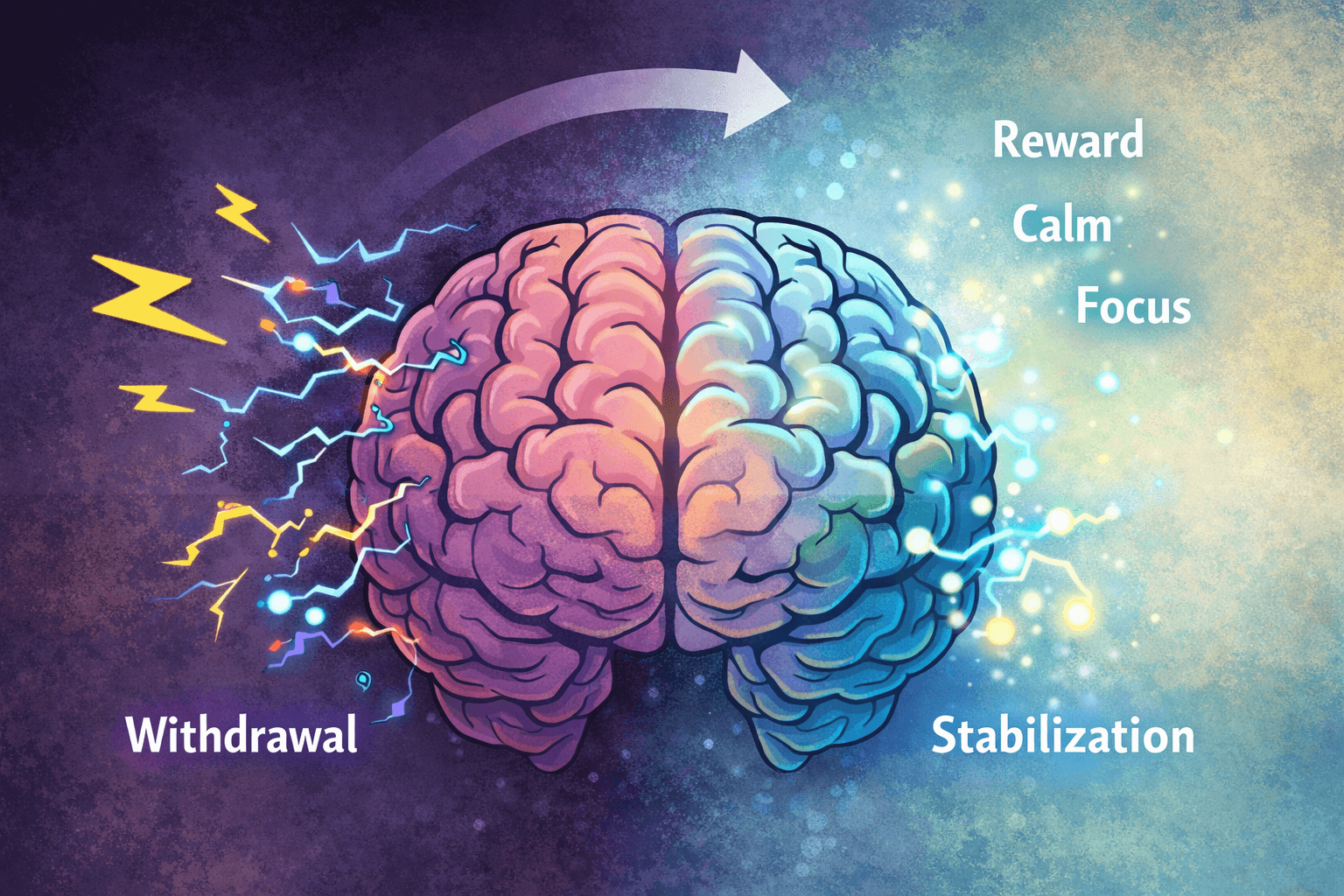
The first stage starts on day one of you quitting pornography. During this phase, your brain is adjusting to the absence of a familiar source of stimulation and emotional regulation.
Common experiences include:
Cravings or intrusive urges
Irritability or mood swings
Sleep disturbances
Anxiety, restlessness, or “brain fog”
Temporary emotional sensitivity
These symptoms can feel intense, especially if you used porn frequently or as a primary coping mechanism. It’s important to remember that these effects are temporary, even when they feel overwhelming in the moment.
This stage is not a sign that recovery is failing—it is evidence that the nervous system is recalibrating. For some people, this phase lasts days; for others, several weeks. Duration depends on factors such as the severity of use, stress levels, and mental health history.
Stage 2: Stabilization (1–3 Months)
As the nervous system adapts, many people begin to experience greater emotional stability. Urges often become less constant, and periods of mental clarity increase.
Common signs of stabilization include:
Improved emotional regulation
Reduced intensity and frequency of compulsive urges
Better focus and concentration
Early confidence in the ability to live without porn
This stage often brings cautious optimism. It’s also a time when people may underestimate the importance of continued structure and support. Feeling “better” does not always mean the habit has been fully replaced.
Some people reach this stage quickly; others cycle in and out of it as they build consistency. Both experiences are normal.
Stage 3: Habit Replacement and Emotional Repair (3–6 Months)
As porn use fades further into the background, recovery shifts from stopping a behavior to building a life that no longer needs it.
During this stage, many people focus on:
Developing healthier coping strategies for stress, boredom, or loneliness
Addressing underlying emotional or relational patterns
Rebuilding trust and connection in relationships
Strengthening routines that support long-term stability
This phase is often where deeper work happens. Emotional issues that were previously avoided may surface—not as setbacks, but as opportunities for lasting change.
Progress here can feel slower because improvements are less dramatic, but they are usually more durable.
This is also likely the point where you feel less temptation and urges around porn. Your new challenge will be to address the underlying causes that lead you to porn addiction in the first place.
Otherwise, you may find yourself relapsing or, just as dangerously, expressing your addiction through different self-destructive, addictive behaviors.
Stage 4: Long-Term Recovery and Maintenance (6–12 Months and Beyond)
Long-term recovery is less about resisting urges and more about aligning with identity and lifestyle. Porn is no longer central, even if occasional thoughts or triggers still arise.
Common characteristics of this stage include:
Lower relapse risk due to established habits
Sustainable routines that support mental and emotional health
Greater self-trust and confidence
A shift in identity away from “someone trying to quit porn”
This stage does not mean temptation disappears entirely.
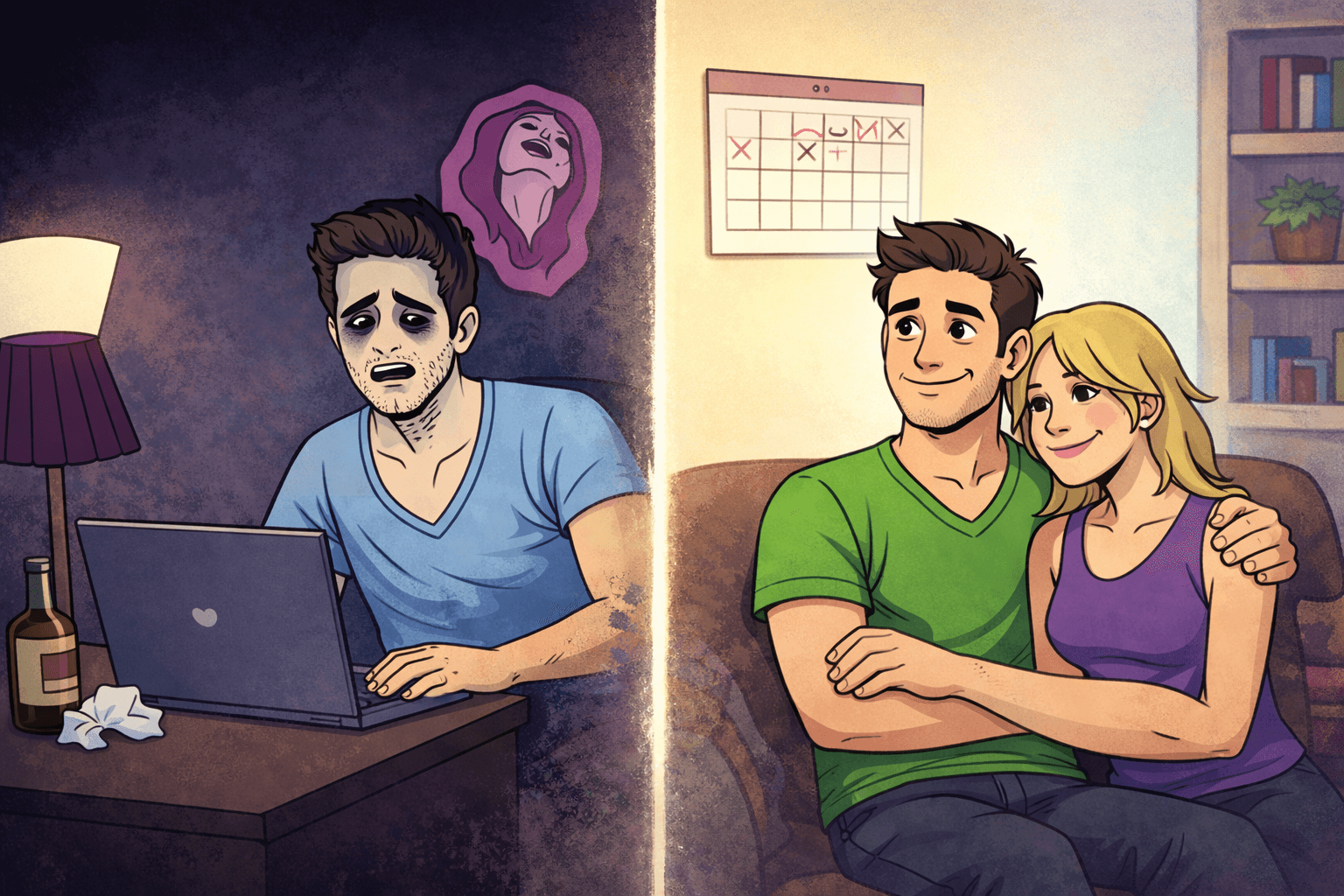
Instead, it means urges are no longer disruptive or controlling. Recovery becomes self-reinforcing rather than effort-intensive.
As long as you continue living a fulfilling life and continue to address any underlying traumas, you likely won’t be drawn to porn at all.
What the experts say about the porn addiction recovery timeline
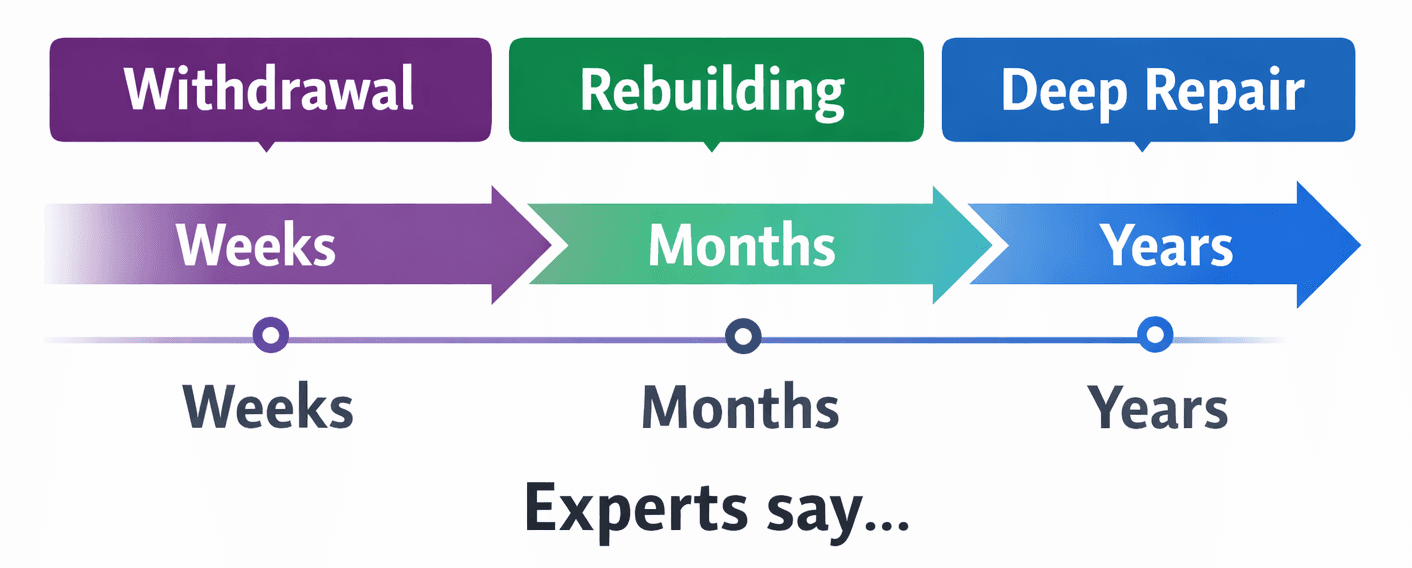
Different therapists, doctors, and experts in pornography addiction and compulsive sexual behavior have expressed different timelines and expectations.
“It is always interesting to hear my clients’ responses when I ask them if they are experiencing any withdrawals. Many of them overlook the symptoms of withdrawal, such as insomnia, irritability, jitters, itchy skin, or genital discomfort or pain. When asked about these symptoms, the pornography addicted person readily identifies with them. What is most challenging is that these withdrawal symptoms can last for two to eight weeks. [3]”
--Treating Pornography Addiction: The Essential Tools For Recovery, Dr. Kevin Skinner
“The following overview of a 5-year recovery process is based on changes in quality-of-life variables. First year, there was no measurable improvement, and yet most sexual addicts reported that life was ‘definitely better.’[4} In the second year, significant rebuilding began. There was measurable improvement occurring in many areas, including finances, ability to cope with stress, spirituality, self-image, career status, and friendships. In the third, fourth, and fifth years, once the personal base of recovery was established, healing occurred in the sexual addicts’ relationships. Often, dramatic improvement occurred in their relationships with children, parents, siblings, and partners…”
-Sexual Addiction And Compulsion: Recognition, Treatment & Recovery, Patrick J. Carnes, PhD
“You recover at the speed of your emotional safety, not your willpower. Most men will fall into one of these categories: Fast recovery in 2-6 weeks, moderate recovery in 6-12 weeks, or slow recovery, taking 6-12 months. [5]”
-Dr. Rishabh Bhola, “How Long Will It Take To Recover After Quitting Porn?”
As you can see, even the experts aren’t quite sure how long it should take to fully recover from porn, but there is a general guideline of expectation we can glean from their answers.
Those expectations allow us to set a reasonable timeline for most men to make noticeable progress. The key is fully understanding the different stages of porn addiction recovery, what they feel like, and why people have such varied times.
What recovering pornography addicts report in their personal porn recovery timeline

These reports are anecdotal and not medical advice, but they show consistent patterns across thousands of recovery attempts.
“When I was on about day 44 my d*** was dead and I still had a deep down craving for porn on some level, because my thoughts, if ever sexual (though I avoided allowing myself to fantasise or focus on the thoughts, they'd just tease, so I forced them to be fleeting), or when dreaming, were about porn girls. Not real sex or anything normal at that point - nothing real. Soon as that wet dream happened, my mind ejected the porn, my desire from the point was for real interaction with women and sex, my ED slowly but surely lifted, to the point where it got hard to handle! [8]“
-Jimmy_Bit_Nuts, r/NoFap, “How long did it take before you noticed signs of recovery?”
“60 days: signs of life 90 days: recovery of libido. [8]”
-nofappp, r/NoFap, “How long did it take before you noticed signs of recovery?”
“For me atleast it took like 8 months of actively avoiding porn. Still 2 months ago I had severe case of ED but it’s mostly gone by now, but to get to that it took months.”
-Silly Gal, Quora, “How long will it take for my brain to return to normal after I give up porn?”
What Factors Affect How Long Porn Recovery Takes?
A major reason that the recovery timeline varies is that everyone’s relationship with pornography is different. There are four factors that influence how long it will take you to get past pornography, and understanding them allows you to set your expectations.
When your expectations are informed, you won’t think you’re permanently broken if you’re aware of extenuating circumstances that affect the power of your addiction and how long it takes to break free of it.
Severity and Frequency of Porn Use
People who use porn daily or experience escalations in tastes usually require longer recovery timelines than those who watch occasionally, because repeated exposure strengthens habit loops and dopamine conditioning in the brain.
Like all things in life, the more you do it, the easier it gets to do it again. Unfortunately, nowhere is this more true than in the area of addiction—especially when it comes to pornography.
Daily vs. Occasional Use
From a behavioral and neurological standpoint, frequency matters because repetition reinforces learning. The same neurological mechanism that allows you to learn a new skill also works against you when it comes to assimilating new behaviors—for better or worse.
And, like new skills and behaviors, the better you get at them through repetition, the harder they are to forget or change.
Occasional use—sporadic viewing without rigid patterns or compulsion—tends to form weaker neural associations. When pornography use stops, cravings often decline faster because the connections and behavior patterns are weaker and need less time before they dissipate. Occasional users will feel victorious sooner, but that’s no reason to stop being diligent and disciplined.
Daily or near-daily use positions pornography as a primary coping mechanism for stress, boredom, or emotional discomfort. In these cases, recovery typically takes longer because the brain must relearn alternative ways to regulate mood and reward. A fact of life is that stress, boredom, and emotional discomfort are parts of life, no matter how fulfilling you make your life.
Once you understand that, you won’t feel discouraged if you follow every part of a recovery plan and still get urges. Don’t worry—you’re still making progress, but it may take a little longer to be evident because you have a stronger psychological and neurological dependence than an occasional user.
The differences in frequency of use are why some people notice improvements within 30–60 days, while others continue to experience urges or emotional instability for several months. The difference lies in exposure history—not effort or motivation.
Escalation Patterns
Escalation significantly affects recovery time. Clinically, escalation refers to the need for increased stimulation to achieve the same effect. In addiction parlance, escalation is building a tolerance. It’s “chasing the dragon.”
Common escalation patterns include:
Increasing frequency or session length
Seeking more novel, extreme, or stimulating content
Pairing porn with compulsive masturbation
Reduced satisfaction from real-life intimacy
When escalation is present—when you’re chasing the dragon—recovery often requires additional time because the brain’s reward threshold has been raised. Early recovery may involve a temporary period where pleasure feels muted or motivation feels low while the reward system recalibrates [6].
This phase is uncomfortable but expected and reversible as long as you stay committed to making the changes.
From a behavioral health perspective, longer recovery timelines reflect greater neurobehavioral adaptation—not permanent damage. The brain remains plastic throughout adulthood, meaning it can form healthier reward patterns when pornography use stops and is replaced with adaptive coping strategies.
A slower recovery does not mean you are broken. It means your brain is doing more unlearning—and that this process is both normal and achievable over time, with support and consistency.
Age of first exposure
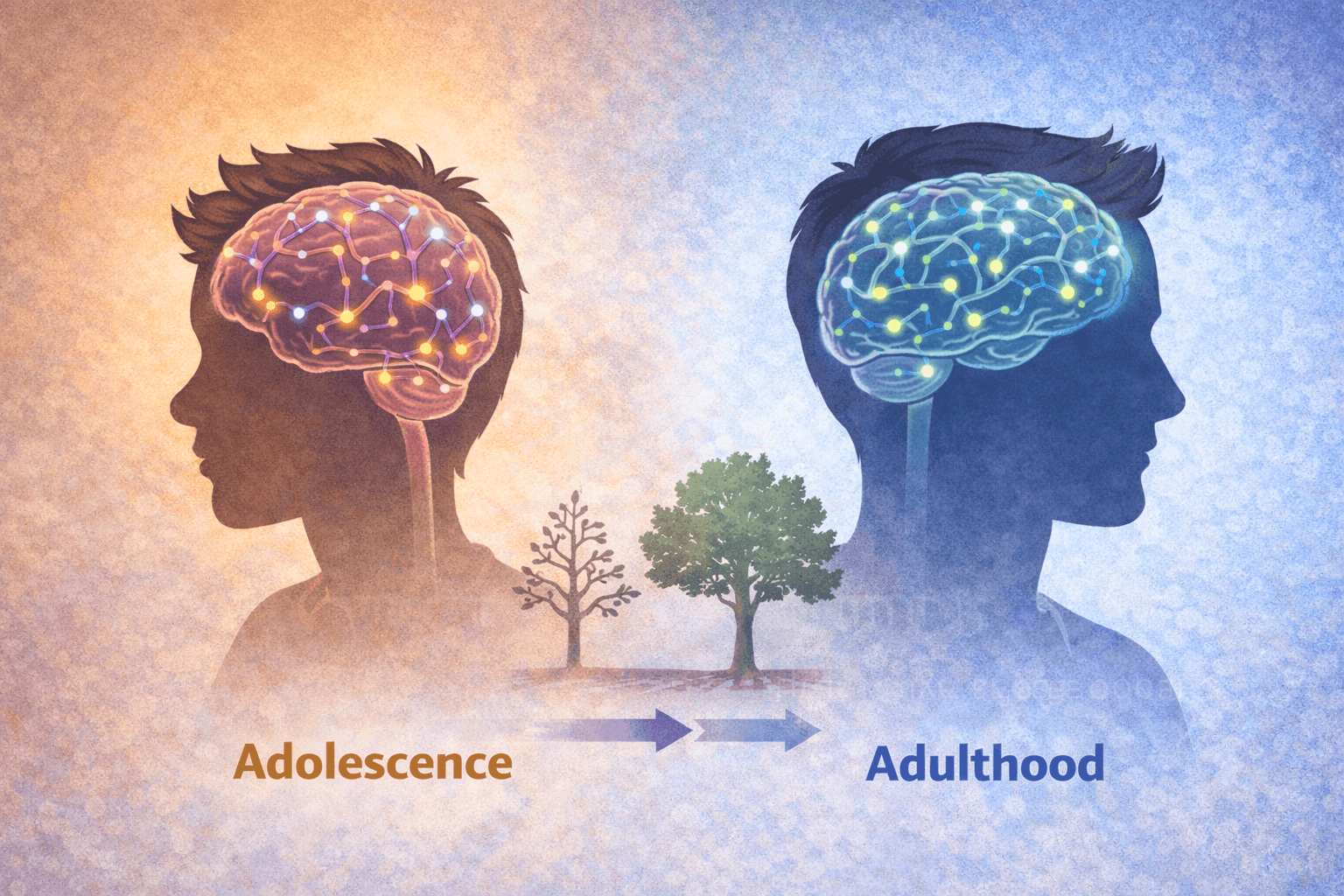
The age at which someone was first exposed to pornography can significantly influence how long recovery takes. This is because the brain develops differently during adolescence than it does in adulthood, and early exposure can shape long-term habits more deeply.
People who were exposed to pornography during adolescence often require longer recovery timelines than those first exposed in adulthood, because early exposure can shape habit formation during critical stages of brain development.
During adolescence, the brain is still developing—especially areas involved in impulse control, emotional regulation, and reward processing. The prefrontal cortex—the area of the brain that controls and regulates all of the aforementioned traits—doesn’t even finish developing until your late 20s.
When pornography is introduced during this developmental period, it can become integrated into how the brain learns to manage stress, curiosity, sexual arousal, and emotional discomfort.
An important, but not often discussed, consequence of brain development is that while brain formation is less complete in adolescents, a person is still fairly susceptible to pornography development well into their 20s. With that said, there are some key differences that can affect pornography recovery timelines.
Adolescent exposure. Porn may become part of foundational habit learning. Because these patterns form earlier, recovery often involves unlearning behaviors that not only have been reinforced for many years but that the brain has grown and developed with as part of its structure.
In our porn recovery course, Renewal: A Holistic System To Overcome Compulsive Sexual Behavior, Chris Chandler (LMHC, CSAT) uses the metaphor of drilling holes in a baby tree. These holes don’t destroy the tree or stunt its growth. Rather, the tree grows with holes as a distinct part of its structure, and we can see that effect over time.
This doesn’t make recovery impossible. Eventually, the holes in the tree fill in, but it takes time, and they leave behind signs that there were holes there. In other words, recovery takes more time, but it’s not impossible.Adult exposure. Adults generally have more established neural pathways and coping mechanisms. When problematic porn use begins later in life, it is often layered on top of existing habits rather than replacing them. As a result, recovery can sometimes happen more quickly once healthier strategies are in place.
This distinction helps explain why two people with similar current habits may experience very different recovery timelines. From a behavioral health perspective, early exposure doesn’t “damage” the brain—it teaches it earlier.
The longer a habit has been reinforced, the more repetitions the brain has logged, and the more practice it needs to replace that behavior with healthier alternatives.
Mental health and trauma
In his research, Patrick J. Carnes, Phd notes that “Patients with problematic sexual compulsivity seldom have just problem behavior, but rather show a variety of problem behaviors that often cluster together. [7]”
Mental health conditions and unresolved trauma are among the strongest factors influencing not only whether someone becomes addicted to pornography, but also how long porn addiction recovery takes. For many people, pornography is not the core problem—it is a coping strategy used to regulate other problems.
As Chandler Rogers, founder and CEO of Relay, says, “You don’t have a porn problem. You have a pain problem.”
When underlying mental health issues are present, recovery often takes longer because quitting porn removes a coping mechanism before healthier ones are fully established.
Anxiety, depression, and unresolved trauma can extend porn addiction recovery timelines because pornography is often used to self-regulate emotional pain rather than for sexual desire alone [7].
Access to support and accountability
Access to therapy, peer support, or structured recovery programs often shortens porn addiction recovery timelines by reducing isolation, improving emotional regulation, and increasing consistency during high-risk periods.
One of the most consistent findings across addiction and behavioral-change research is this: people recover faster and more sustainably when they are not doing it alone. Support and accountability don’t replace personal effort, but they dramatically reduce the risk of a relapse and shorten recovery timelines.
Porn addiction, in particular, thrives in isolation and feeds on loneliness. Support strikes at the heart of that isolation and provides motivation and structure during tough moments. Here are some different types of support that can shorten your recovery period and make it stick.
For many people, knowing that someone else is aware of their goals is enough to interrupt impulsive decisions during moments of vulnerability. A lot of guys hate admitting to other people that they couldn’t keep their word.
If that’s you, this type of support can make a huge difference in keeping you on track with your recovery and speeding it up.
Structured Porn Recovery Programs Like Relay
Structured recovery programs combine education, accountability, and behavioral tools into a consistent framework. These programs are especially helpful for people who struggle with repeated relapse despite strong motivation.
What structure adds to recovery:
Predictability during emotionally unstable periods
Clear guidance when decision-making feels compromised
Built-in accountability without relying on constant self-control
From a behavioral science standpoint, structure reduces cognitive load. Instead of constantly deciding how to recover, individuals can focus on following a proven process while new habits take root.
Structured programs are not required for recovery—but for many, they significantly shorten the learning curve and reduce the trial-and-error phase that can prolong recovery.
We’re a bit biased here, but we think Relay is one of the best options for a structured recovery program. You can read the review I wrote about it here and decide for yourself whether this is an option.
Can You Ever Fully Recover From Porn Addiction?
Yes—but recovery doesn’t mean you’ll never want to watch again.
In reality, full recovery means porn no longer controls your behavior, attention, or emotional regulation.
Even if you still occasionally get the urge to watch, you’ll have the discipline and growth to resist without using a significant amount of mental bandwidth.
Recovery Does Not Mean Zero Temptation
Human brains are pattern-recognition machines. If pornography was once paired with relief or stimulation, memories of that association may surface occasionally—especially during stress, fatigue, or emotional overload.
This is normal.
Recovery means:
Urges become weaker and less frequent
Urges pass without demanding action
Temptation no longer hijacks decision-making
In other words, temptation loses authority.
People who have fully recovered often report that urges feel more like background noise than commands, and many go weeks or months without thinking about porn at all, let alone even watching it.
Recovery Is About Management: You’re Stronger Than You Think
One of the most damaging myths is that people in recovery are fragile. Guys think they’re one stray thought away from total collapse
However, the reality is that a successful recovery makes you more resilient, not less.
Recovering from porn addiction usually causes you to develop:
Stronger emotional regulation
Better stress tolerance
Clearer boundaries
Faster recovery from slips, if they occur
All of this makes relapse less likely, not more.
It helps if you don’t think of recovery as requiring constant vigilance. Recovery is more about living a structured, meaningful life where porn no longer serves a purpose.
So What Does “Fully Recovered” Actually Look Like
Someone who has fully recovered typically experiences the following:
Long periods without urges
Little emotional charge when temptation appears
No sense of internal battle or obsession
Confidence in their ability to choose differently
Porn becomes irrelevant, not forbidden.
And when recovery reaches this point, it sustains itself—not through fear or restriction, but because the behavior no longer offers anything worth returning to.
You don’t recover from porn addiction by eliminating desire. That’s impossible.
You recover by outgrowing the role porn once played in your life. That’s far more realistic
When you do that, you will see that recovery isn’t this state of constant fragility and always being on guard. It’s strong, stable, and easily sustainable.
When to Seek Professional Help For Porn Addiction Recovery

Porn addiction recovery is something many people can manage on their own, but sometimes, you need more.
There are clear situations where professional help is not just helpful, but strongly recommended.
Seeking professional help is not a sign of weakness or failure; it just means that your particular situation needs extra attention and, to be honest, it takes a lot of self-awareness to admit that to yourself and a lot of strength to actually do something about it.
Here are the most important indicators that it’s time to seek outside, professional help.
Severe or Escalating Compulsive Use
Professional help is warranted when porn use feels out of control, not merely habitual. Warning signs include:
Daily or near-daily use despite repeated attempts to stop
Escalation to more extreme or risky content to achieve the same effect
Porn use is interfering with work, school, relationships, or sleep
Continuing to use even when consequences are severe or mounting
At this level, the issue is no longer just about motivation—it’s about deeply reinforced habit loops and emotional regulation patterns that typically require guided intervention.
When you want to stop watching pornography because you’re acutely aware of the damage it's causing, but you still can’t, then seeking professional help is one of the best things you can do.
Co-Occurring Mental Health Issues
Porn addiction rarely exists in isolation. Many people struggling with compulsive porn use are also dealing with underlying mental health challenges, such as:
Anxiety or panic disorders
Depression or persistent low mood
Trauma or post-traumatic stress symptoms
ADHD or impulse-control difficulties
When these conditions are present, quitting porn alone often isn’t enough.
Porn may be functioning as a coping mechanism for symptoms that still need treatment.
In these cases, working with a licensed therapist can dramatically improve outcomes by addressing both the addiction and its root drivers.
Repeated Relapse Despite Serious Effort
Relapse can happen during recovery—but repeated relapse despite consistent effort is a signal that something important is missing.
This often indicates:
Unidentified triggers
Insufficient coping tools
Lack of accountability or structure
Unprocessed emotional or psychological stressors
A trained professional can help identify blind spots, refine recovery strategies, and provide external accountability that is difficult to replicate alone.
When Safety, Mental Health, or Stability Are at Risk
Immediate professional support is essential if porn use is linked to:
Suicidal thoughts or self-harm
Severe emotional distress
Risky sexual behaviors
Loss of employment, housing, or relationships
In these situations, help should not be delayed.
Confidential Help Is Available Right Now
If you or someone you care about needs guidance, referrals, or immediate support, SAMHSA’s National Helpline offers a free, confidential, 24/7 service for mental health and substance-related concerns.
Call 1-800-662-HELP (4357) to be connected with treatment resources in your area [9].
You don’t need to “hit rock bottom” to reach out to a professional. Reaching out to a professional is how you keep from hitting rock bottom.
Professional support is appropriate whenever porn use feels overwhelming, unmanageable, or tied to deeper emotional pain.
Recovery is not about doing everything alone—it’s about using the right level of support at the right time to protect your health, stability, and future.
A Realistic Expectation for Recovery
Despite the apparent conflict between expert models and anecdotal reports, there is a pattern that helps set realistic expectations for recovery.
Pornography recovery appears to follow a logarithmic pattern. In the first few weeks or months, progress is rapid and quality of life improves dramatically. By 18–36 months, many people report feeling “about 90% recovered.”
The remaining years are not about eliminating constant urges, but about addressing deeper emotional, relational, and identity-level patterns that can only be worked on after early stability is achieved.
Patrick J. Carnes’ model becomes much clearer when viewed through this lens.
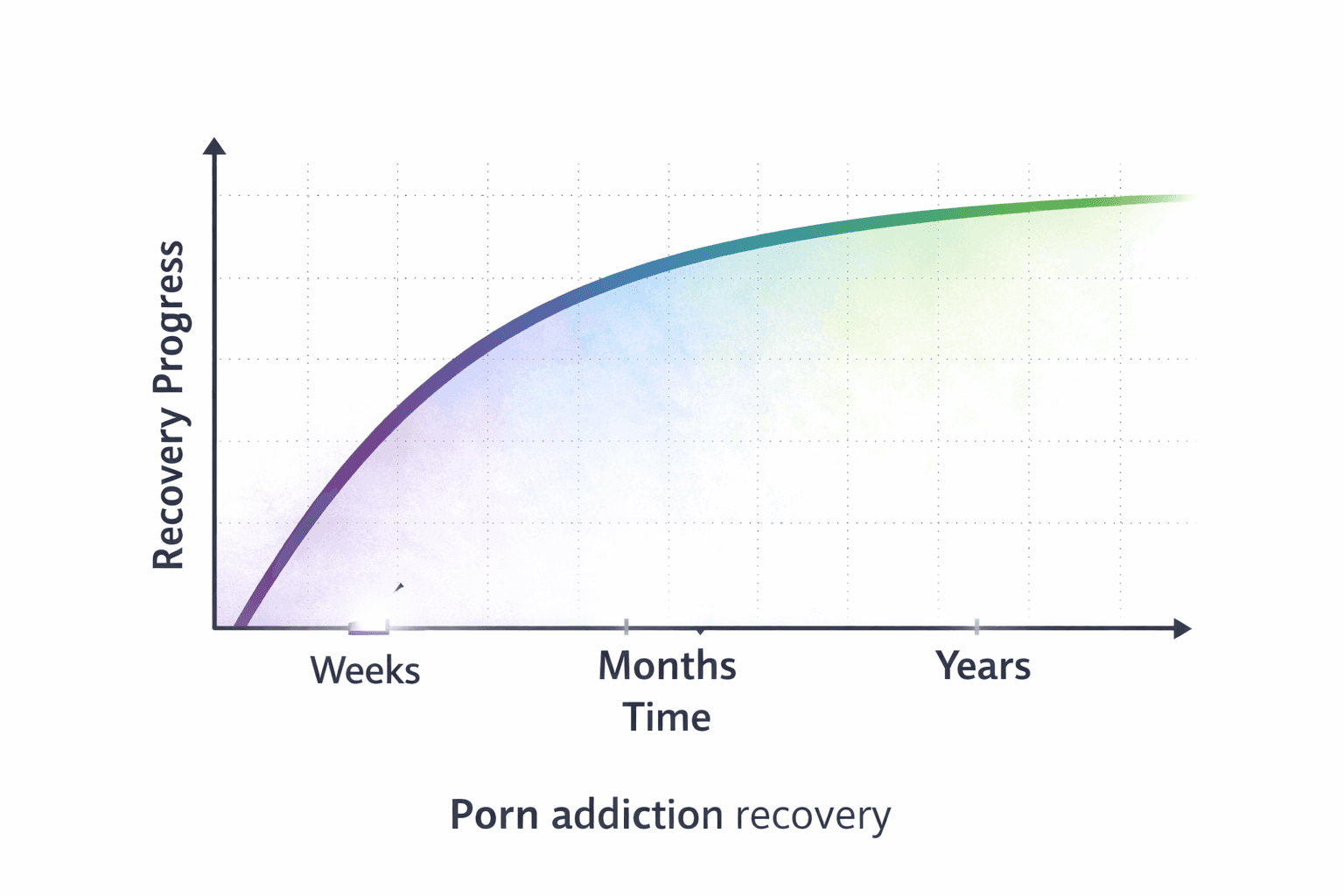
Porn addiction recovery isn’t a straight line, a stopwatch, or a universal deadline.
But it does follow a predictable pattern when expectations are realistic, and recovery is approached correctly.
The biggest mistake people make is assuming that time alone equals healing or that slow progress means something is wrong with them.
Here’s what most people can reasonably expect.
Occasional temptation may still exist, just as it does with any behavioral habit—but it no longer controls decision-making or identity. Porn is no longer a central force in life; it’s something you understand, manage, and move past.
Recovery isn’t about becoming “immune” to urges.
It’s about becoming capable of handling them.
References
Carnes PJ. Sexual Addiction and Compulsion: Recognition, Treatment, and Recovery. Hazelden Publishing; 2001.
American Psychiatric Association. Diagnostic and Statistical Manual of Mental Disorders (DSM-5). APA; 2013.
Skinner KB. Treating Pornography Addiction: The Essential Tools for Recovery. Growth Climate; 2014.
Bhola R. How Long Will It Take to Recover After Quitting Porn?
https://drbhola.com/how-long-will-it-take-to-recover-after-quitting-porn/Volkow ND, Koob GF, McLellan AT. Neurobiologic advances from the brain disease model of addiction. N Engl J Med. 2016;374:363-371.
Kühn S, Gallinat J. Brain structure and functional connectivity associated with pornography consumption. JAMA Psychiatry. 2014;71(7):827-834.
Carnes PJ, Hopkins TA, Green BA. Clinical relevance of proposed sexual addiction diagnostic criteria. J Sex Med. 2014;11(8):2013-2033.
Stringer J. Unwanted: How Sexual Brokenness Reveals Our Way to Healing. NavPress; 2018.
Reddit. r/NoFap user discussions on recovery timelines.
https://www.reddit.com/r/NoFap/Quora. User-reported experiences after quitting pornography.
https://www.quora.com/Substance Abuse and Mental Health Services Administration (SAMHSA). National Helpline.
https://www.samhsa.gov/find-help/national-helpline