

Key takeaways about porn addiction resources and support groups
-
Porn addiction support groups provide accountability, shared experience, and structured guidance to help break the cycle of compulsive use.
-
Recovery is more effective with support because addiction thrives in isolation and is reinforced by shame.
-
Popular options include 12-step groups like SAA and SLAA, faith-based programs like Celebrate Recovery, and secular approaches like SMART Recovery.
-
Modern platforms like Relay and Fortify offer structured, app-based support with real-time accountability and behavior tracking.
-
Support groups help normalize the experience by connecting you with others facing similar struggles.
-
Combining peer support with professional therapy often leads to better long-term outcomes.
-
The best support systems provide anonymity, structure, and consistent accountability.
-
Taking the first step—joining a group or reaching out for help—is often the most important action in recovery.
Frequently asked questions about porn addiction resources and support groups
What are the best resources for overcoming porn addiction?
The best resources for overcoming porn addiction include support groups, therapy, and structured recovery platforms that provide accountability and behavior-change tools.
These options include 12-step programs like Sex Addicts Anonymous and Sex and Love Addicts Anonymous, faith-based programs like Celebrate Recovery, secular approaches like SMART Recovery, and app-based platforms such as Relay and Fortify. Combining multiple forms of support often leads to stronger and more sustainable recovery outcomes.
Is a recovery group necessary?
A recovery group is not required, but it significantly increases your chances of quitting porn successfully. Porn addiction often thrives in isolation and is reinforced by shame, which makes it harder to break without external support. Recovery groups provide accountability, shared experience, and practical strategies that help you stay consistent and manage urges more effectively over time.
How do I stop watching porn?
To stop watching porn, you need to remove triggers, replace the habit, and build accountability into your daily routine. This involves limiting access to explicit content, avoiding high-risk situations, and developing healthier responses to stress or boredom. .
How long does it take to get over a porn addiction?
It typically takes several weeks to notice improvement and several months to achieve stable recovery from porn addiction. The exact timeline depends on factors like frequency of use, underlying habits, and the level of support you have.
What is porn addiction?
Porn addiction is a compulsive pattern of pornography use that continues despite negative effects on mental health, relationships, or daily functioning. It is often driven by changes in the brain’s reward system, making it difficult to stop without intentional behavior change, support, and structured intervention.
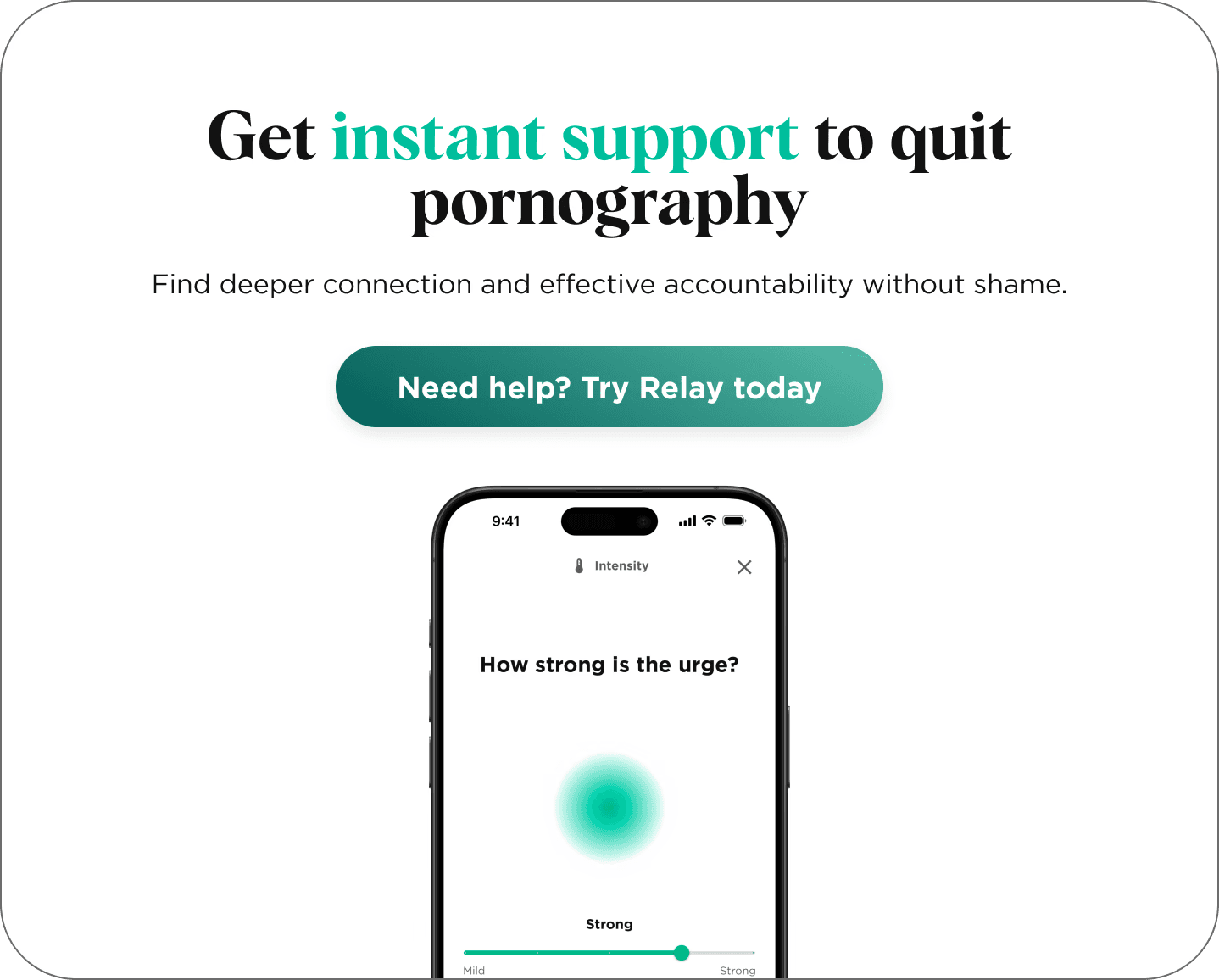
Relay is a therapist-backed group recovery program for pornography and unwanted sexual behavior, combining daily accountability, real-time urge support, and a private peer community.
The Best Porn Addiction Resources And Support Groups
Taking the first step toward overcoming a porn addiction often feels like walking out of a dark room into blinding sunlight. It is uncomfortable, disorienting, and heavy with the weight of secrets you’ve kept for years.
But that discomfort is actually the first sign of healing. If you are reading this, you have already recognized the signs of porn addiction and moved past the hardest hurdle: acknowledging that your digital habits no longer align with the person you want to be.
Recovery isn’t about willpower alone; it’s about rewiring the way you connect with yourself and the world. While the journey is personal, it was never meant to be solitary.
This guide will walk you through the most effective support networks to reduce pornography consumption, clinical treatment options, and immediate lifelines available to help you reclaim your life.
Understanding the Path to Recovery
Internet pornography addiction functions much like a chemical dependency. It hijacks the brain’s reward system, flooding it with dopamine until everyday joys feel muted and grey.
Over time, what started as a casual escape through viewing pornography becomes a compulsory loop that affects your relationships with a family member or loved ones, your productivity, and your overall well-being.
The path to addiction recovery is not a straight line, nor is it a quick fix. It is a process of "unlearning" the neuropathways that demand instant gratification. To navigate this, you need a map and a crew.
Support groups provide the map, showing you the pitfalls others have faced, while professional counseling provides the deep internal work necessary to address the root causes of the behavior.
Why Join a Support Group for Porn Addiction?
Many people try to quit watching porn "cold turkey" in the privacy of their own rooms. While noble, this approach often fails because it leaves the underlying architecture of the addiction intact. Support groups change the environment in which the addiction lives.
The Power of Shared Experience
There is a profound chemical shift that happens when you sit in a room—virtual or physical—with others who mirror your struggle. For years, you may have felt like an anomaly or a "broken" person.
Hearing someone else describe your exact thoughts and failures removes the "monster" status from your behavioral addiction. It turns a looming shadow into a manageable medical and psychological condition.
Breaking the Cycle of Isolation and Shame
Shame is the fuel that keeps addiction burning. It tells you that you are uniquely flawed, which drives you to hide, and that hiding leads back to the very behavior you’re trying to quit. Support groups act as a solvent for shame.
By bringing your secrets into the light of a supportive community, they lose their power over you. You stop being a "porn addict" in isolation and start being a person in recovery among peers.
The Best Support Groups for Porn Addiction
Different people require different frameworks. Whether you prefer a spiritual approach, a scientific one, or a peer-led community, there is a group designed for your specific needs.
Which Porn Addiction Resource Is Right for You?
-
Best for structure and long-term recovery: SAA / SLAA
-
Best for faith-based recovery: Celebrate Recovery
-
Best for real-time accountability and modern tools: Relay
-
Best for science-based, self-directed recovery: SMART Recovery
-
Best for younger users and app-based learning: Fortify
If you’ve tried quitting on your own and failed, you likely don’t need more information—you need real-time support and accountability, which is where platforms like Relay stand out.
1. Sex Addicts Anonymous (SAA)
Modelled after the traditional 12-step program of Alcoholics Anonymous, SAA is perhaps the most well-known resource. It operates on the principle that "sexual sobriety" regarding addictive behaviors is defined by the individual in consultation with their sponsor.
This flexibility allows members to define what healthy behavior looks like for them. It is a space of total anonymity where the only requirement for membership is a desire to stop compulsive sexual behavior and overcome sexual addiction.
2. Sex and Love Addicts Anonymous (SLAA)
While similar to SAA, SLAA places a heavier emphasis on the emotional underpinnings of addiction—specifically how the use of pornography or fantasy is used to bridge a "hole in the soul."
If you find that your porn use is deeply tied to a need for romantic validation or an escape from loneliness, SLAA’s focus on the intersection of love and sex can be incredibly illuminating.
3. Celebrate Recovery (CR)
For those who want to integrate their faith into their healing, Celebrate Recovery is a Christ-centered 12-step program. It addresses "hurts, habits, and hang-ups" of all kinds.
CR is widely available in churches across the globe and provides a massive, built-in community for those who find strength in biblical principles and communal worship.
4. Relay Health (Relay)
Relay is a modern, therapist-backed recovery platform designed specifically for people trying to quit pornography and regain control over their behavior.
Unlike traditional 12-step programs that rely on scheduled meetings, Relay provides real-time accountability and intervention, helping you manage urges the moment they happen—not hours or days later.
The platform combines daily check-ins, peer support, and structured behavior-change tools to interrupt patterns before they turn into a relapse. Instead of relying on willpower alone, Relay builds a system around you that makes consistency easier.
What sets Relay apart is its flexibility in approach. Users can choose a psychology-based track grounded in behavioral science, or a combined psychology + faith path that integrates spiritual principles into the recovery process.
This allows you to align your recovery with your personal beliefs while still benefiting from proven methods. The result is a system that doesn’t just teach recovery—it helps you practice it in real time, every day.
5. Fortify (Fight the New Drug)
Fortify is a modern, tech-forward platform designed specifically for the digital age. Unlike traditional 12-step meetings, Fortify uses a "brain-based" approach. It offers a structured curriculum, accountability software tracking tools, and community forums.
It is particularly popular among young adults and younger generations who want a science-backed understanding of how porn affects the brain and a community that communicates via apps and video.
6. SMART Recovery
If you prefer a secular, cognitive-behavioral approach, SMART Recovery (Self-Management and Recovery Training) is an excellent choice. It focuses on empowerment rather than admitting powerlessness.
Using tools like the "Cost-Benefit Analysis" and "Urge Log," SMART Recovery teaches you how to manage your thoughts and feelings through practical coping mechanisms and psychological techniques.
Professional Counseling and Clinical Resources
While support groups provide the community, professional therapy provides the surgery. Sometimes the addiction is a symptom of deeper trauma, anxiety, or depression that requires professional help a peer-led group isn't equipped to handle.
Research shows that combining peer support with professional therapy significantly improves long-term recovery outcomes compared to attempting recovery alone.
Seeking a Certified Sex Addiction Therapist (CSAT)
Not all therapists are trained to handle the nuances of sexual compulsivity. A Certified Sex Addiction Therapist (CSAT) has undergone rigorous training specifically in this field, a framework pioneered by Dr. Patrick Carnes.
They understand the cycle of betrayal trauma (if a partner is involved) and the specific neurological triggers of porn addiction. Working with a CSAT ensures you are getting clinical interventions based on the latest research.
Inpatient vs. Outpatient Programs
If your addiction has led to a total breakdown in your ability to function—loss of a job, divorce, or legal issues—an intensive program may be necessary. Inpatient programs provide a "digital detox" in a controlled environment for 30 to 90 days.
Outpatient programs allow you to remain at home while attending several hours of therapy and group sessions per week. These are high-accountability options for those who need a hard reset.
Immediate Help: Hotlines and Crisis Resources
Sometimes the urge feels like a physical weight, or the shame leads to thoughts of self-harm. In those moments, you don't need a meeting next Tuesday; you need a voice right now.
SAMHSA National Helpline
The Substance Abuse and Mental Health Services Administration (SAMHSA) offers a 24/7, 365-day-a-year treatment referral and information service. Call 1-800-662-HELP (4357). They can direct you to local clinics, support groups, and community-based organizations.
Crisis Text Line
If you aren't comfortable speaking over the phone, the Crisis Text Line is an invaluable resource. Text HOME to 741741 to connect with a crisis counselor. It’s free, confidential, and available 24/7 to help you navigate a moment of intense distress.
What to Look for in a Quality Support Network
Not every group is a perfect fit. When evaluating a community, look for these three pillars to ensure it’s a healthy environment for your growth.
Anonymity and Confidentiality
A quality group must feel like a sanctuary. You should feel certain that what you share stays within those walls. This safety is what allows for the radical honesty required to heal.
Structure and Accountability
A group that is just a "venting session" rarely leads to long-term change. Look for a network that has a clear path forward—whether that’s a 12-step curriculum or a set of cognitive goals. There should be a system where members check in on one another and hold each other to their commitments.
Inclusivity and Safety
The best groups are those where everyone—regardless of gender, orientation, or background—feels welcome. Avoid groups that use "shame-based" tactics or excessive judgment. Recovery should be built on the pursuit of a better life, not the fear of punishment.
How to Take the First Step Today
The hardest part of this journey is the five minutes before you enter your first meeting or make your first call. Your brain will try to convince you that you can handle it tomorrow or that your case isn't "bad enough" yet. Ignore those voices.
Today, your only job is to reach out. Pick one of the addiction resources from this list—whether it’s looking up a local SAA meeting or downloading the Fortify app—and engage with it.
You don't have to figure out the next ten years; you just have to manage the next ten minutes. You have lived in the cycle of addiction long enough. It’s time to see what life looks like on the other side of the door.
We're biased, but we think Relay is a great place to start.