

Key takeaways about finding out that your boyfriend watches porn
-
Finding out your boyfriend watches porn can hurt because it triggers feelings of insecurity, comparison, and broken trust.
-
Porn use is usually driven by habit, early exposure, or coping mechanisms, not a reflection of your attractiveness or worth.
-
The impact on the relationship depends more on secrecy, frequency, and effects on intimacy than the behavior alone.
-
Many people experience porn as a form of betrayal when it violates boundaries or involves dishonesty.
-
Conflict often comes from mismatched expectations about porn, intimacy, and relationship boundaries.
-
Healthy resolution requires understanding your feelings, defining boundaries, and having a calm, honest conversation.
-
Lasting change depends on behavior over time, not promises, especially if porn use has become habitual or compulsive.
-
You are not responsible for managing your partner’s behavior, but you are responsible for protecting your emotional well-being.
Frequently asked questions about your boyfriend watching porn
Why does it hurt when I find out my boyfriend watches porn?
It often hurts because it can trigger feelings of betrayal, insecurity, and comparison, especially if there was secrecy or unclear boundaries in the relationship.
Does it mean I’m not attractive enough?
No. In most cases, porn use is tied to habit, early exposure, or emotional coping—not your attractiveness or worth.
Is it normal for men in relationships to watch porn?
It is common, but that doesn’t mean it’s harmless. What matters is whether it affects trust, intimacy, or violates your relationship boundaries.
Is my boyfriend watching porn cheating?
It depends on your relationship boundaries. If it violates agreed expectations or involves secrecy, many people experience it as a form of betrayal.
What should I do if my boyfriend watches porn?
Take time to process your emotions, clarify your boundaries, have a calm conversation, and evaluate whether he is honest and willing to change if it affects you.
Relay is a therapist-backed group recovery program for pornography and unwanted sexual behavior, combining daily accountability, real-time urge support, and a private peer community.
I Found Out My Boyfriend Watches Porn — Why Does It Hurt So Much?
Women usually find out their boyfriend watches porn in one of three ways:
-
They catch him in the middle of watching.
-
He forgets to close an incognito tab or clear his history.
-
Or he admits it when he’s asked directly.
No matter how you discover it, the emotional fallout can be intense.
You might feel betrayed, even though it’s “just a screen.” You might feel like the trust is gone, especially if he denied it before. You might feel inadequate, comparing your body or sexual performance to the women you’ve seen. You might feel disgusted, confused, or suddenly unsure how you see him.
Some women also begin worrying about what porn use says about their partner’s values, boundaries, or perceptions—especially if the relationship is becoming more serious.
Whatever your reaction is, it’s not irrational or overdramatic. It’s a normal response to a situation that violates trust, intimacy, and self-worth.
Before we go any further, one thing needs to be made clear:
If your boyfriend watches porn, it is not because you aren’t attractive, desirable, or “good enough.”
And it is not your fault.
At the same time, that doesn’t mean porn can never become a real relationship issue, and it doesn’t mean that you’re obligated to be okay with it.
The goal of this article isn’t to tell you how to feel or what decision to make. It’s to help you understand what your boyfriend’s porn use might mean, when it’s a warning sign, and how to respond in a way that protects your self-respect and emotional safety.
If porn is affecting your relationship, read our full guide on dealing with porn in marriage.
What Does It Mean If Your Boyfriend Watches Porn?
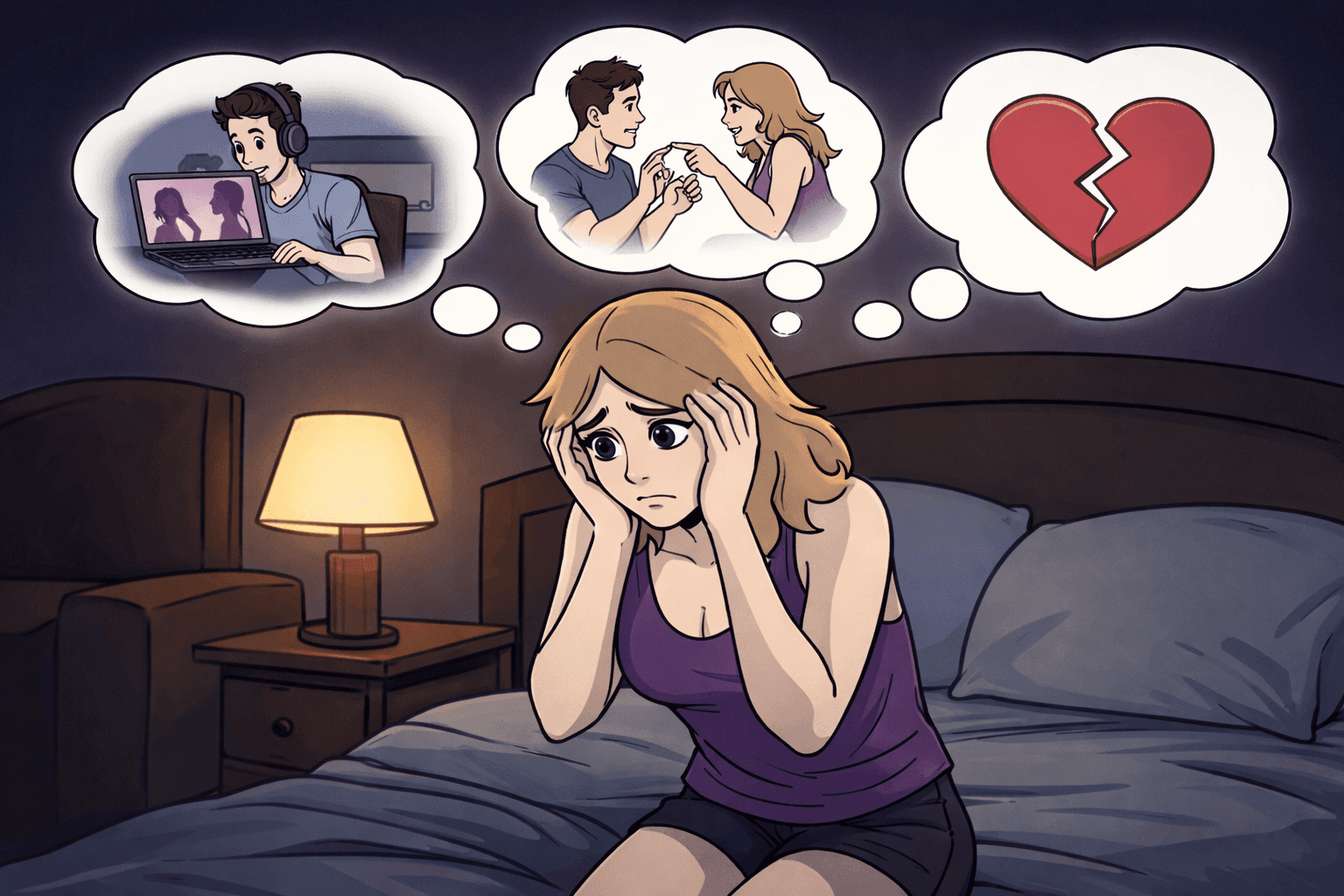
It can mean a few different things. And before we go any further, let’s clear something up.
If you just found out your boyfriend watches porn, it does not automatically mean he’s dangerous, deviant, or secretly fantasizing about things that would horrify you.
Most men who consume pornography are not seeking illegal or exploitative content. The internet can make everything feel extreme, but various data on male pornography use tells a different story.
Large-scale traffic analyses and academic surveys consistently show that most men who consume pornography view legal, mainstream adult content rather than illegal or exploitative material (Hald, 2006; Wright et al., 2013; Pornhub Insights, 2023).
That said, the fact that something is common doesn’t mean it’s harmless. A lot of unhealthy behaviors are common.
The majority of men have been exposed to pornography at a young age, often during their teenage years. For many, it became a private habit long before they entered an adult relationship.
Some continue that habit even while they’re committed to someone they love.
What it means in your relationship depends less on the fact that he watches porn — and more on how he watches it, why he watches it, and what it’s doing to the relationship.
Further reading: I found out my husband watches porn—what do i do?
A Long-Standing Habit
For some men, pornography use is simply a pattern that started early and was never interrupted.
National surveys and longitudinal studies show that many men are first exposed to pornography in early adolescence and continue using it into adulthood, often without significant interruption (Ybarra & Mitchell, 2005; Carroll et al., 2008; Wright et al., 2013).
It’s accessible. It’s private. It doesn’t require vulnerability or emotional connection. Over time, it can become a default way to cope with stress, boredom, loneliness, or anxiety.
Further reading: The negative effects of porn addiction
This doesn’t automatically mean he prefers porn to you. It doesn’t automatically mean he isn’t attracted to you. It may mean he developed a coping mechanism years before he met you and never examined it.
However, even if it began as a habit, that doesn’t mean it can’t grow into something more compulsive if left unaddressed.
A Secrecy and Intimacy Issue
In some relationships, the larger issue isn’t pornography itself — it’s secrecy.
If he hides it, lies about it, or becomes defensive when you bring it up, the problem shifts from private behavior to broken trust. Secrecy erodes intimacy.
Sometimes men rationalize porn use by telling themselves it’s “better than cheating” because it doesn’t involve another real person. In their mind, it feels like the lesser of two evils.
But if it violates an agreement in your relationship, or if he knows it deeply hurts you and continues anyway, the issue becomes one of integrity, not just habit. That’s where boundaries matter.
Compulsive or Escalating Use
For some men, pornography use becomes difficult to control.
Warning signs might include increasing frequency, escalating into more extreme content over time, repeated failed attempts to stop, choosing porn over sex with you, irritability when questioned, or using porn as a primary way to cope with emotional distress.
When porn starts replacing intimacy, interfering with responsibilities, or feeling impossible to stop, that suggests loss of control — not just preference.
That’s no longer casual use. That’s a behavior that may require outside support.
Popular Recovery Guides
A Clear Line
There is one category that is not negotiable.
If you discover illegal or exploitative content — particularly involving minors — this is not simply a relationship issue. That is a safety and legal issue. In those cases, you remove yourself immediately and seek appropriate help.
That situation is rare, but it’s important to be clear about it.
Most of the time, though, the situation falls into one of the first three patterns. Figuring out which one you’re dealing with is the first step toward deciding what to do next.
The real question isn’t just “Why does he watch porn?” It’s whether he’s honest about it, whether it’s replacing intimacy, whether it’s escalating, and whether he’s willing to address it if it’s hurting you. Those answers will tell you far more than the existence of porn itself.
Does This Mean I’m Not Good Enough?
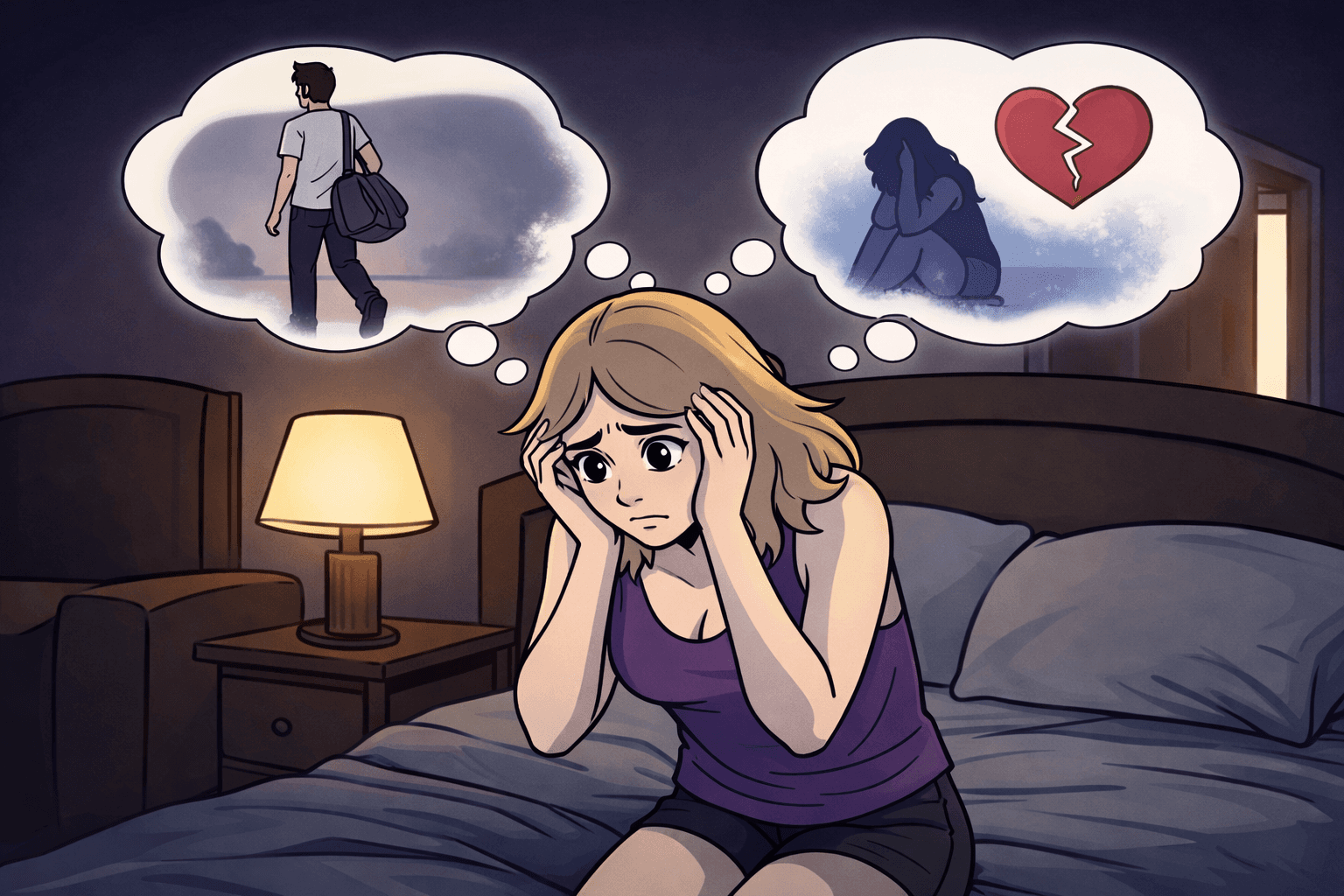
This is usually the first fear that shows up.
You see the women on the screen. You notice how they look. You notice what they’re doing. And before you even have time to think, your brain fills in the blank:
“If I were more attractive… more adventurous… more confident… he wouldn’t need this.”
That conclusion feels logical in the moment. But in most cases, it’s not accurate.
Pornography use is far more often about habit, novelty, or emotional coping than it is about dissatisfaction with a partner. Many men who watch porn are also genuinely attracted to and in love with the person they’re with.
The behavior typically started years before the relationship began and continues because it became routine — not because you’re lacking.
That doesn’t mean it can’t hurt you. It doesn’t mean your feelings are irrational. It doesn’t mean you have to accept it.
But it does mean this: his porn use is not a measurement of your beauty, your worth, or your sexual adequacy.
If anything, the deeper issue to examine isn’t “Am I enough?” It’s:
-
Is he honest?
-
Is it affecting intimacy?
-
Is he willing to address it if it hurts you?
Those questions are far more revealing than comparison ever will be.
Is It Normal for Men in Relationships to Watch Porn?
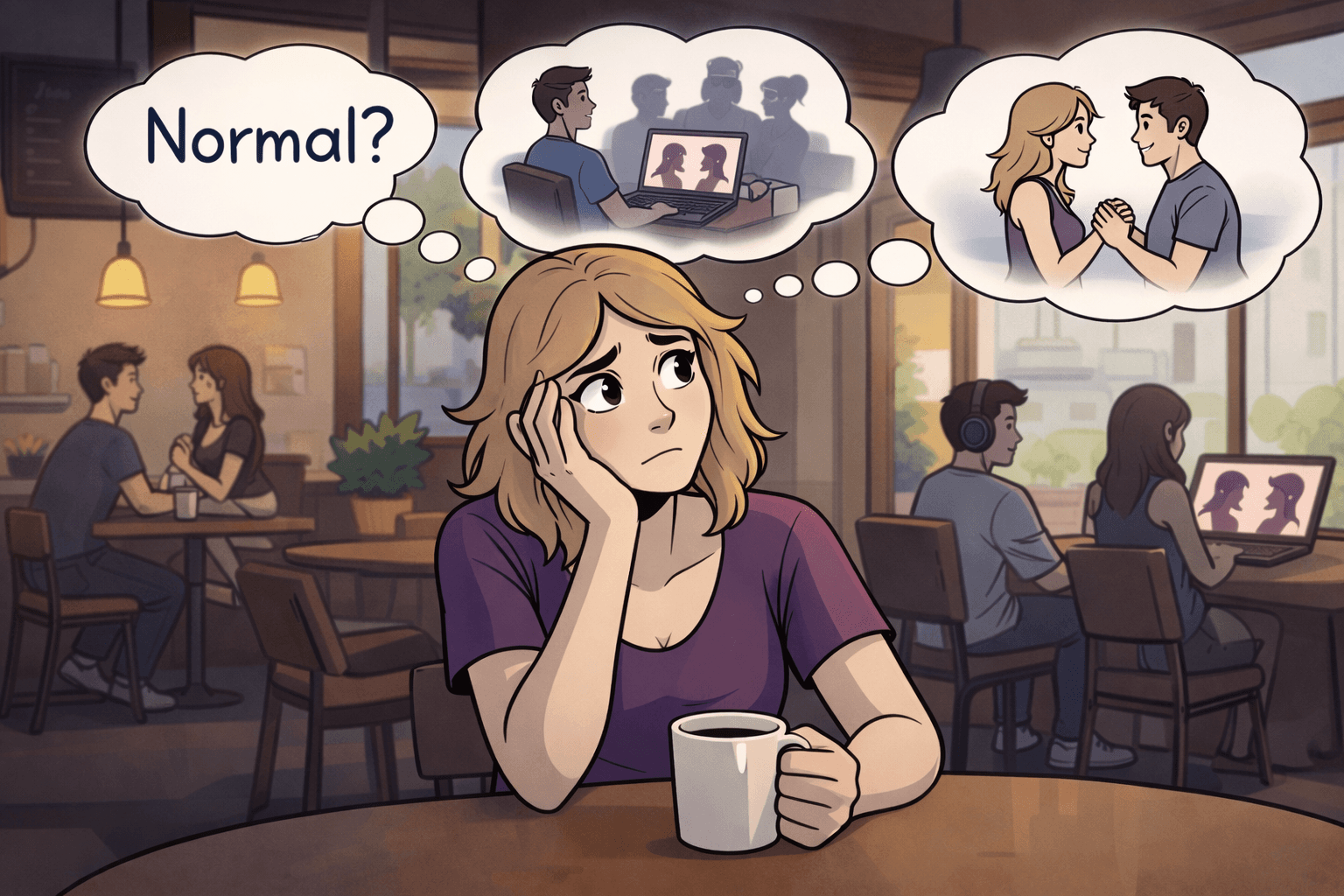
It’s common.
A large percentage of men are exposed to pornography during their teenage years, and many continue watching into adulthood — including while in relationships. The accessibility of online porn has made it a routine part of many men’s sexual development.
But common and normal are not the same thing.
Some couples agree that occasional porn use isn’t a major issue in their relationship. Others consider it a boundary violation. Neither reaction makes someone insecure or controlling. It simply reflects different values and expectations around exclusivity and intimacy.
The more important question isn’t whether it’s “normal.” It’s whether it’s affecting your relationship.
If porn is:
-
Secretive
-
Replacing intimacy
-
Escalating in intensity or frequency
-
Creating emotional distance
-
Violating agreed-upon boundaries
Then it’s not just a private habit anymore. It’s a relationship issue.
On the other hand, if it’s occasional, honest, and not interfering with closeness, the conversation may be more about expectations than dysfunction.
“Normal” doesn’t decide what you should tolerate. The health of the relationship does.
Is Watching Porn Cheating?
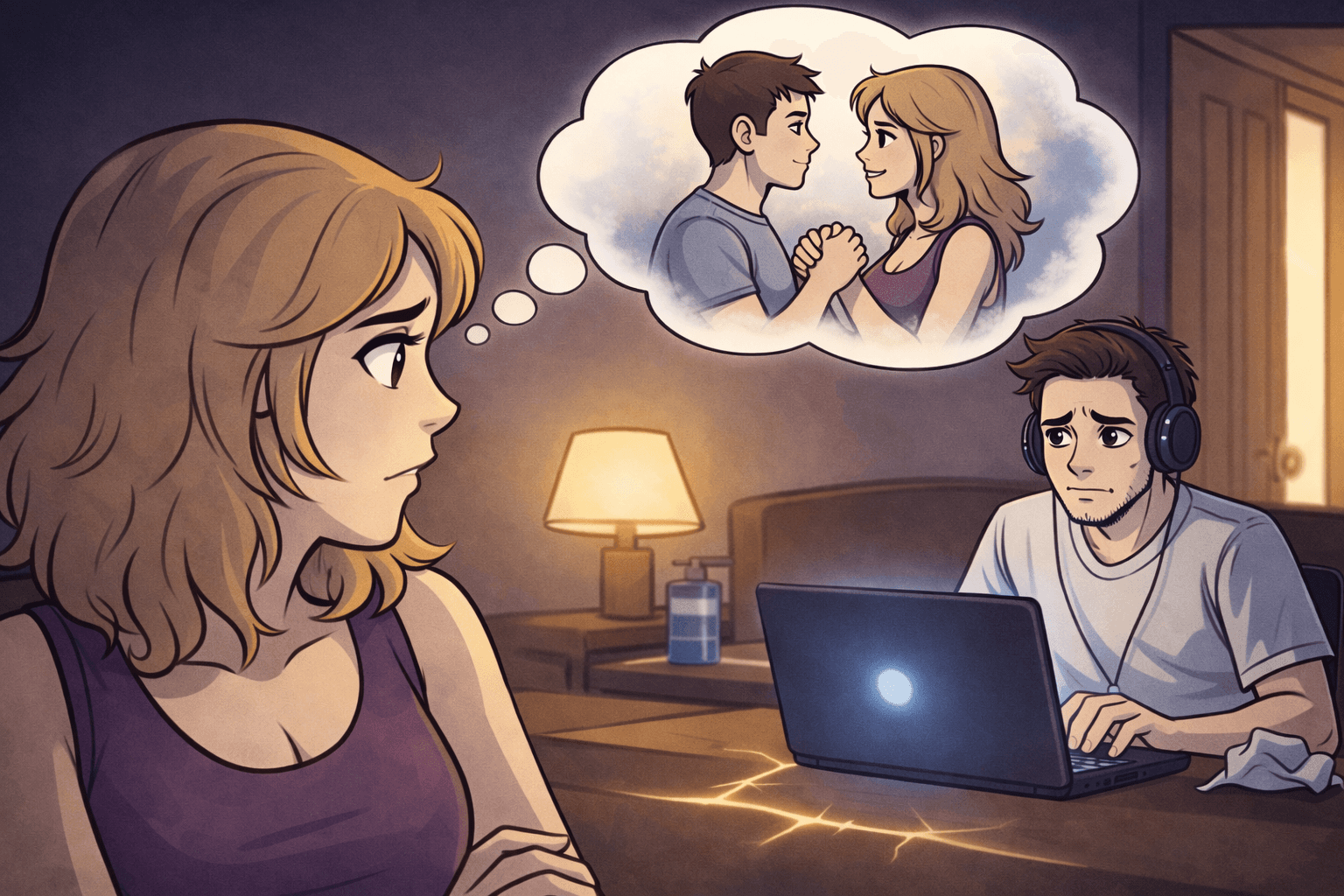
Whether porn counts as cheating depends on how you define cheating.
For some couples, cheating means physical contact. For others, it means emotional intimacy.
For others, it means directing sexual energy outside the relationship in any deliberate way.
Instead of jumping straight to labels, let’s try a thought experiment.
Imagine your boyfriend subscribes to a private online account where he pays one specific woman to send him personalized sexual videos. He messages her. She responds using his name. He masturbates while watching her content.
There’s no physical contact. They’ve never met. It’s “just online.”
Would that feel like cheating?
For most people, the answer is yes — even though nothing physical happened.
Now take one step back.
Remove the direct messaging. Remove the personalization. Now he’s watching pre-recorded sexual content from a woman he doesn’t know. He’s still intentionally seeking sexual stimulation from someone who isn’t you.
Has the distance changed the nature of the act — or just made it easier to justify?
This is where couples start to disagree.
Some argue that porn is simply fantasy — no different than noticing an attractive actor in a movie. Others argue that intentionally seeking sexual arousal from another person, even digitally, crosses the boundary of exclusivity.
The core issue isn’t proximity or medium of interaction. It’s the intent behind the actions.
Further reading: Is jerking off cheating?
Cheating, in most relationships, isn’t defined by geography. It’s defined by whether someone is directing romantic or sexual energy outside agreed-upon boundaries.
For some couples, porn violates that boundary. For others, it doesn’t — as long as it’s honest and not replacing intimacy.
The real question isn’t “Is porn universally cheating?”
The better question is:
Did the two of you agree — explicitly or implicitly — that sexual energy would stay between you?
If the answer is yes, and porn breaks that agreement, then it will feel like cheating — because in your relationship, it is.
If there was no discussion and no clear boundary, then the issue may not be betrayal — it may be misalignment.
Either way, the solution isn’t winning a philosophical debate.
It’s defining what exclusivity means in your relationship and deciding whether you're both willing to honor it.
What Should I Do If My Boyfriend Watches Porn?
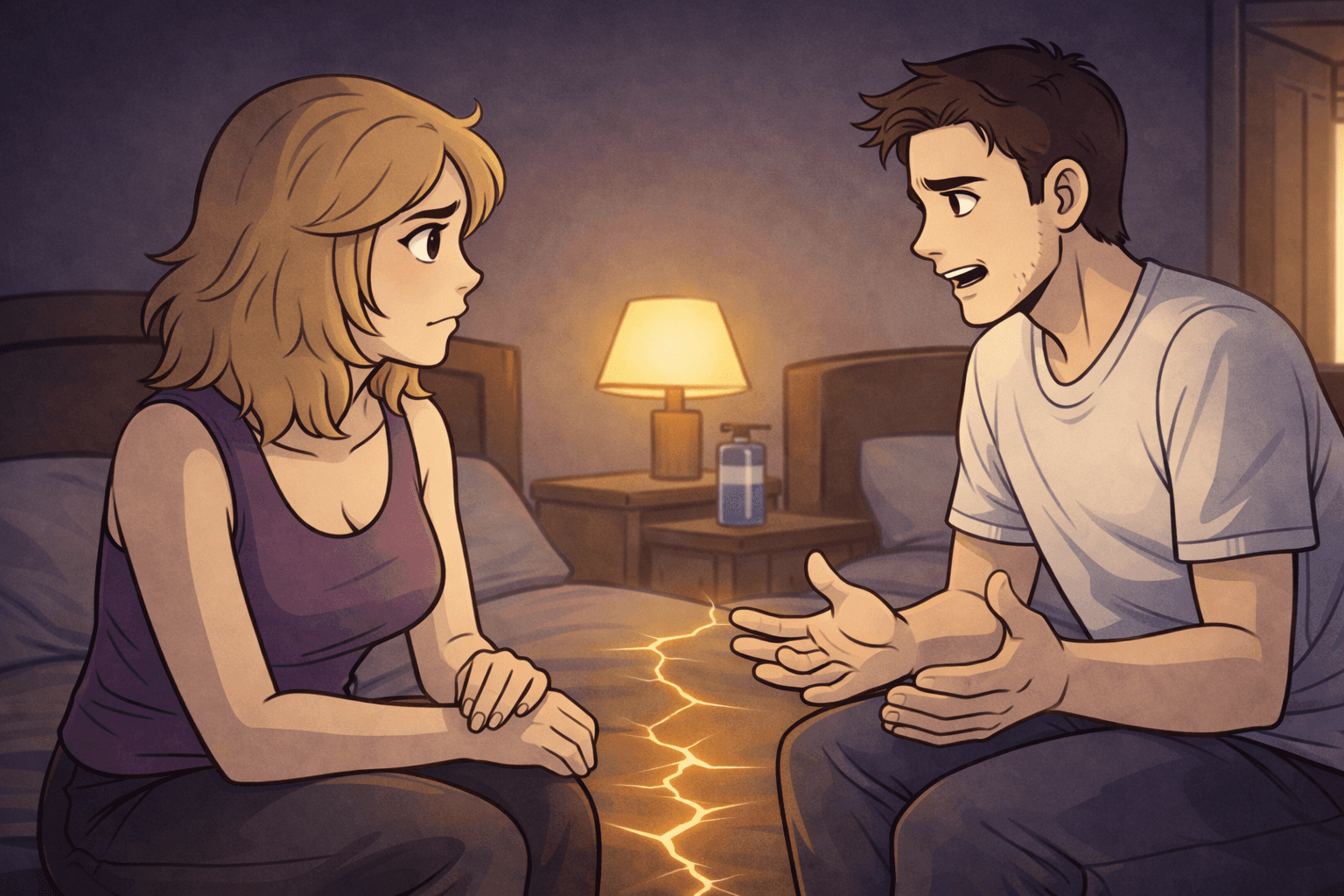
Once the shock settles, most women land on the same question: What do I actually do now?
There isn’t a single correct answer. But there are wise next steps.
1. Don’t react in the heat of the moment
Discovery can trigger emotions such as anger, disgust, insecurity, and fear. Acting from that reaction rarely leads to clarity.
You don’t need to decide the future of your relationship in the same hour you found out. Give yourself space to think. Journal. Talk to someone grounded and trustworthy. Separate your feelings from your decisions.
You’re allowed to feel everything. Just don’t let the first wave make permanent choices for you.
2. Get clear on your own boundaries
Before you confront him, clarify this for yourself:
-
Is porn a dealbreaker for me?
-
Is occasional use different from compulsive use?
-
Is secrecy the bigger issue?
-
What would rebuilding trust require?
If you don’t know your boundaries, the conversation will drift. If you do know them, you’ll speak from clarity rather than panic.
Boundaries are not threats. They’re standards for what you’re willing to participate in.
3. Have the conversation — calmly and directly
When you do talk to him, focus less on accusation and more on understanding.
You’re trying to answer questions like:
-
Is he defensive or honest?
-
Does he minimize your feelings?
-
Does he recognize any negative impact?
-
Is he willing to make changes if this hurts you?
His response will tell you more than the porn itself.
Some men will acknowledge the issue and want to address it. Others will rationalize, dismiss, or flip the blame back onto you. That difference matters more than the act of watching porn itself.
4. Only talk about how it makes you feel
Start the conversation by sharing your feelings and concerns using "I" statements.
This approach allows you to express your emotions without sounding accusatory.
For example, it is much more helpful to say: “when I think about you watching porn, it makes me feel insecure because I compare my body and my sexual performance to the women/men in the videos, and I feel like I don’t measure up,” instead of saying, “you make me so mad when you watch porn.”
Remember that this is about how it makes you feel, not about attacking him or passing judgment.
5. Even if you decide to leave, practice active listening
Pay close attention to what your boyfriend shares during the conversation. Practice active listening by paraphrasing and validating his feelings (like saying, ”so, it sounds like you’ve been watching porn because you feel a lot of pressure from work, and it helps you relax. Is that right?”), and by being vocal about your own feelings and opinions.
If you decide to stay with him, it will help foster trust and encourage open communication.
If you decide to leave, this allows you to better understand what type of guy might have an issue with pornography, so you can avoid it in the future.
6. Watch for patterns, not promises
Anyone can say, “I’ll stop.”
The real indicator is behavior over time.
If he agrees it’s a problem, ask:
-
What is your plan?
-
Who are you accountable to?
-
What happens if you slip?
Lasting change rarely happens through willpower alone. It usually requires structure, support, and transparency.
If he refuses any outside help and expects you to carry the emotional burden alone, that’s important information.
Further reading: Can you quit porn cold turkey?
7. Decide what you’re willing to live with
This is the part no one can answer for you.
Some women decide they can accept limited, honest use.
Some decide they cannot. Some stay and work through recovery together. Some leave because trust has been too deeply damaged.
You’re not weak for staying, and you’re not dramatic for leaving.
The question is not what other women tolerate. That doesn’t matter because their life and relationship are their business. All that matters is how you feel about it.
The question is what aligns with your values and your emotional safety.
8. Don’t make ultimatums
While it's important to set boundaries, it's crucial to avoid issuing ultimatums during the initial conversation.
Ultimatums—like telling your boyfriend he has to quit watching porn by next week or you’ll dump him—can escalate tensions and don’t contribute to the safe emotional space you want to create for these kinds of challenging conversations.
Also, you’re only setting yourself up for disappointment. What if he chooses porn over you? What if he tells you that he’ll stop, but then you catch him again?
Now you feel even worse because he lied to you again.
9. If he wants to stop, support him the right way
If he genuinely wants to quit, understand this: you cannot be his therapist, accountability partner, and girlfriend all at once.
Recovery works best when it includes:
-
Structured accountability
-
Peer or professional support
-
Ongoing honesty
Your role is to decide whether you’re willing to walk alongside him, not to manage his recovery for him.
Further reading: How to help a porn addict
If porn use has become compulsive or difficult to control, structured recovery support significantly increases the likelihood of real change. Trying to white-knuckle it alone rarely works in the long term.
Finding out your boyfriend watches porn forces you into a difficult position. But it also gives you information about his habits, his honesty, and your own boundaries.
What you do next should come from clarity — not fear, not comparison, and not pressure to accept something that violates your standards.
You deserve a relationship where intimacy feels safe, mutual, and respected.
If He Wants Help, There Is a Way Forward
If your boyfriend or husband recognizes that his porn use has become a problem, and he genuinely wants to stop, real change is possible.
But change rarely happens through promises alone.
It usually requires structure. Accountability. And support outside the relationship, so you aren’t carrying the emotional weight of his recovery by yourself.
Relay was built specifically for men who want to quit porn in a practical, structured way. It provides guided recovery tools and peer accountability so that progress doesn’t depend on willpower alone.
If you decide to stay and work through this together, encourage him to seek support that protects both of you — not just his behavior, but your trust and emotional safety as well.
You shouldn’t have to become his therapist in order to save your relationship.
If he’s ready to take responsibility, there are tools that can help him do exactly that.
📚 References
Hald, G. M. (2006). Gender differences in pornography consumption among young heterosexual Danish adults. Archives of Sexual Behavior, 35(5), 577–585. https://doi.org/10.1007/s10508-006-9064-0
Wright, P. J., Bae, S., & Funk, M. (2013). United States adults’ pornography consumption and attitudes toward pornography. The Journal of Sex Research, 50(1), 60–71. https://doi.org/10.1080/00224499.2011.628132
Pornhub Insights. (2023). Year in Review 2023. Pornhub. https://www.pornhub.com/insights/2023-year-in-review
Ybarra, M. L., & Mitchell, K. J. (2005). Exposure to Internet pornography among children and adolescents: A national survey. CyberPsychology & Behavior, 8(5), 473–486. https://doi.org/10.1089/cpb.2005.8.473
Carroll, J. S., Padilla-Walker, L. M., Nelson, L. J., Olson, C. D., Barry, C. M., & Madsen, S. D. (2008). Generation XXX: Pornography acceptance and use among emerging adults. Journal of Adolescent Research, 23(1), 6–30. https://doi.org/10.1177/0743558407306348