

Key takeaways about porn use in marriage
-
Pornography harms marriage by reducing sexual satisfaction, weakening trust, and lowering long-term commitment.
-
Frequent or secret porn use is consistently associated with higher relationship conflict and lower relationship stability.
-
Porn use in marriage often leads to decreased sexual satisfaction by creating unrealistic expectations and reducing emotional intimacy.
-
Pornography erodes trust by introducing secrecy, deception, and behaviors that distance partners from each other.
-
Increased pornography use is linked to lower relationship commitment and a higher likelihood of divorce or infidelity.
-
Porn use can function as an emotional coping mechanism, causing partners to avoid resolving real relationship issues.
-
Relationships where both partners avoid pornography report the highest levels of stability, satisfaction, and commitment.
Frequently asked questions about porn use in marriage
Does porn ruin marriage?
Not always, but research shows it is associated with lower relationship satisfaction, reduced trust, and weaker commitment—especially when use is frequent or hidden.
Is porn a cause of divorce?
Porn use is linked to a higher likelihood of divorce, particularly when it begins in otherwise happy relationships. However, in struggling relationships, it may be more of a symptom than the root cause.
How does porn affect intimacy in marriage?
Porn can reduce sexual satisfaction by creating unrealistic expectations, separating emotional connection from sex, and redirecting sexual energy away from your partner.
Does porn destroy trust in a relationship?
It can, especially when it involves secrecy. Hidden use often creates patterns of deception that damage emotion safety and trust between partners.
Does watching porn make people more likely to cheat?
Research suggests porn use is associated with more permissive attitudes toward infidelity, which may increase the likelihood of cheating over time.
Relay is a therapist-backed group recovery program for pornography and unwanted sexual behavior, combining daily accountability, real-time urge support, and a private peer community
Does Porn Ruin Marriage? 3 Things the Research Actually Shows
A lot of adults watch porn—and that might be an understatement. According to 2025 figures gathered by Statista.com, 87% of men and 28% of women between the ages of 18-35 watch porn at least once a week. Watching porn has become normalized, but it is certainly not normal, and nowhere is this disparity more apparent than in marriage.
Most men—and more than a quarter of women—come into marriages with an established pornography viewing habit. This doesn’t mean that they are full-blown porn addicts, but their use is consistent enough that porn begins to function like an invisible 3rd wheel.
Neither party may be aware that the other is indulging in pornography, but this doesn’t mean that its effects aren’t felt.
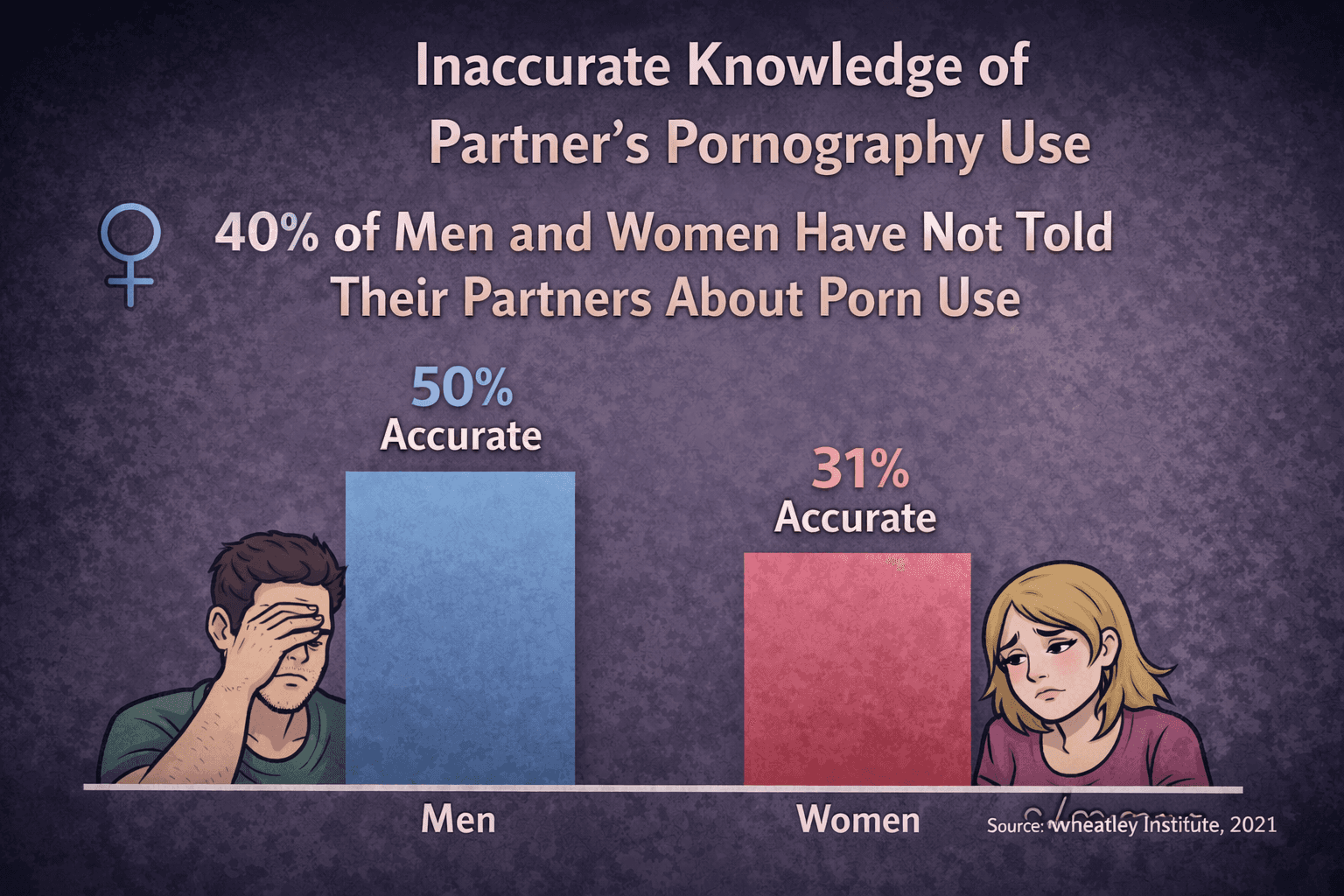
40% of both men and women in marriages have not disclosed their pornography use to their partner. And we are surprisingly adept at hiding this from our partners. In a survey by the
Wheatley Institute, partners were surprisingly inaccurate about each other’s pornography use. Men were correct about 50% of the time, while women fared far worse, with less than a third correctly assessing their partner’s usage.
If you've ever wondered about the psychological and neurological reasons why quitting porn is so difficult, read this article. I explain how the 17 tricks of porn and how they take advantage of your brain, and how they are so difficult to walk away from.
Pornography use in a relationship creates a variety of problems on multiple fronts, but before we dive into the specific reasons why this is, I’d like to point out an interesting piece of data I discovered while writing this article.
All of the data collected overwhelmingly reach the same conclusions: pornography use makes your relationship worse—unless your relationship is already bad to begin with.
In the study titled Till Porn Do Us Part? Longitudinal Effects of Pornography Use on Divorce, researchers found that either partner initiating a porn viewing habit in a reportedly happy relationship was associated with a 4x increase in the likelihood of divorce.
However, beginning pornography use had no statistically significant association for individuals who reported lower marital happiness initially.
In other words, if your relationship is already not going well, pornography use is likely a symptom rather than a cause. As you’ll see in the rest of the article, there’s a lot of data and research to support this.
However, this does not mean that just because you’re in a happy relationship that you are immune to the addictive, destructive effects of pornography. It just means that the damage is worse.
That leads nicely into the first reason why pornography use in marriage is such a problem.
1) Porn makes you less sexually satisfied with your spouse
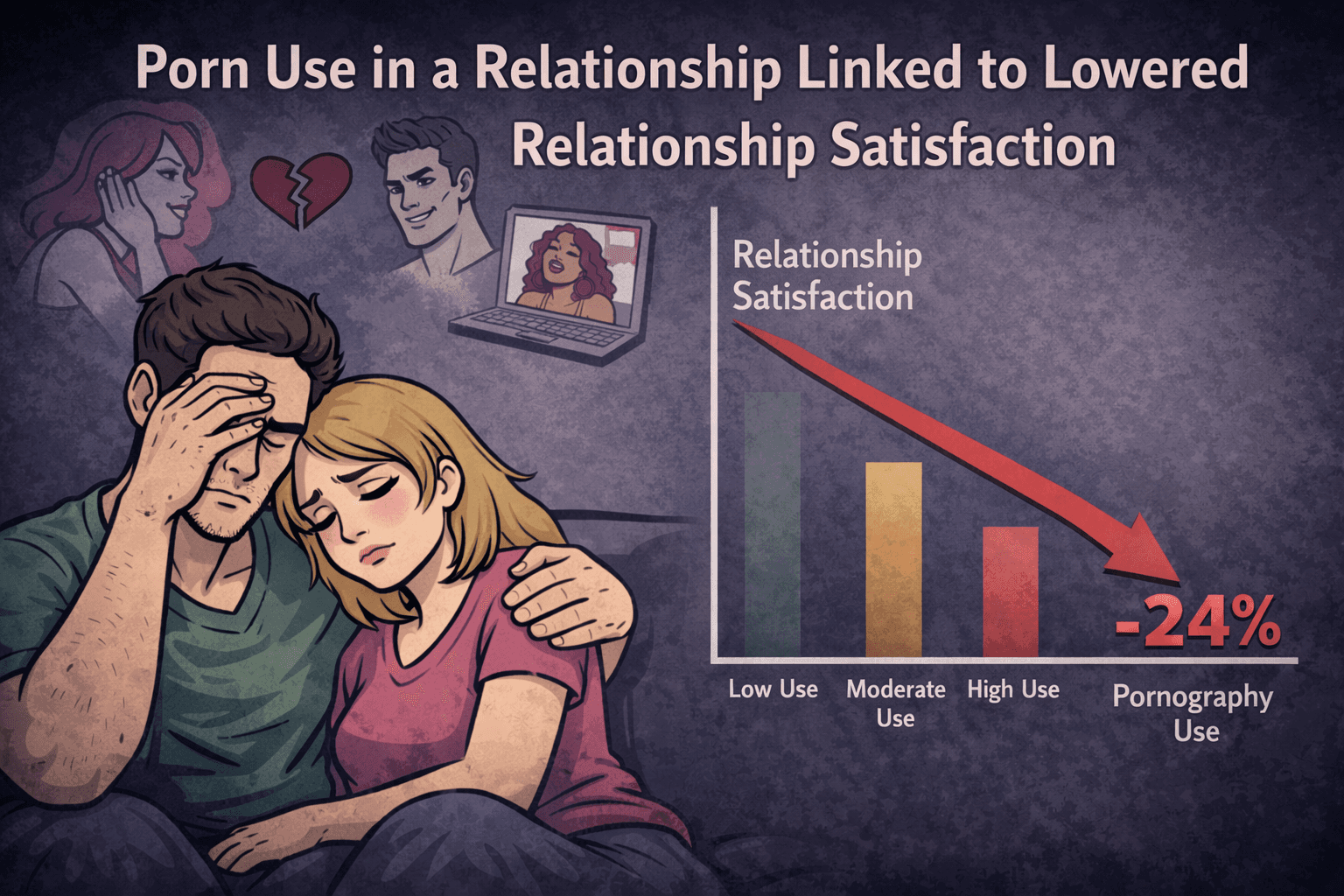
There is this idea that porn can spice up your sex life, but the data indicate that nothing could be further from the truth. Research consistently finds a link between porn use and lowered sexual satisfaction. Before we even look at the research, let’s just think about this.
Looking at strangers having sex is the diametrical opposite of what a marriage is supposed to be—a closed system where sexual energy is only focused on one person. When you open that system up, you open the doors to comparison, insecurity, and instability. Psychologically, it’s no different than having an actual person in the bedroom with you—and that’s not hyperbole.
Scary movies and thrillers generate fear and anxiety within us because our brains can not distinguish between entertainment and actual threat.
The same physiological responses, like increased heart rate, shallow breathing, and the uneasy feelings of butterflies in your stomach, happen when you watch a suspenseful scene in that would happen with suspense in reality.
This is no different than the feelings that happen when you watch porn, and the downstream effects are just as predictable.
A study titled Curvilinear associations between pornography use and relationship satisfaction, sexual satisfaction, and relationship stability in the United States found a relationship between increased porn use and decreased sexual satisfaction.
More specifically, the study titled Pornography, provocative sexual media, and their differing associations with multiple aspects of sexual satisfaction shows that pornography use in a relationship was linked to dissatisfaction across multiple non-sexual domains.
Multiple studies all point the same picture: pornography use in the relationship leads to relationship dissatisfaction.
Pornography creates a sense of false expectations, where the participants are always young, hyper-sexual, and the content is put together to cater to personal preferences.
Pornography also completely separates the emotional bond from the sexual act, which diminishes the intimacy that couples experience during sex.
Further reading: I just found out my husband watches porn
But perhaps most damaging is that pornography becomes an emotional coping mechanism in a relationship. Rather than discuss difficulties and solve problems, pornography allows either partner to turn away from each other and let issues fester.
All of this contributes to why pornography in relationships is destabilizing, even if many people think that it’s harmless.
Further reading: Can you quit porn cold turkey?
2) Pornography in marriage destroys trust
Pornography destroys the trust necessary for a healthy marriage through two powerful, but distinct methods.
The first one is obvious and is the one most people think of. It is a secret that’s being kept that feels like betrayal. Sexual energy directed somewhere outside of the marriage will also feel like a betrayal, whether it’s just a comment, a glance, or on a screen with towards stranger.
Further reading: Is jerking off cheating?
And there are people who would argue that porn isn’t a betrayal because they’re digital strangers you never met, but the content is specifically designed for sexual arousal. In this way, there is no justification, and spouses who watch porn know this, which is why they keep it a secret.
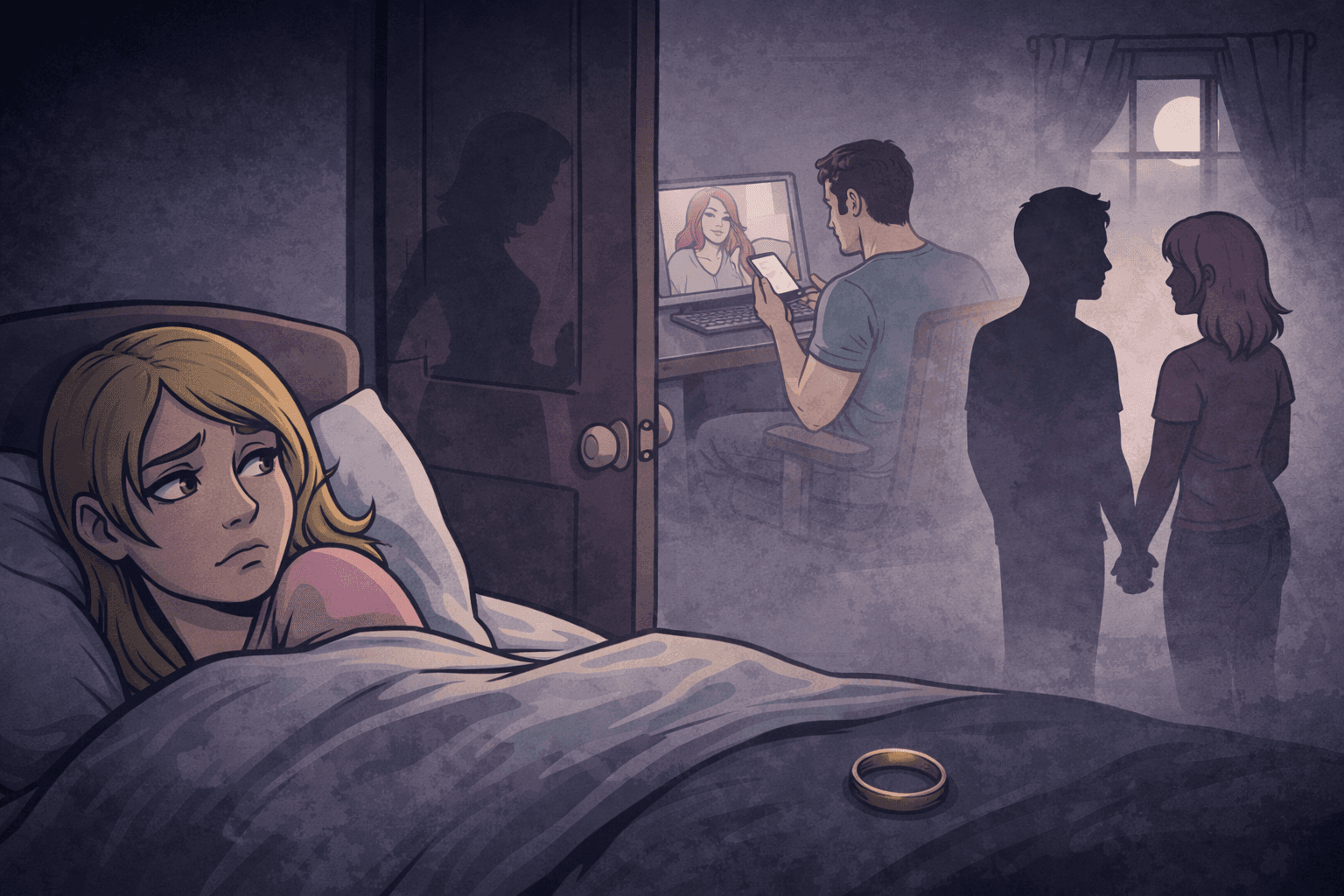
The other reason that porn erodes trusts is because the introduction of it to the marriage automatically creates a set of supporting behaviors that require deception. If your spouse does not approve of pornography, then there’s no way to indulge in it without partaking in a set of behaviors to conceal and disguise your behavior and motives.
The immediate thing that comes to mind is staying up late, taking your phone in the bathroom, or locking your office your door. You have to create spaces of secrecy in your home, and those automatically open up spaces.
The delay result of these actions is there is simply less of yourself to give to your spouse. Your sexual attraction and desire for them is consumed by pornography, and they will notice it.
For men especially, if you watched porn earlier that day and your wife wants to get intimate, you will realistically have trouble getting an erection, which makes her feel undesired and contributes to porn’s destabilizing effect on relationships.
3) Porn weakens your commitment
At this point, someone might be thinking: “Okay, so the problem isn’t porn. The problem is lying about porn.”
While it’s true that honesty removes one layer of damage, it doesn’t negate the negative effects of watching pornography in the first place. The most devastating damage is how pornography use changes how you relate to your parter.
The effect of porn on relationships exists, but it is relatively weak. The stronger and more consistent negative correlation is porn’s effect on relationship committment. Said differently, pornography use is strongly associated with lower relationship stability.
The issue isn’t just that porn might make you a little less happy with your spouse. The issue is that it appears to weaken how invested people feel in the relationship itself.
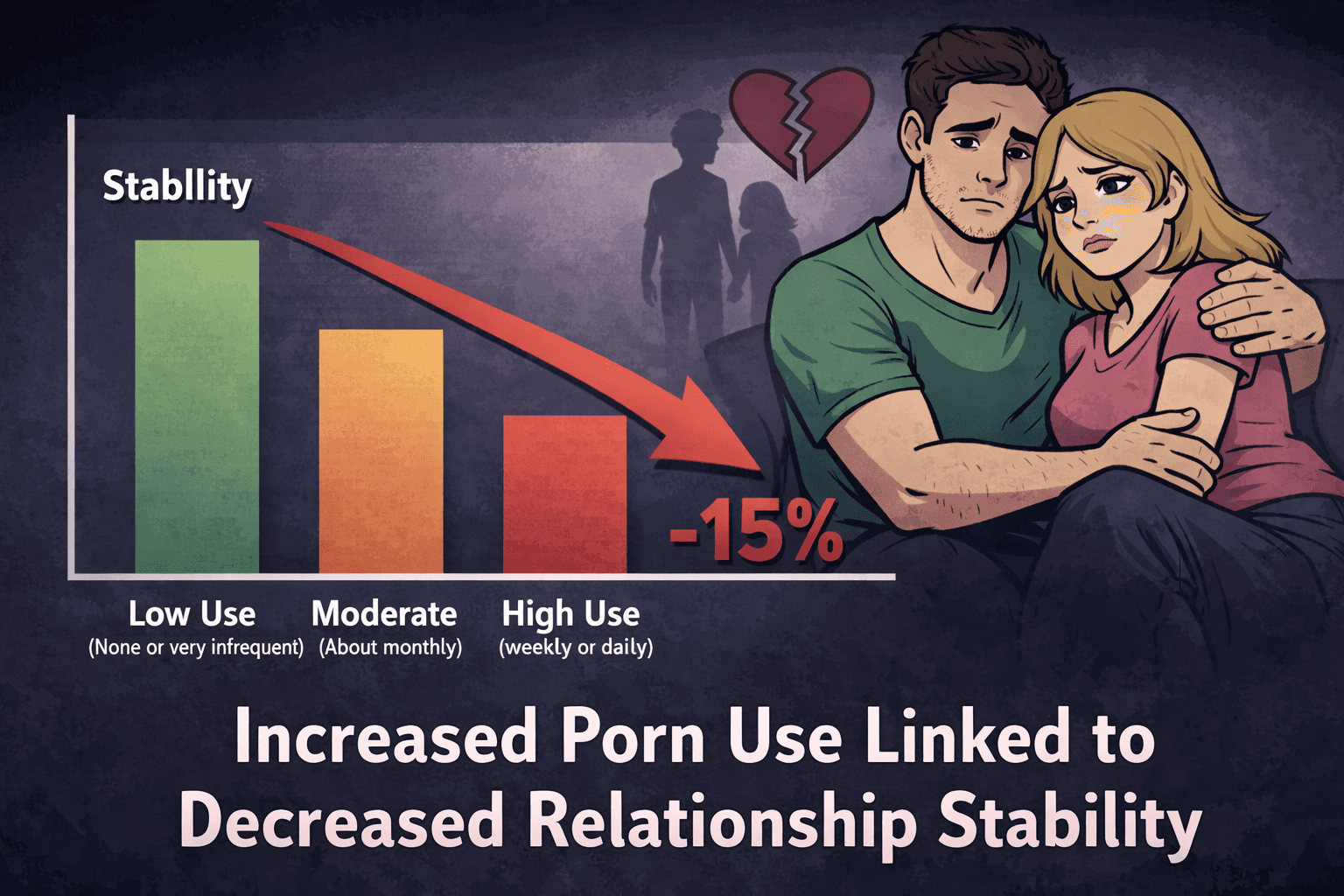
This pattern showed up clearly in the National Couples and Pornography Survey, which examined more than 3,500 people in committed relationships across the United States. Researchers compared couples across three levels of pornography use:
-
Low use (none or very infrequent)
-
Moderate use (about monthly)
What they found was simple, important, and, considering everything, not particularly surprising.
As pornography use increased, reported relationship stability dropped. Across those three groups, stability declined by nearly 15%. That’s a small effect, and it is not where the pattern ends.
Couples where both partners reported avoiding pornography had the strongest relationships by almost every measure. Over 90% of these couples described their relationships as stable, committed, and satisfying.
But as porn use increased inside the relationship, those numbers began to fall. Consider this:
Couples where the man uses porn regularly and the woman uses it occasionally were:
-
18% less likely to report relationship stability
-
20% less likely to report strong commitment
When both partners used pornography daily, the drop became even more dramatic.
Compared to couples who avoided porn entirely, these couples reported:
-
45% lower relationship stability
-
30% lower commitment levels
The more pornography becomes part of a relationship, the less stable that relationship tends to be. And this instability translates into increased likelihood of the ultimate betrayal.
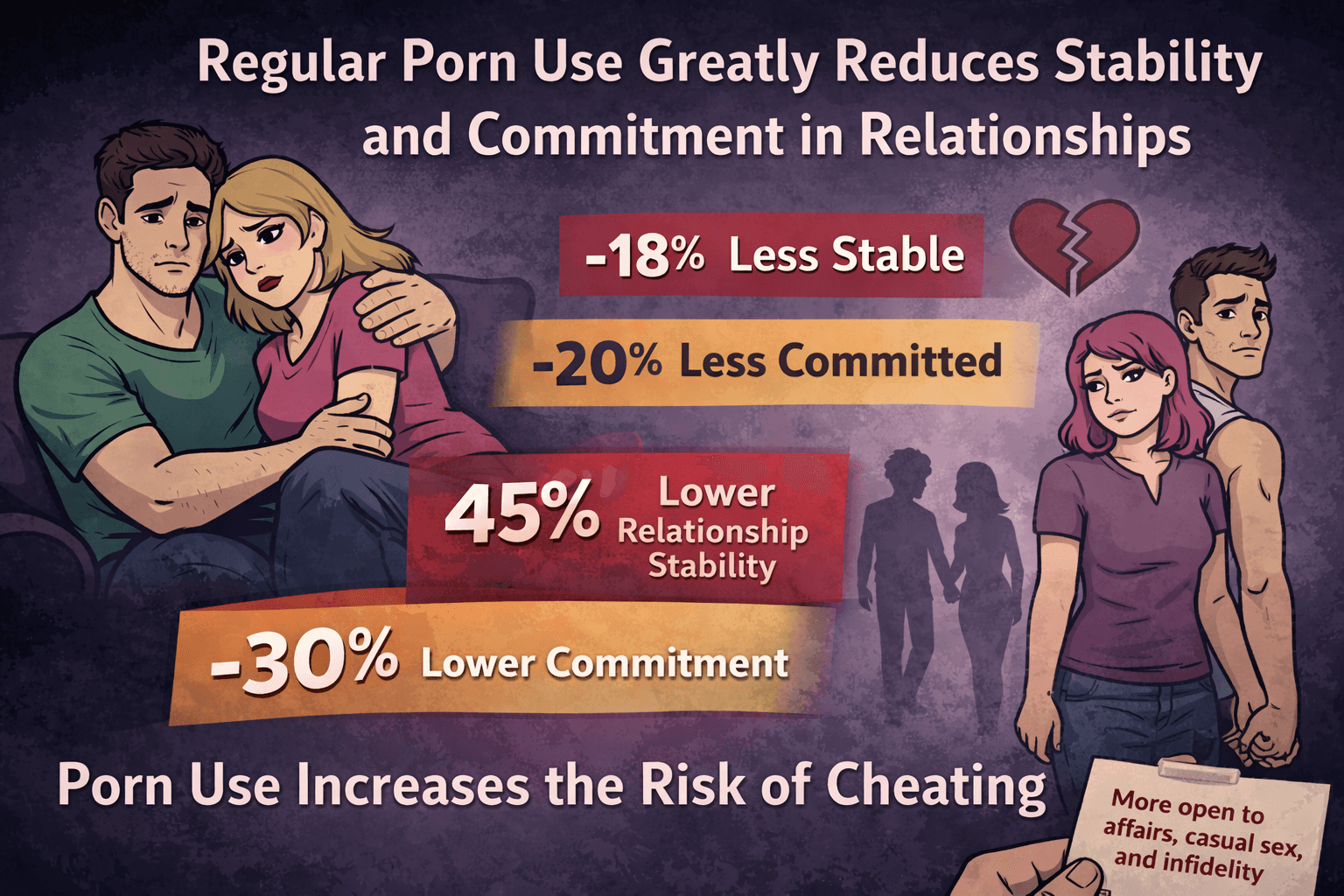
Several studies have found that people who regularly watch pornography are more likely to develop positive attitudes toward extramarital affairs. In other words, porn use is associated with being more open to cheating. What’s most interesting about this information is that this effect was larger in relationships where partners watched pornography together and it was not a secret.
When researchers examined different predictors of infidelity in relationships, watching pornography together turned out to be a stronger predictor of cheating than things like:
-
physical aggression
-
psychological aggression
-
negative communication patterns
Now obviously this doesn’t mean porn automatically leads to an affair, but it does suggest that porn has a negative effect on people’s mindset toward commitment.
Commitment is what holds a marriage together when things are difficult. It’s the psychological glue that keeps two people invested in solving problems instead of escaping from them. And pornography seems to not only weaken the glue, but also the people that it’s holding together.
Further reading: Dealing with a porn relapse (without spiraling)
The next steps of dealing with porn in your marriage
If you want to go at it alone, you can try to something like the No Fap, but there is an even better way.
Here at Relay, we’ve crafted a unique, support-group-style recovery program. Relay provides a safe and confidential environment for individuals to input their own recovery goals, and then places users into a team of others working towards the same goals.
If you or your spouse are seeking assistance in overcoming pornography, whether it be a habit or a full-blown addiction, Relay may be able to provide the support, accountability, and guidance that you need.
Dealing with porn in marriage is a challenge, but if you’re committed to the relationship, it’s one you can easily overcome. Relay can help you.
References
Statista Research Department. (2025). Share of internet users who watch pornography at least once per week by gender and age group. Statista. https://www.statista.com/chart/16959/share-of-the-internet-that-is-porn/
Willoughby, B. J., & Leonhardt, N. D. (2020). Behind Closed Doors: Individual and Joint Pornography Use Among Romantic Couples. The Journal of Sex Research, 57(1), 77–91. https://doi.org/10.1080/00224499.2018.1541440
Perry, S. L., & Schleifer, C. (2018). Till Porn Do Us Part? A Longitudinal Examination of Pornography Use and Divorce. The Journal of Sex Research, 55(3), 284–296. https://doi.org/10.1080/00224499.2017.1317709PMID: 28497988
Wright, P. J. (2023). Pornography Consumption and Extramarital Sex Attitudes Among Married U.S. Adults: Longitudinal Replication. Archives of Sexual Behavior, 52, 1953–1960. https://doi.org/10.1007/s10508-023-02612-8
Maddox Shaw, A. M., Rhoades, G. K., Allen, E. S., Stanley, S. M., & Markman, H. J. (2013). Predictors of Extradyadic Sexual Involvement in Unmarried Opposite-Sex Relationships. The Journal of Sex Research, 50(6), 598–610. https://doi.org/10.1080/00224499.2012.666816
Wheatley Institute. (2021). National Couples and Pornography Survey. Brigham Young University. https://wheatley.byu.edu/national-couples-and-pornography-survey-2021