

Key takeaways about your wife watching porn
-
A wife watching porn is not automatically infidelity but can become a problem if it affects trust, intimacy, or communication.
-
The impact depends more on secrecy, boundaries, and emotional connection than the behavior itself.
-
Porn use can feel like betrayal when it redirects sexual attention outside the marriage or is hidden.
-
Common reasons include habit, stress relief, curiosity, or unmet emotional or sexual needs.
-
The key issue is whether the behavior harms trust, reduces intimacy, or creates conflict in the relationship.
-
Healthy resolution requires calm communication, understanding motivations, and defining shared boundaries.
-
Not all couples view porn the same way, so alignment on expectations is more important than general norms.
-
Long-term outcomes depend on honesty, mutual agreement, and whether both partners are willing to address the issue together.
Frequently asked questions about your wife watching porn
Is it normal for a wife to watch porn?
It is less common than male porn use but not unheard of. Whether it is “normal” depends on the couple’s values, boundaries, and expectations within the relationship.
Does my wife watching porn mean she is cheating?
No. Porn use alone is not the same as physical or emotional infidelity. However, if it involves secrecy, emotional distance, or replaces intimacy, it can feel like a breach of trust.
Why would my wife watch porn?
Reasons can include curiosity, stress relief, habit, or unmet emotional or sexual needs. In some cases, it may also be tied to compulsive behavior or deeper psychological factors.
Should I be worried if my wife watches porn?
You should be concerned if it creates secrecy, conflict, or reduces intimacy. If both partners are aligned and it does not harm the relationship, it may not be a problem.
How do I talk to my wife about her watching porn?
Approach the conversation calmly and without accusation. Focus on how it affects you, ask questions to understand her perspective, and work together to define clear boundaries.
Relay is a therapist-backed group recovery program for pornography and unwanted sexual behavior, combining daily accountability, real-time urge support, and a private peer community
My Wife Watches Porn. I Don't — Is My Marriage in Trouble?
While there are some guys who think it would be cool if their wives watched porn, you are not one of them.
Fortunately, there are steps you can take that do not end in divorce or dissolution of the relationship. To prepare you for those steps, we have to first look at the facts, because those are going to help us solve this problem—even if those facts are ugly.
If porn is affecting your relationship, read our full guide on porn in marriage.
The reality of wives watching porn
According to research and surveys that have explored married women’s pornography use, only 6-7% of women report viewing pornography at least once a week, more than half reporting no pornography watching over the last year.
Compare this to married men,
55% of married men watch porn, with 63% of men watching multiple times a week.
In the general population, 78% of men watch porn. To put the odds of your wife watching porn into perspective, you’re almost 4x as likely to find a guy who doesn’t watch porn as you are to find a wife who does—and the stats are clear that a large percentage of men watch porn.
Your wife watching porn feels shocking because it is—it is statistically uncommon — not unheard of, but not the norm either.
That said, pornography use among wives is not random. Certain factors make it more likely.
Younger women (18-30) are more likely to watch porn
76% of women in that age group have watched, but that number plummets to 16% by age 50. Given that the average age of a woman getting married in the United States is 28, most women have “grown out” of watching it by the time they’re married.
Having a young bride makes it more likely that she will indulge in porn.
But age isn’t the only predictor.
Research also suggests that certain psychological and developmental factors increase the likelihood of problematic or compulsive sexual behavior. A history of trauma — particularly childhood sexual abuse, emotional abuse, or high adverse childhood experiences (ACE scores) — is associated with higher odds of sexual compulsivity.
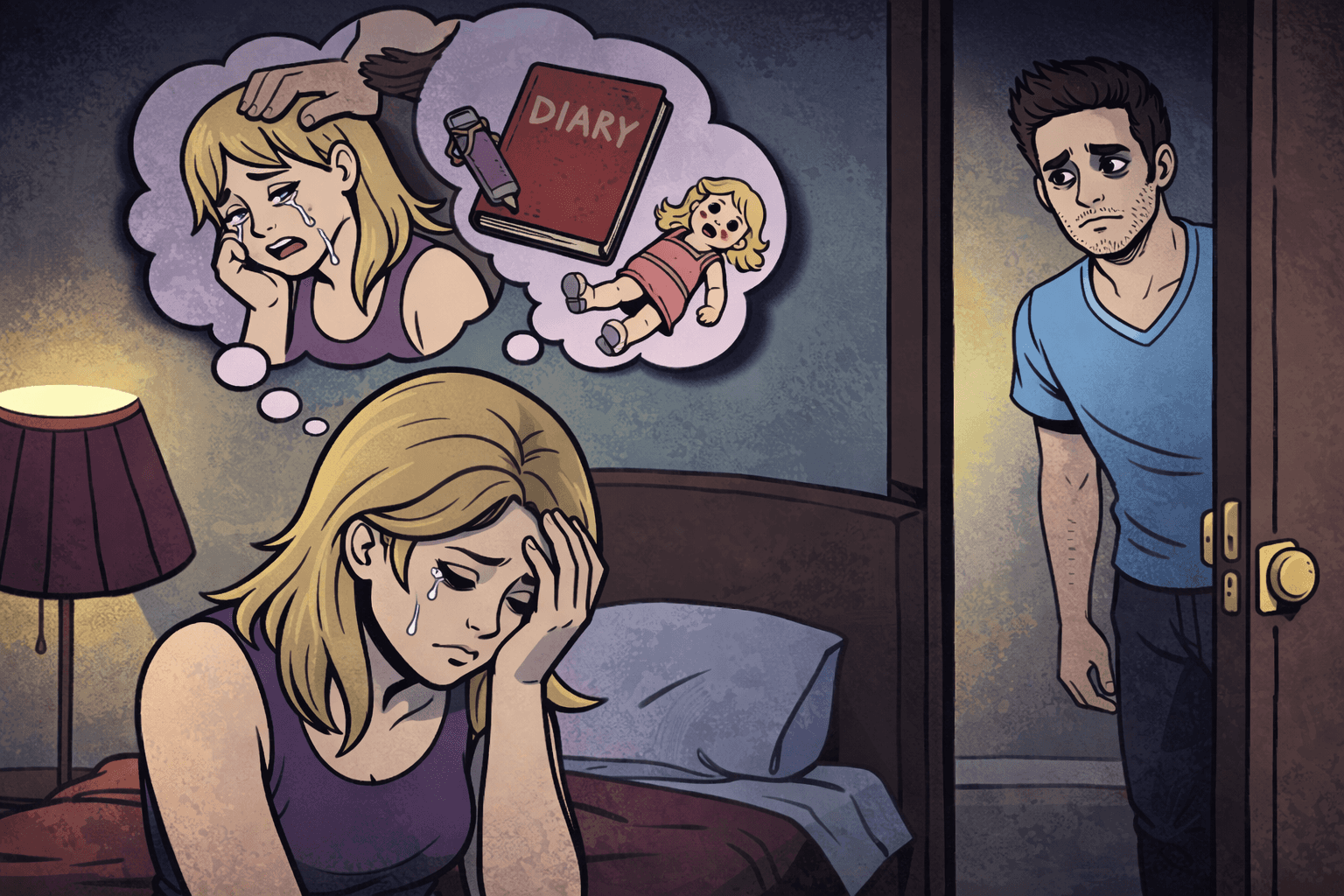
That doesn’t mean pornography use automatically implies trauma. Most women who watch porn do not have abuse histories. But in cases where pornography use is frequent, secretive, escalating, or emotionally dysregulated, trauma history is statistically more common.
I’m not sharing these statistics to make you feel hopeless. I’m sharing them to provide clarity. This situation does not automatically mean your marriage is over.
Further reading: Porn in marriage
It does, however, mean there may be some hard conversations ahead.
In the sections that follow, we’ll cover what not to do, what to do instead, and what options are available if pornography has begun affecting your relationship.
Does Your Wife Watching Porn Mean That She’s Cheating on You?
Short answer: not automatically.
Long answer: it depends on how you define betrayal inside your marriage.
There is no direct line from “she watches porn” to “she is physically unfaithful.” Porn use alone tells you nothing about whether she is sleeping with someone else.
But it can absolutely feel like an affair. And that reaction is understandable.
For some couples, pornography clearly violates the boundaries of the relationship. For others, it’s tolerated. For a smaller percentage, it’s even shared. The behavior itself isn’t universally categorized as infidelity — but the meaning attached to it absolutely can be.
If you feel hurt, that doesn’t make you insecure or unreasonable. Many men experience a partner’s porn use as a sexual comparison. It triggers questions like:
-
Am I not enough?
-
Is she fantasizing about someone else?
-
Is this replacing intimacy with me?
-
Is she hiding part of her sexual life from me?
Those reactions are common because marriage carries an expectation of sexual exclusivity — not just physically, but psychologically.
Pornography complicates that expectation. It introduces external sexual stimulation without physical contact. Some see that as harmless. Others experience it as a breach of erotic exclusivity.
Which raises the uncomfortable question most couples never articulate:
Is a sexual interaction through a screen fundamentally different from a sexual interaction in person?
Most people instinctively say yes.
Watching strangers on a screen does not involve physical touch, emotional reciprocity, or real-world opportunity. There is no texting afterward, private meet-ups, or shared secrets. It’s pure impersonal consumption, not active participation.
But others argue that sexual arousal directed outside the marriage — even digitally — still represents a diversion of erotic energy and betrayal. The body doesn’t necessarily distinguish between pixels and people. The brain’s inability to distinguish between the digital world and reality is why horror movies are frightening, and pornography is arousing.
If your nervous system is engaged, the brain experiences it as real enough.
So the question isn’t simply screen versus in-person. It’s this:
Do intent, secrecy, and emotional investment matter more than physical proximity?
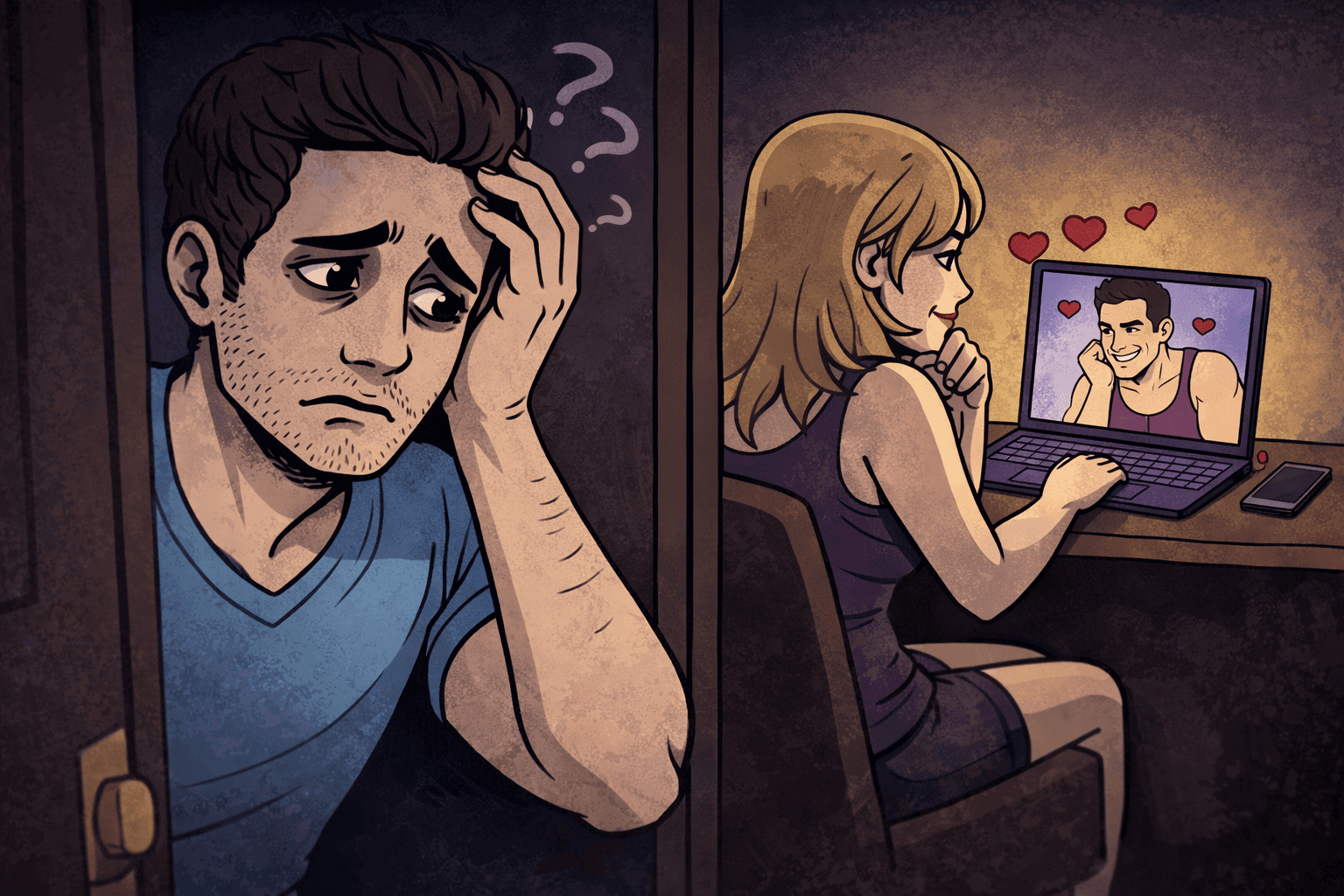
If your wife were flirting in person, exchanging intimate messages, or meeting someone privately, most people would clearly call that cheating.
Pornography sits in a gray zone because it lacks personal interaction. It’s a one-way experience. But when it becomes secretive, compulsive, or emotionally charged, the line begins to blur.
In some relationships, porn use escalates into more extreme categories like hentai which can create deeper disconnect.
There is not just the question of what is being consumed, but also how.
Cheating typically involves deception, secrecy, and the diversion of emotional or sexual energy away from the relationship.
If pornography use is hidden, defended aggressively, or prioritized over your sexual relationship, the pain you feel may be less about the content and more about the rupture of trust.
Further reading: Porn addiction effects
At the same time, labeling it “cheating” too quickly can escalate conflict before you’ve had a real conversation.
Instead of asking, “Is this cheating?” a more productive question is:
Is my wife watching porn harming trust, intimacy, or emotional safety in our marriage?
Further reading: Is jerking off cheating?
If the answer is no, the issue may be more about personal values than betrayal.
If the answer is yes, then you’re not dealing with a philosophical disagreement. You’re dealing with a relational problem that deserves serious attention.
And that’s where the next step becomes critical: how you approach the conversation.
How to talk to your wife about her watching porn
The moment you discover your wife watches porn, you’ll probably feel a variety of negative emotions.
Anger. Embarrassment. Jealously. Insecurity. Confusion.
Your first instinct is to confront her immediately—and as much as that instinct makes sense and is natural, I beg you to pause and take a breath. Because how you handle the problem matters more than the problem itself.
Emotionally charged reactions are the fastest way to turn a difficult moment into a defensive war. And although your heart is in the right place, you may lose that war and every reason you’re fighting for.
If you approach her in accusation mode—even subtly—she’ll be defensive. And defensive people expect a battle. Once both of you are protecting yourselves from the other’s attacks, intimacy shuts down.
Before you talk to her, do something harder.
Get clear on your own position and what you actually believe about this. Ask yourself
-
Is any porn use unacceptable in marriage?
-
Is occasional use tolerable, but secrecy isn’t?
-
Are you more hurt by what she watched—or by the fact she hid it?
-
Are you afraid she prefers what she sees on the screen to you?
If you don’t know how you really feel about it, you’ll argue from emotion instead of principle— and emotional arguments rarely produce clarity.
Also, before you talk to her, here’s a list of some things you definitely should not do if your goal is to repair the relationship.
-
Don’t threaten divorce in the first conversation.
-
Don’t demand a full confession on the spot.
-
Don’t compare yourself to the people she watches.
-
Don’t shame her sexuality.
-
Don’t turn it into a moral lecture.
Even if you believe pornography is wrong, the goal is not to win an argument. The goal is to protect your marriage.
If you try to humiliate or shame her, you’ll have a new problem on your hands—managing the damage you caused by your reaction.
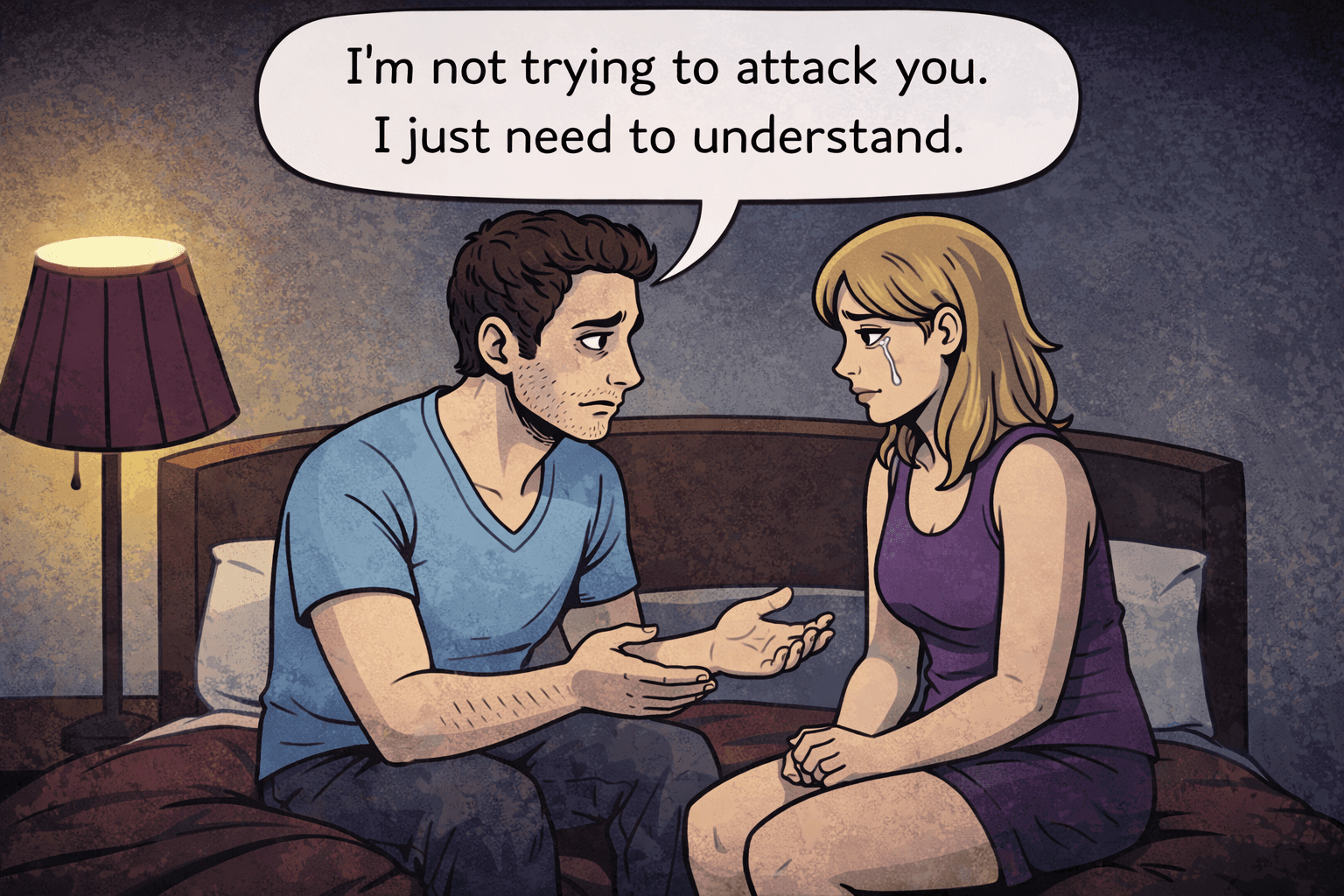
Instead, I recommend that you lead with your feelings, honesty, and curiosity. For example, you might say:
“When I found out you were watching porn, I felt insecure. I’m not trying to attack you. I’m trying to understand what it means.”
That changes everything. It’s an expression of how it made you fell and it’s not an attack on her. Once you do that, you have to listen and understand.
I’m not saying you have to agree with everything—or anything, really—that she says, but you need to listen because that will help you understand the nature of her viewing habits.
Find out:
-
What it does for her.
-
When she watches.
-
Does she want to stop but can’t.
-
If she feels shame or nothing at all.
You may learn something you didn’t expect. It may not be dissatisfaction with you. It may be stress relief, a habit, or even unresolved childhood trauma.
Regardless, you cannot solve what you refuse to understand.
Every marriage runs on shared boundaries. Pornography forces you to define yours.
Some couples decide they want none of it. Others allow limited, transparent use. What matters isn’t what another couple chooses. It’s whether you agree.
If you cannot agree on sexual boundaries, resentment will not disappear. It will simply resurface in different forms.
Alignment is the goal. From there, you can decide what comes next—whether that’s clearer boundaries, outside support, recovery work, or simply a better understanding of each other.
And that’s where the real work begins.
What not to do if your wife watches porn
Don’t crowdsource your marriage.
Before you’ve even spoken to your wife, avoid running to friends, family, or social media for advice. Once outside opinions enter the situation, it becomes harder to have a clear, honest conversation between the two of you.
Even well-meaning people project their own values onto your situation. If their beliefs about pornography, marriage, or sexuality differ from yours, their advice may inflame the problem instead of solving it.
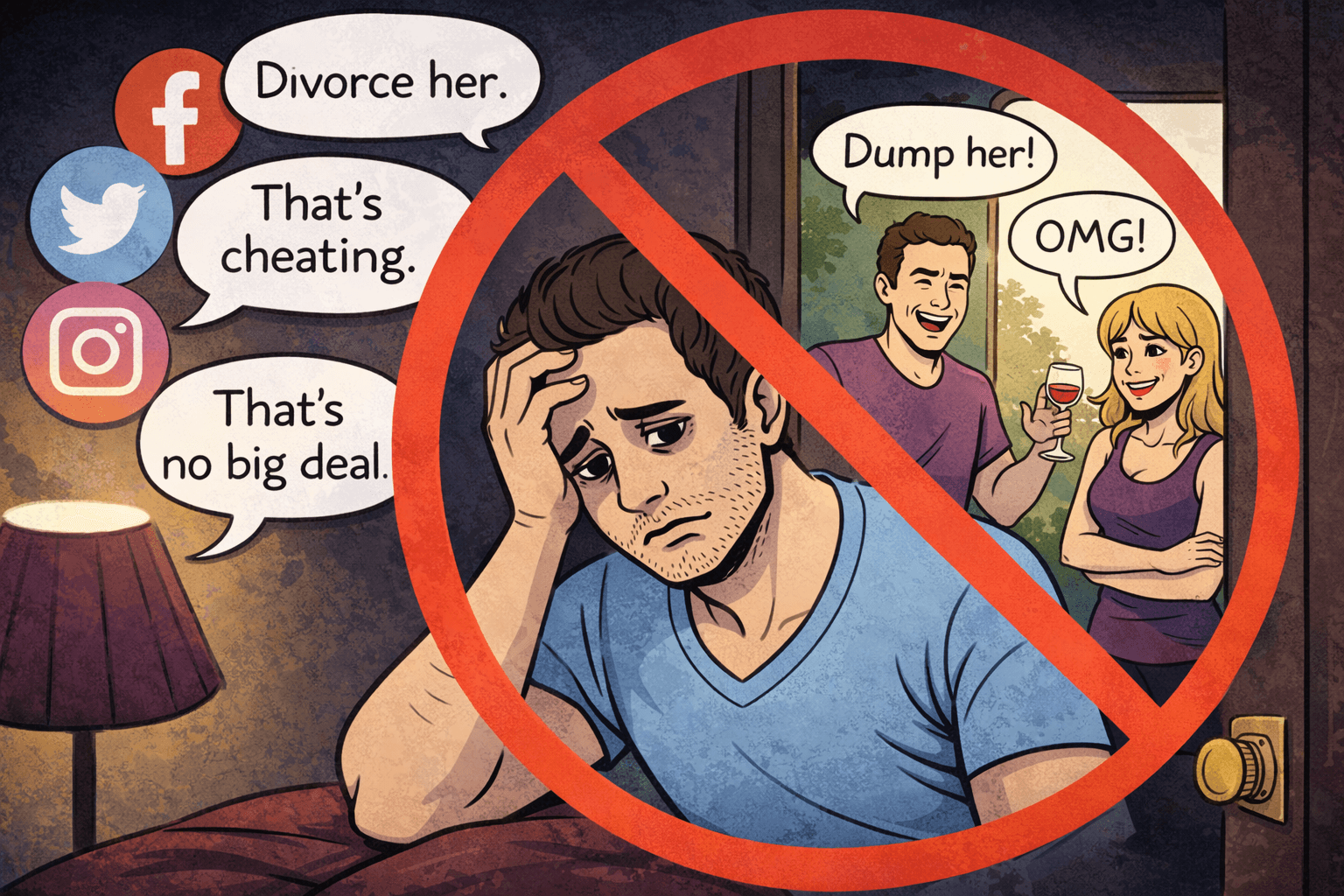
If you do seek outside help, make it intentional. A qualified therapist or trained professional can provide neutrality. Casual advice often cannot.
Also, don’t minimize your own discomfort.
Yes, many people watch porn without believing it harms their relationship. That’s true. But your marriage is not governed by statistics or cultural averages. It’s governed by shared boundaries.
If your wife watching porn bothers you, that matters.
Ignoring it won’t make it disappear. Suppressing it will only turn it into resentment.
Stay grounded. Stay calm. But don’t pretend you’re fine if you’re not.
Address the issue directly — and privately — before it grows into something larger than it needs to be.
What to do if your wife watches porn
If you want to move forward instead of sideways, you need a plan.
Your wife may be watching porn for reasons that have little to do with you — or she may not. The only way to find out is through honest, structured conversation and shared effort.
Here are nine actionable steps that actually help.
1. Get Clear on Your Own Emotions
Before you try to fix anything, understand what you’re feeling.
Are you hurt? Angry? Insecure? Embarrassed? Betrayed?
Clarity gives you control. If you don’t understand your emotions, they will control the conversation instead of guiding it.
Choose a calm, private setting to talk. Don’t bring this up in the middle of an argument or during intimacy. Difficult conversations deserve stable ground.
2. Have a Blame-Free Conversation
The goal is understanding — not prosecution.
Use “I” statements instead of accusations.
Instead of: “You make me feel terrible about myself.”
Try: “When I found out, I felt insecure because I started questioning whether I’m meeting your needs.”
That phrasing invites dialogue rather than triggering a defense.
Listen carefully. You don’t have to agree with everything she says. But you do need to understand the pattern before you decide how to respond to it.
3. Be Willing to Examine the Relationship Honestly
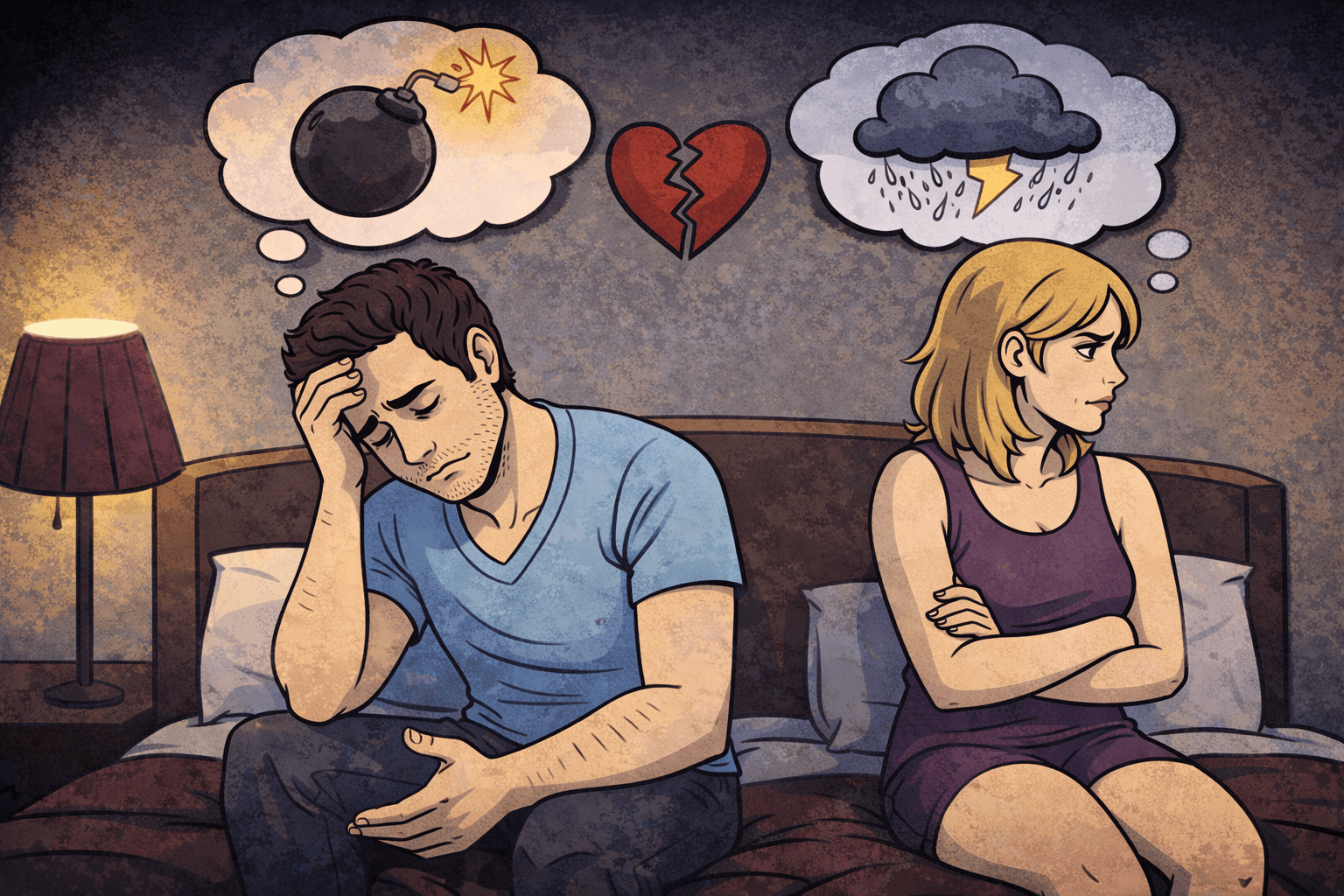
This is uncomfortable, but important.
Ask yourself:
-
Is there emotional distance between us?
-
Has our sex life changed?
-
Are we stressed, disconnected, or avoiding deeper issues?
Pornography is sometimes the problem. Sometimes it’s a symptom.
This doesn’t mean you’re to blame. It means strong marriages require two people willing to look inward.
Don’t treat this as a one-time confrontation. Keep the conversation open.
4. Educate Yourself
You can’t make informed decisions about something you don’t understand.
Take time to learn about:
-
How pornography affects the brain
-
The difference between casual use and compulsive behavior
-
What recovery actually looks like
Understanding reduces panic. It also helps you separate emotional reaction from measurable concern.
Recovery, if needed, is not one-size-fits-all. Some people quit easily. Others need structure and outside accountability.
Recovery Guides
5. Decide on Boundaries Together
Every marriage operates on shared boundaries.
Some couples decide there will be no pornography. Others allow limited, transparent use. What matters is agreement — not imitation of what other couples do.
If your wife wants to stop and struggles to do so, that may require structured support. If you both decide certain behaviors cross a line, define those lines clearly.
Ambiguous boundaries create repeated conflict.
Clear boundaries create alignment.
Further reading: Can you quit porn cold turkey?
6. Support Her If She Wants to Change
If your wife wants to stop watching porn, your role is not to become her probation officer. It’s to become her ally.
Recovery—if that’s what’s needed—is rarely linear.
Further reading: Porn relapse
There may be setbacks, difficult conversations, or triggers you don’t fully understand. Support means encouragement without control, accountability without surveillance, and empathy without enabling.
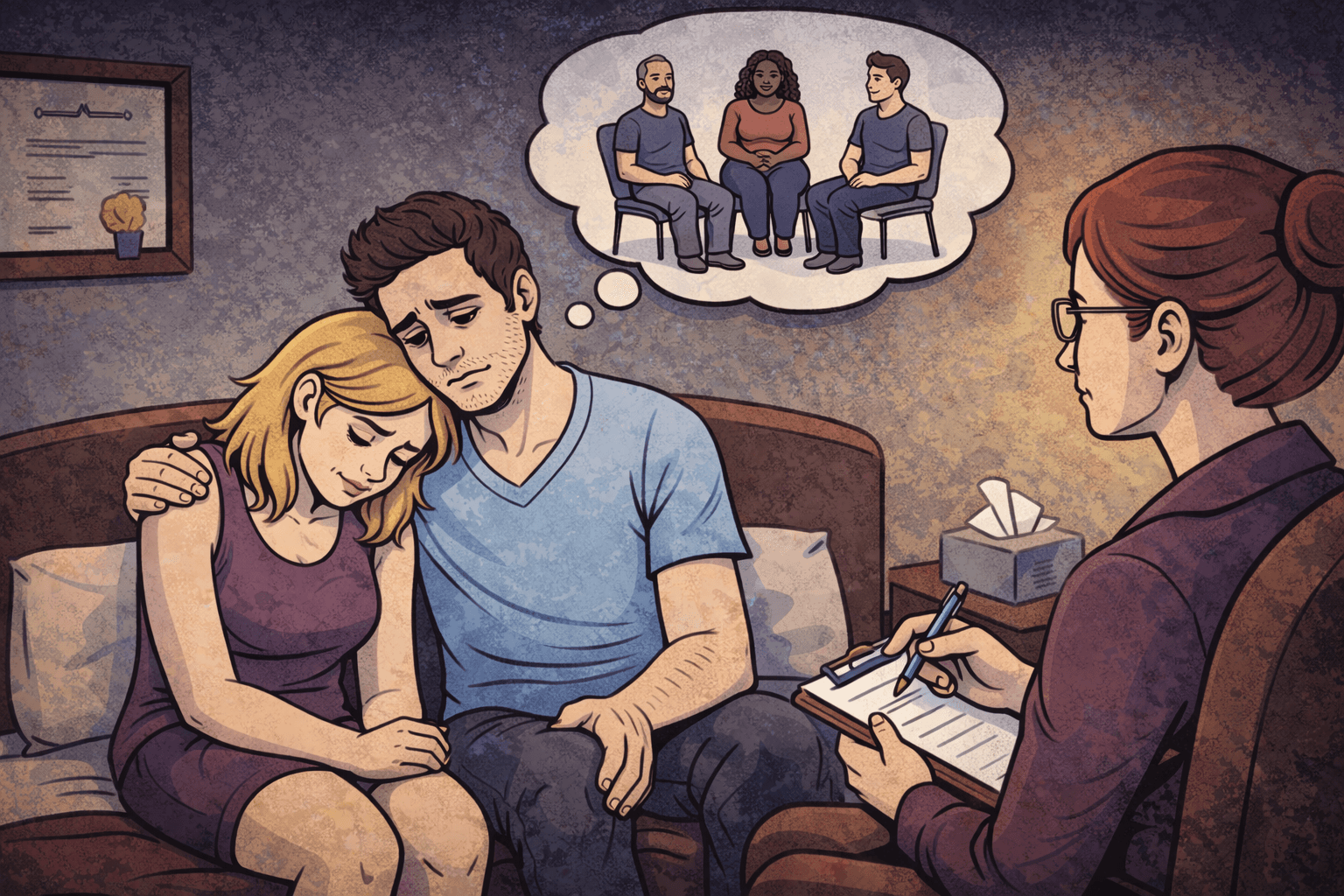
You cannot force someone to change, but you can create an environment that makes change easier.
And if the behavior has become compulsive or deeply rooted, outside help may be necessary.
A licensed therapist, counselor, or structured support group can provide neutrality and tools that neither of you may have on your own.
Sometimes, the healthiest move for a marriage is to bring in qualified support rather than trying to solve everything privately.
7. Don’t Become Her Only Support System
If she is trying to quit, she should not rely solely on you. It’s extremely difficult to overcome habitual or compulsive behaviors in isolation, and it’s unfair for your marriage to carry the full weight of recovery.
Encourage structured support—whether that’s counseling, group accountability, or a recovery platform designed specifically for this issue. That way, you remain her husband, not her therapist.
You can:
-
Support her without monitoring her.
-
Encourage her without policing her.
-
Rebuild intimacy without turning your relationship into a management system.
Recovery works best when responsibility is shared—not transferred.
8. Protect the Relationship While the Work Happens
Don’t allow this issue to consume your entire marriage.
Yes, address it and define boundaries, but don’t let every interaction revolve around it.
Set intentional check-in times to discuss progress, then move forward. Have date nights and keep showing physical affection. Laugh together and be in love.
If all your marriage becomes is “the porn problem,” resentment will quickly and quietly replace intimacy. Connection must grow at the same time correction happens.
9. Be Honest About Your Limits
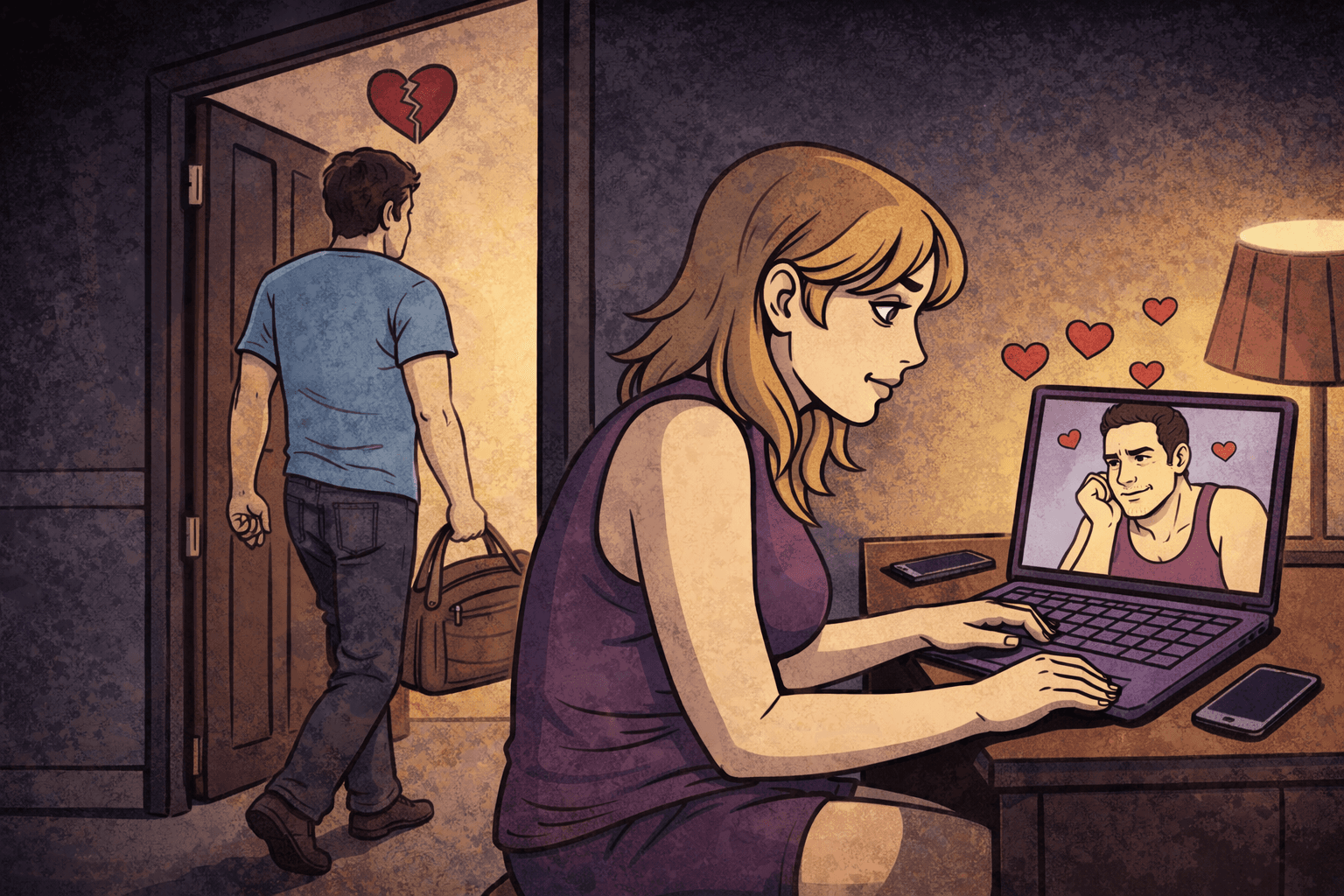
This is the part many articles avoid.
Not every marriage survives this issue. Most can—if both partners are willing, but if someone is unwilling to respect agreed boundaries, unwilling to seek help, or dismissive of your concerns, you may eventually face a difficult decision.
You cannot force someone to make a change.
At some point, you must ask yourself whether this is something you can live with long-term.
That decision should never be made in anger, but in clarity.
For many couples, pornography becomes a turning point that strengthens the relationship. For others, it is, unfortunately, the end.
Conclusion
Finding out that your wife watches porn can feel destabilizing. It can shake your confidence, your sense of exclusivity, and even your trust.
But discovery does not equal destruction.
Pornography didn’t create the cracks in your marriage — it exposed something that needs attention. What you do next determines whether those cracks widen or become the place where you rebuild something stronger.
You don’t need to panic. You need clarity about your values, the behaviors you’re willing to accept, and the boundaries that protect your marriage.
If the issue is occasional and aligned with shared boundaries, then it becomes a conversation about expectations. If it’s compulsive, secretive, or replacing intimacy, then it becomes a problem that requires structure, support, and real work.
Further reading: How to help a porn addict
Either way, silence won’t solve it.
Honest conversation will.
If your wife wants to stop but struggles, structured support can make the process far more sustainable. Recovery tools, accountability, and outside guidance reduce the pressure on your marriage and increase the likelihood of lasting change.
Most importantly, remember this: alignment is the goal. Not control. Not dominance. Not punishment. Alignment.
When two people are willing to have hard conversations and protect their shared boundaries, even uncomfortable discoveries can become turning points.
What happens next isn’t decided by the porn.
It’s decided by how the two of you respond to it.

References
Briere, J., & Runtz, M. (1988). Symptomatology associated with childhood sexual victimization in a nonclinical adult sample. Child Abuse & Neglect, 12(1), 51–59. https://doi.org/10.1016/0145-2134(88)90007-5
Carroll, J. S., Busby, D. M., Willoughby, B. J., & Brown, C. C. (2017). The porn gap: Differences in men's and women's pornography patterns in couple relationships. Journal of Couple & Relationship Therapy, 16(2), 146–163. https://doi.org/10.1080/15332691.2016.1238796
Centers for Disease Control and Prevention. (2023). Adverse childhood experiences (ACEs). https://www.cdc.gov/violenceprevention/aces/index.html
Marshall, E. A., & Miller, H. A. (2023). The role of sexual scripts in the relationship between pornography use and sexual coercion. Journal of Interpersonal Violence, 38(7–8), 5519–5541. https://doi.org/10.1177/08862605221123291
Perry, S. L., & Schleifer, C. (2018). Till porn do us part? A longitudinal examination of pornography use and divorce. Journal of Sex Research, 55(3), 284–296. https://doi.org/10.1080/00224499.2017.1317709
Scoglio, A. A., Chen, Y., Huang, K., Borgogna, N. C., Potenza, M. N., Blycker, G. R., & Kraus, S. W. (2025). Sexual trauma and compulsive sexual behavior in young men and women: A network analysis involving two samples. Journal of Behavioral Addictions, 14(1), 166–177. https://doi.org/10.1556/2006.2024.00074
Wright, P. J., Tokunaga, R. S., & Bae, S. (2014). More than a dalliance? Pornography consumption and extramarital sex attitudes among married U.S. adults. Psychology of Popular Media Culture, 3(2), 97–109. https://doi.org/10.1037/ppm0000024