

Key takeaways about finding out that your husband watches porn
-
Discovering your husband watches porn often feels like betrayal because of secrecy, broken trust, and redirected sexual attention.
-
Porn use in marriage is usually tied to long-standing habits, conditioning, or coping mechanisms—not your attractiveness or worth.
-
The real issue is often secrecy and violation of boundaries, not just the act of watching porn itself.
-
Porn can feel like cheating when it directs sexual attention outside the marriage and breaks expectations of exclusivity.
-
Many men develop porn habits years before marriage, which can continue unless intentionally addressed.
-
Conflict arises when porn use replaces intimacy, escalates, or is hidden from a partner.
-
Rebuilding trust requires honesty, clear boundaries, and consistent behavior change over time—not just promises.
-
You are not responsible for your husband’s behavior, but you are responsible for protecting your emotional well-being.
Frequently asked questions about your husband watching porn
Why does it hurt when I find out my husband watches porn?
It often hurts because of secrecy, broken expectations, and the feeling that sexual attention is being directed outside the relationship—not necessarily just the act itself.
Does it mean I’m not enough if my husband watches porn?
No. In many cases, porn use began long before the relationship and is tied to habit, conditioning, or coping mechanisms—not your attractiveness or value.
Is my husband watching porn considered cheating?
It can be, depending on your relationship boundaries. If it violates agreed expectations or involves secrecy, many people consider it a form of betrayal.
Why do married men watch porn?
Common reasons include long-standing habits, easy access, stress relief, emotional coping, and normalization from early exposure—not necessarily dissatisfaction with their partner.
What should I do after discovering my husband watches porn?
Pause before reacting, identify what specifically feels wrong, have a direct conversation about boundaries, and determine whether both partners are willing to rebuild trust and change behavior.
Relay is a therapist-backed group recovery program for pornography and unwanted sexual behavior, combining daily accountability, real-time urge support, and a private peer community.
My Husband Watches Porn: What Does It Mean?
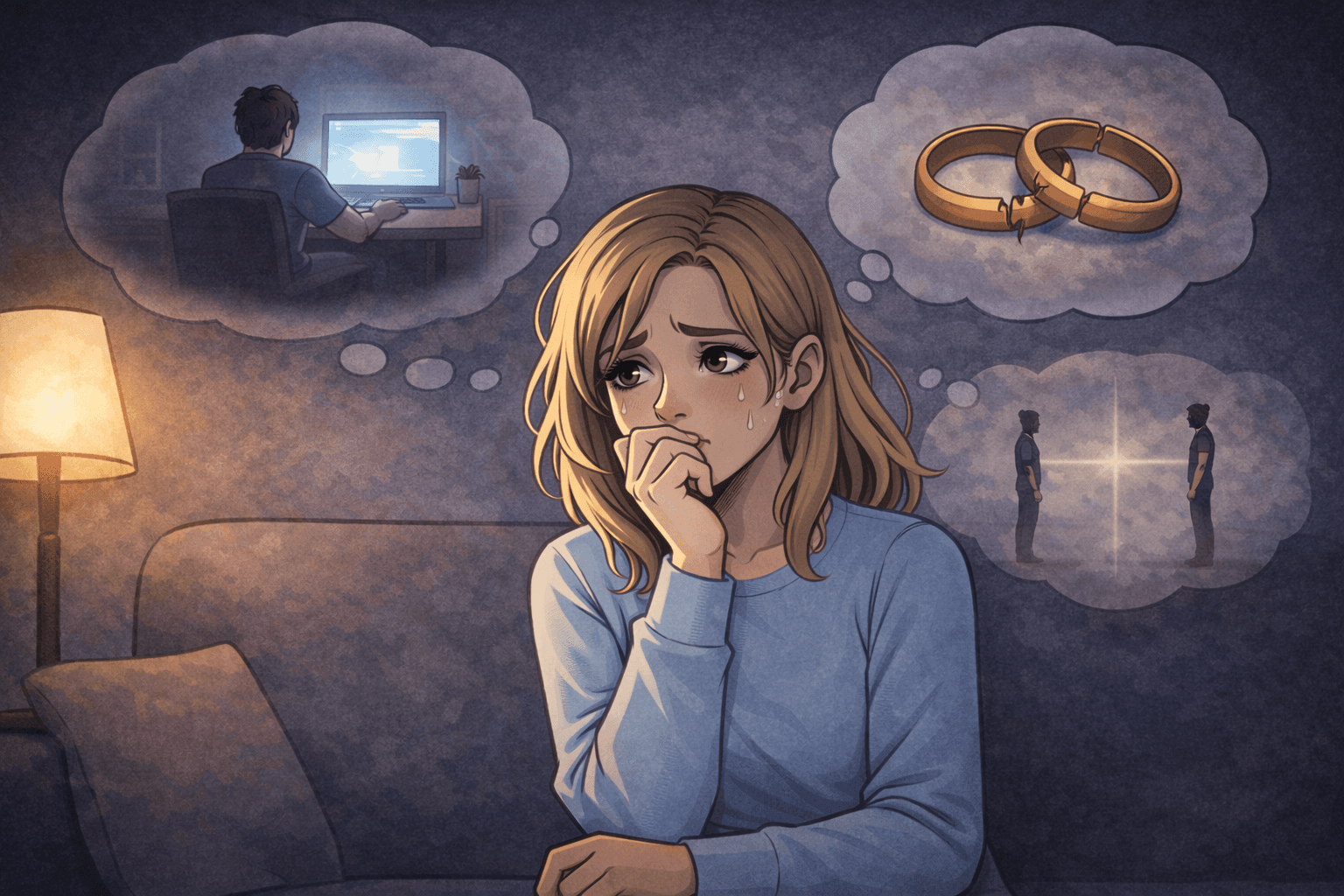
Discovering that your husband watches porn can feel devastating. Many women immediately wonder:
-
Am I not enough?
-
Is he no longer attracted to me?
-
Is this cheating?
-
Does this mean he has secret desires?
-
Is my marriage falling apart?
Those questions are understandable.
But pornography use usually says far more about long-standing habits, conditioning, coping mechanisms, and secrecy than it does about your attractiveness or worth.
That does not make it harmless.
But it does change how you interpret what happened.
You just found that your husband watches porn
And not just with passing curiosity or occasional viewing. He’s a full-on, habitual pornography watcher, with habits that could easily pass for addiction. And the worst part of all is that he’s managed to keep it a secret.
He watched porn when you met him, while you dated, while you were engaged, and throughout your marriage.
That’s a tough pill to swallow. Whatever you’re feeling is completely justified — and despite how emotionally turbulent it may be — rational as well.
Fifty-five percent of married men say they watch porn at least once a month. Within that group, 63% of men ages 18–30 and 38% of men ages 31–49 admit to watching it at least a few times a week. While it isn’t clear exactly what constitutes “a few times per week,” any amount of pornography viewing in a relationship does not bode well for the outcome.
Especially when the other partner is kept in the dark.
Fifty percent of women disapprove of pornography use in marriage, and 38% consider it cheating. While many men and women argue that it’s “just a screen” and “the girl isn’t real,” if it’s a hard boundary in your relationship, then you have every right to feel betrayed.
Rest assured: if you found this article, you are not alone in your feelings.
This article will not attempt to change how you think or feel. If you were hoping to read an argument that simply sides with your emotions or tries to convince you to ignore them, this isn’t that article.
Instead, I’m going to explain why men watch porn in marriage — without blaming the wife or absolving the husband of responsibility.
I’ll also explain what it most likely means — and more importantly, what it does not mean — if your husband watches porn. I’ve spoken with wives who harbor genuinely terrifying fears about their husbands’ secret desires and behaviors once they discover the porn use.
While I can’t promise that everything below will apply directly to your husband, there’s a good chance much of it will.
Understanding this can help you see one fundamental truth about your husband’s porn use:
Why Does My Husband Watch Porn?
Many women assume pornography must mean dissatisfaction:
"He watches porn because I’m not attractive enough."
"He watches because I’m not enough sexually."
"He watches because I failed somewhere."
In reality, many men begin watching pornography years before marriage.
For many, pornography becomes:
-
routine
-
stress relief
-
boredom relief
-
escape
-
emotional coping
-
conditioned behavior
That doesn't excuse it.
But understanding why something happens and approving of it are not the same thing.
It’s not your fault if your husband watches porn
It’s easy for many women to think things like:
If I were more attractive, he wouldn’t watch porn. If I were more adventurous in bed, he wouldn’t watch porn. He watches porn because I don’t have sex with him enough.
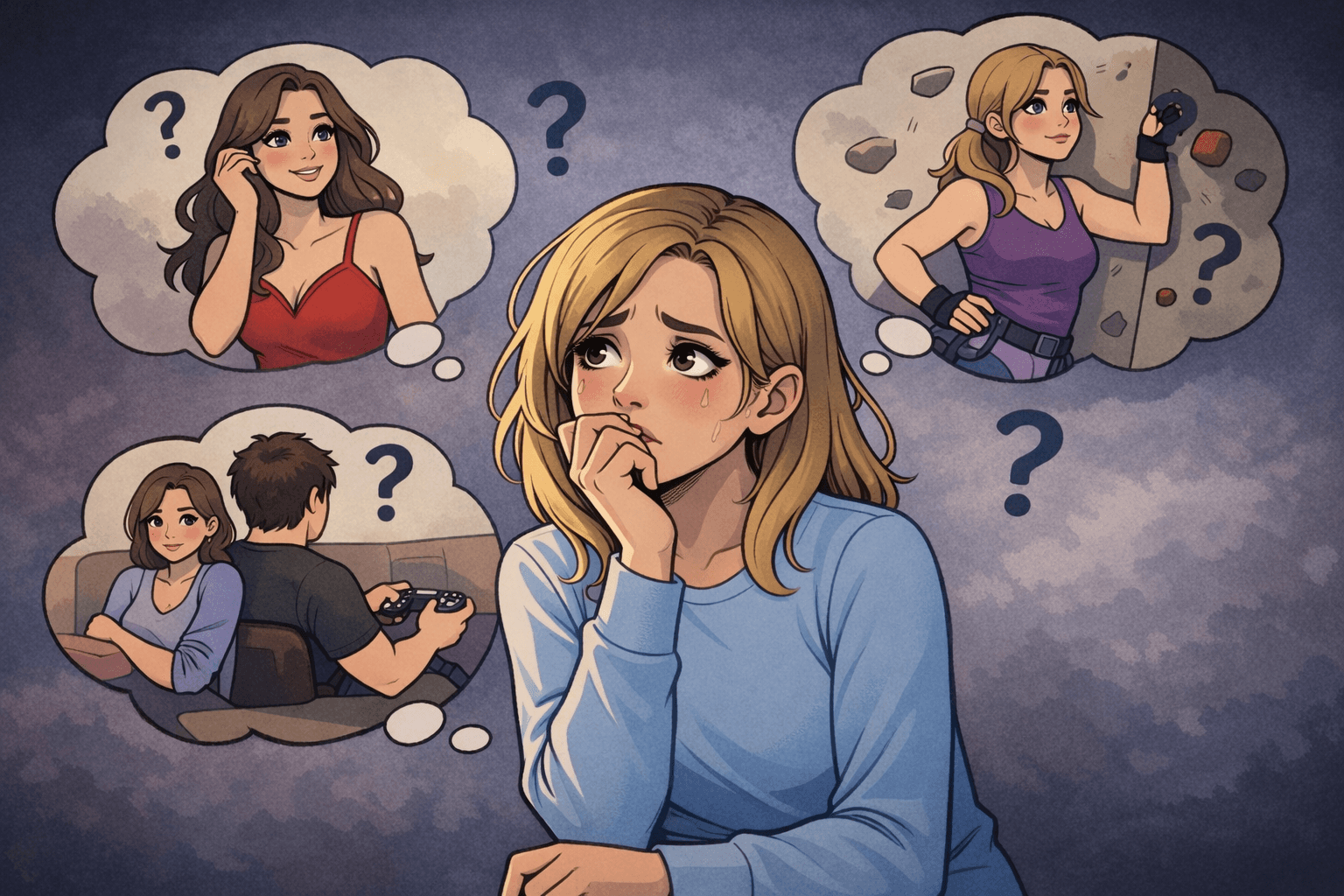
As we’ll see later, most of that isn’t true. And not only is it untrue, but it also shifts the blame onto something you did — and that’s not correct.
You did not make your husband look up porn and hide it from you. Those were his decisions.
Even if there has been tension in the relationship or things haven’t been as exciting in the bedroom, that does not excuse pornography use.
If you take nothing else from this article, understand this: you did not force an adult man to watch strangers on the internet having sex. There is always an alternative.
Blaming yourself for his porn use would be like accepting responsibility if he cheated on you.
Speaking of cheating, there’s something else that comes up whenever I discuss this topic with both men and women.
If you've ever wondered about the psychological and neurological reasons why quitting porn is so difficult, read this article. I explain how the 17 tricks of porn and how they take advantage of your brain, and how they are so difficult to walk away from.
Recovery Guides
Your husband is (probably) not a pervert or pedophile.
I once spoke with a woman who had discovered that her husband watched pornography. She became terrified that it meant he might look at their daughter as a sexual object.
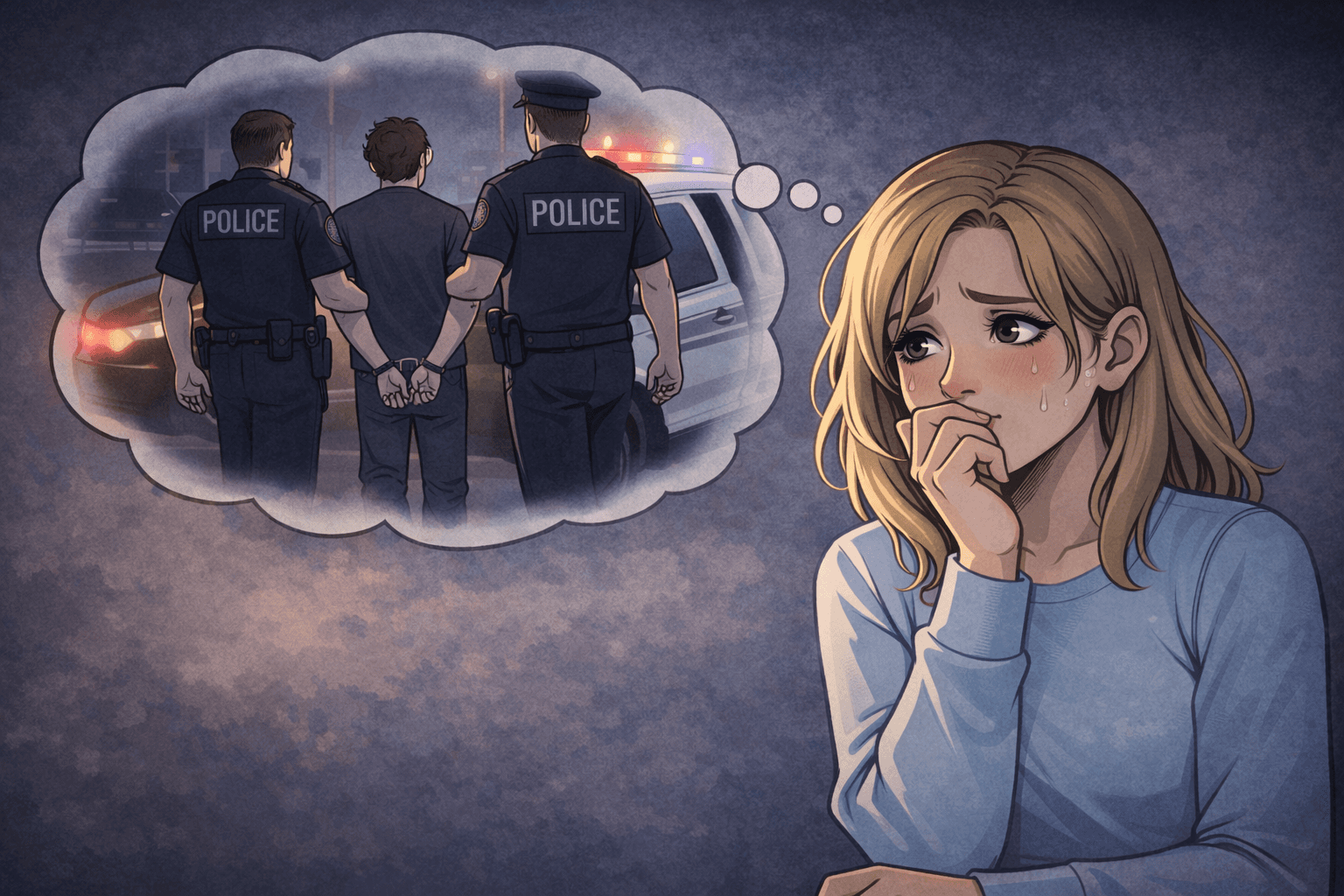
While I can’t speak for every man, the overwhelming majority of men who watch porn are not thinking about incest or consuming child sexual abuse material (CSAM). Even beyond anecdotal experience, research does not show a direct link between general pornography consumption and the likelihood of committing sexual offenses.
That said, if you ever discover that your husband is viewing illegal material of any kind, that is no longer a marital issue — it’s a legal one. In that case, you should contact your local authorities immediately.
Is watching porn cheating?
I used to think the answer to this question depended on how you personally viewed porn. My stance was this:
If you’re one of the 62% of women who don’t view porn as cheating, then it’s clearly not cheating. After all, if you don’t feel that it’s cheating, then it must not be cheating.
As I’ve gotten older and more refined in how I think about ethical and moral questions, I’ve come to see the issue differently:
No matter how you feel about it, if it breaks your marriage vow and commitment to one another, then it is cheating. How you personally feel about the cheating is your prerogative, but it’s like a contract.
Just because you don’t get sued for breaching the terms of a contract doesn’t mean you didn’t breach it. It just means the person who had the right to come after you chose not to.
This naturally leads to the question:
“How is watching porn cheating? I’m not with the people in the video. They’re on a screen. I’ll admit it’s kind of shady and degenerate, but it’s not infidelity.”
Here’s a thought exercise to show how watching pornography can easily fall under the category of cheating.
Imagine your husband tells you this:
“I’m not sleeping with her. I’m not texting her. I’m not even talking to her. I just watch her. I look at her body. I fantasize about being with her. I use her to get sexually aroused and orgasm. But I would never actually meet her.”
Now remove the screen.
Instead of a video, imagine he has a favorite live cam model he returns to regularly. He knows when she logs on. He chooses her specifically. She performs while he watches and masturbates.
Still not cheating?
At this point, many people would say yes — but the argument about distance usually comes up. So let’s remove the internet entirely.
Imagine he drives somewhere private. He sits in a room while a woman performs sexually for him. No touching. No kissing. No sex. He masturbates. He leaves.
Would that violate the spirit of your marriage?
If your answer changes the moment she’s physically in the room, then the issue was never really about physical contact.
It’s about sexual exclusivity.
Marriage isn’t just about bodies. It’s about where desire, attention, and intimacy are directed. When you commit to someone, you’re not just promising physical restraint. You’re promising that your sexual focus belongs inside the relationship.
Now, at this point, I know the obvious pushback:
“Porn is prerecorded. It’s not interactive. The people in the videos don’t even know he exists.”
That’s true. But think about what prerecorded pornography actually is.
Sexual content is intentionally created so strangers can consume it for arousal and orgasm. The entire purpose of the recording is to be used sexually by someone who isn’t their partner.
So imagine this instead.
Your husband keeps a private collection of explicit recordings of specific women. He chooses them. He searches for them. He returns to them. He uses them repeatedly for sexual release.
They don’t know him. He doesn’t know them.
Does that make it fundamentally different?
If the only thing that changes is scale — if it feels more acceptable because millions of other men are doing the same thing — then the difference isn’t moral. It’s statistical.
The internet makes it anonymous. It makes it easy. It makes it feel impersonal.
But impersonality doesn’t erase what’s happening.
His sexual arousal is directed outside the marriage, and the screen doesn’t remove the intention or the outcome.
It just creates distance.
And distance is often what allows something to feel harmless that wouldn’t feel harmless at all if it happened any other way.
If this exact behavior happened without a screen, would you still call it harmless?
If the answer is no, then you have your answer.
Further reading: Is jerking off cheating?
Should I Be Upset That My Husband Watches Porn?
Many people immediately ask whether they're overreacting.
You're not.
Whether pornography counts as betrayal depends partly on your relationship expectations and boundaries.
But even when people disagree about whether porn is "cheating," secrecy alone can create real emotional pain.
Broken trust hurts.
Feeling replaced hurts.
Feeling excluded hurts.
You do not need permission to feel those things.
Why does my husband even watch porn? Am I not enough?
Unfortunately, many men have been watching porn for so long that it feels normal to them. It’s not a crisis. It’s not rebellion. It’s not even necessarily dissatisfaction.
It’s just… routine.
Most boys are first exposed to pornography between the ages of 10 and 12.
If the median age of marriage for men is around 30, that means many husbands have been consuming porn for nearly two decades before they ever say “I do.” In some cases, they’ve been watching it longer than they haven’t.
By the time you married him, it may not have even registered as a problem. It was background noise — something he and most of the men he knew did. Culture has become progressively more sexualized and permissive, and the internet removed every barrier that once made pornography inconvenient. What used to require effort, risk, or embarrassment now requires only a smartphone and privacy.
That doesn’t make it harmless.
It just makes it common.
And common behaviors can still damage a marriage.
Even setting morality aside, pornography use within marriage is associated with significantly higher rates of divorce — in some studies, nearly double the odds. Most men don’t know that. But ignorance of the risk doesn’t eliminate the risk.
Further reading: Porn in marriage
There’s also the conditioning factor.
Repeated exposure wires habits. The brain adapts to what it consumes. Over time, arousal becomes linked to novelty, intensity, and screen-based stimulation. Neural pathways form.
What once felt shocking becomes familiar. What was familiar becomes boring. Escalation often follows.
Further reading: Porn addiction effects
That doesn’t mean he’s broken beyond repair.
It does mean the habit isn’t as simple as “just stop.”
For many men, porn becomes a coping mechanism. Stress. Anxiety. Boredom. Insecurity. It provides a quick hit of relief — predictable, private, and controllable. The relief is temporary, but the pattern sticks. Shame follows. Stress returns. The cycle repeats.
Further reading: Can you quit porn cold turkey?
From the outside, it looks selfish.
From the inside, it often feels automatic.
None of this means you aren’t enough.
Pornography predates you. In many cases, it predates adulthood. It was there before the marriage, before the commitment, before the life you built together. That doesn’t excuse it — but it explains why it doesn’t feel to him like a commentary on your attractiveness or desirability.
The deeper issue is this:
He normalized something that directly conflicts with the exclusivity of marriage. And instead of confronting it, he hid it.
Secrecy layered on top of sexual redirection is what turns a private habit into a relational fracture.
Most men watch because it’s what they’ve always done. Because it’s easy. Because it’s normalized. Because it works — temporarily.
But something being normalized does not make it neutral.
And something feeling automatic does not make it harmless.
Does It Mean I’m Not Enough?
For many women, this is the first conclusion they reach.
But pornography often predates the marriage itself.
Many men start consuming pornography during adolescence and continue long before entering serious relationships.
That means the habit frequently existed before you.
This does not mean you're unattractive.
It does not automatically mean your sex life is inadequate.
And it does not mean another woman is replacing you.
The larger issue is often secrecy and redirected intimacy—not your worth.
So what do I do now that I know my husband watches porn?
If you decide to stay in the relationship, understand that getting past this won’t be easy. But it is possible — if you take the right steps and he supports you with real, changed behavior.

Don’t react in the moment
No matter what path you take, the most important thing is that you don’t react immediately. No one has ever improved a situation or fixed a problem through an impulsive emotional reaction.
This applies not just to how you speak to him, but to everything you do. Don’t make a social media post about his behavior. Don’t blast him publicly. This is still your relationship, and he’s still a man you chose. Be intentional about how you handle it.
Be careful who you share with
Even sharing with your sisters or best friends can create complications. Their reactions may push you in a direction you weren’t planning to go.
You may want to leave, and your confidants convince you to stay — or vice versa. They may mean well, but when people give advice, they’re often projecting what they would do without fully considering how you actually feel.
This is stressful, and you need support. But be careful about exposing yourself to too many outside opinions. No matter what you decide, you’re the one who has to live with it — not the people advising you.
Understand, but don’t condone
This is a difficult balance.
You can try to understand why he did what he did without signaling that you approve of it. Many people hesitate to show any understanding because they fear it will look like permission.
It won’t.
You’re not saying his behavior was acceptable. You’re making it clear that it hurt you and that it crossed a line — while also acknowledging that there were likely underlying factors that contributed to it.
That tone matters. When a man doesn’t feel attacked, he’s less likely to become defensive. He’s more likely to listen. More likely to admit fault. More likely to change.
Escalation shuts conversations down. Measured firmness keeps them open.
Make sure he’s ready to prove his commitment
It’s one thing to say you want to be better. It’s another thing to accept guardrails.
That might mean removing privacy settings on his phone, installing accountability software, or limiting device use to shared spaces.
You may not implement all of that. But if you suggest it, he shouldn’t resist reasonable transparency.
Guardrails aren’t punishment. They’re structure. They make it harder to fall back into old patterns during moments of weakness.
And if he’s serious about quitting, he should welcome anything that makes relapse less likely.
Further relapse: Porn Relapse: What to do next without spiraling
Forgive him — if you choose to stay
If you decide to remain in the marriage, forgiveness isn’t optional.
He likely already feels shame. But if you hold this over him indefinitely — bring it up in every argument, use it as leverage, let resentment build — then healing won’t happen.
If you know you won’t be able to move past it, that’s something you need to confront honestly.
Staying means working toward a better future — not weaponizing the past.
Forgiveness doesn’t mean forgetting. It doesn’t mean trust instantly returns. It means you’re choosing to rebuild instead of relitigate.
And that choice has to be real.
Can A Marriage Recover After Porn?
Discovering pornography use does not automatically mean your marriage is over.
But rebuilding trust usually requires more than promises.
It often requires:
-
honesty
-
transparency
-
accountability
-
behavior change
-
time
Trust rarely returns because someone says sorry.
Trust returns when behavior changes consistently over time.
One more thing that can help the relationship.
If he’s serious about changing, he shouldn’t be trying to do it alone.
Porn thrives in secrecy and isolation. It survives on convenience and privacy. Removing it usually requires structure, accountability, and a clear plan — not just willpower in a moment of motivation.
Further Reading: How to help a porn addict
That might mean counseling. It might mean accountability software. It might mean bringing another trusted man into the process.
It might also mean using something designed specifically to help men break the habit.
If your husband is willing to take action, tools like Relay exist for this exact reason — to give men structure, accountability, and a defined path forward instead of vague promises to “just stop.” It’s not about punishment. It’s about replacing a private habit with intentional support.
You can’t force him to change.
But if he’s ready, he shouldn’t have to guess at how.
And if both of you are willing to confront this honestly, what feels like a fracture right now can become the beginning of something stronger — more transparent, more disciplined, and more intimate than what you had before.
References
Longitudinal / Strongest Causal Evidence
Perry, S. L., & Schleifer, C. (2018). Till Porn Do Us Part? A Longitudinal Examination of Pornography Use and Divorce. Journal of Sex Research, 55(3), 284–296. https://doi.org/10.1080/00224499.2017.1317709 PMID: 28497988
Peer-Reviewed Couple Data
Carroll, J. S., Busby, D. M., Willoughby, B. J., & Brown, C. C. (2017). The Porn Gap: Differences in Men’s and Women’s Pornography Patterns in Couple Relationships. Journal of Couple & Relationship Therapy, 16(2), 146–163. https://doi.org/10.1080/15332691.2016.1238796
Medical Review Article
Bordoloi, M., Durkin, I., & Aggarwal, A. (2024). Effects of Pornography on Youth: A Review. Missouri Medicine, 121(3), 195–197. PMID: 38854615; PMCID: PMC11160374.
Supplementary Statistical Source
Enough Is Enough. (n.d.). Statistics on Adults and Online Pornography. Retrieved from https://enough.org/stats_adults_online_porn