

Key takeaways about why it's so hard to quit porn
-
Porn is hard to quit because it combines biological drives, psychological conditioning, and instant technological access.
-
It triggers dopamine-driven cravings while reinforcing habit loops tied to stress, boredom, and isolation.
-
Unlimited novelty activates the brain’s desire for new sexual stimuli, making repeated use more compelling.
-
Porn uses variable reward systems similar to gambling, keeping users engaged through unpredictability.
-
Environmental cues and conditioning can trigger urges automatically before conscious decision-making.
-
The brain often prioritizes immediate reward over long-term benefits, making quitting difficult in the moment.
-
Repeated exposure can strengthen cravings even as enjoyment decreases, creating a persistent cycle of use.
-
Quitting is difficult not because of weak willpower, but because multiple reinforcement systems are working together.
Frequently asked questions about why porn is so addictive
Why is porn so addictive?
Porn can feel addictive because it activates the brain’s reward system through repeated dopamine spikes. Over time, the brain learns to associate porn with quick relief from stress, boredom, or negative emotions. This conditioning, combined with unlimited novelty and instant access, reinforces the habit and makes it harder to stop.
Why is it so hard to stop watching porn even when you want to?
It’s difficult to stop because porn use becomes tied to automatic triggers like stress, loneliness, or fatigue. These triggers activate learned habit loops before conscious decision-making kicks in. At the same time, the brain favors immediate rewards over long-term benefits, making it harder to resist in the moment.
Does watching porn change your brain?
Research suggests that repeated porn use can affect how the brain responds to reward, motivation, and cues associated with sexual content. Over time, this may lead to increased cravings, reduced sensitivity to normal stimuli, and stronger reactions to porn-related triggers. These changes are similar to patterns seen in other behavioral habits.
How long does it take to break a porn habit?
There’s no fixed timeline, but many people begin noticing improvements within a few weeks of stopping. However, breaking the underlying habit loop and rewiring triggers can take longer depending on usage patterns and lifestyle factors. Consistency and addressing root causes play a major role in long-term success.
Relay is a therapist-backed group recovery program for pornography and unwanted sexual behavior, combining daily accountability, real-time urge support, and a private peer community

Why It’s So Hard to Quit Porn: 17 Psychological and Biological Reasons
Modern pornography exploits several psychological mechanisms that make stopping far harder than most people realize. Pornography itself isn’t new. What is new is the technology that delivers it.
High-speed internet, smartphones, and streaming platforms have made pornography easier to access than almost any other form of entertainment. Today it’s available instantly, privately, and in unlimited supply.
It wasn’t always this way.
If someone wanted to watch pornography a few decades ago, they had to go to a seedy theater late at night or walk into a shady adult store and buy a tape or magazine in a big, embarrassing box. Acquiring porn required effort, storing it required space, and privacy wasn’t guaranteed.
The internet erased all of those barriers.
High-speed wireless connections and smartphones put an endless supply of pornography in everyone’s pocket. What used to require effort and planning now takes seconds.
But the real change isn’t just convenience.
Modern internet porn doesn’t just make sexual content easier to access—it also interacts with human psychology in ways earlier forms of pornography never could. The result is a perfect storm: a product that is incredibly easy to acquire and surprisingly difficult to stop using.
Porn is uniquely compelling because it combines several powerful behavioral forces that evolved long before the internet existed. Three of the most important are unlimited novelty, slot-machine style reward systems, and dopamine-driven craving.
Those forces—and several others—help explain why so many people struggle to stop watching porn, even when they genuinely want to.
Here are some of the most important psychological and behavioral mechanisms behind it. Even with porn blockers in place, these can be tough to overcome.
Cognitive Reasons It’s So Hard To Stop Watching Porn
1. The Zeigarnik Effect
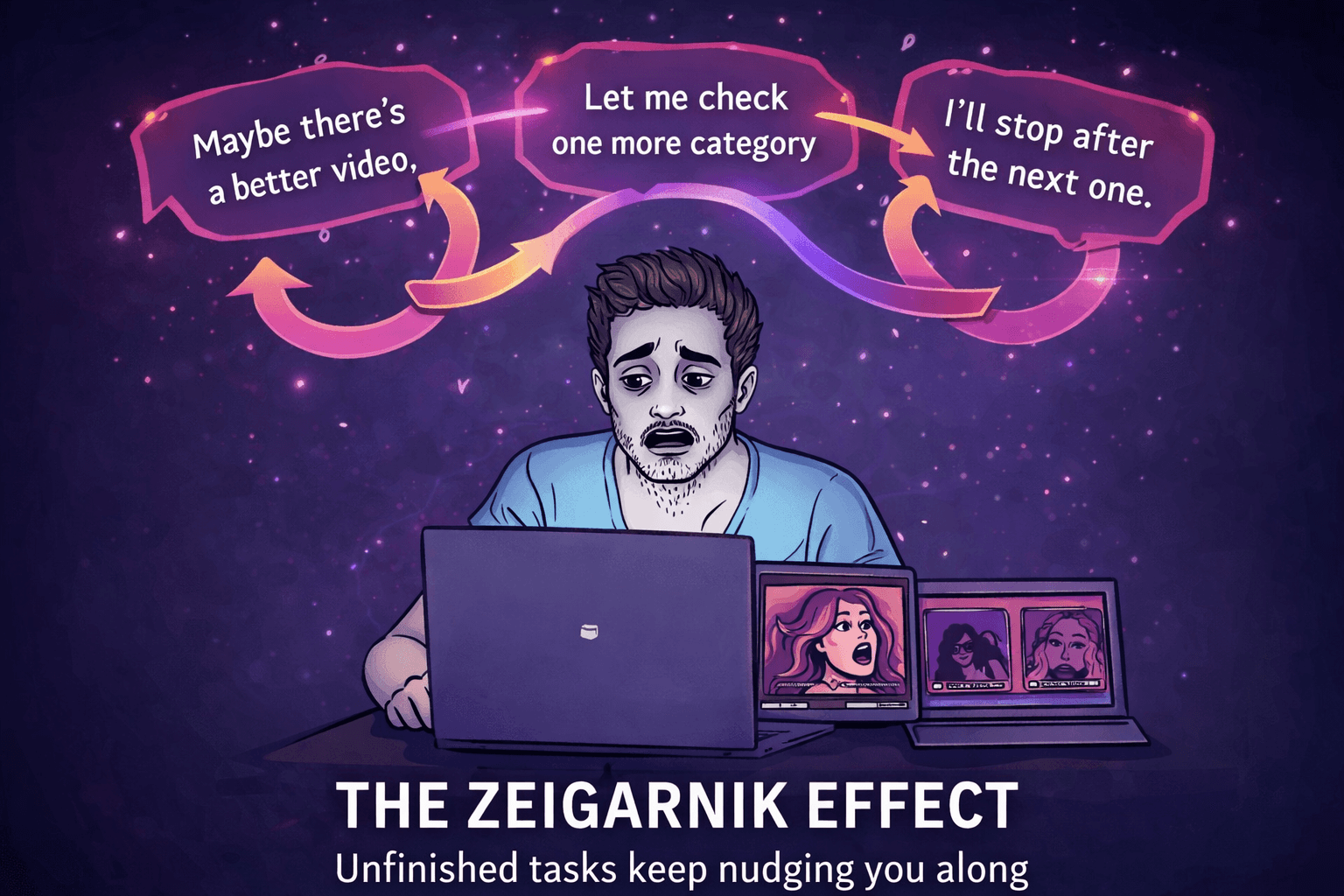
One reason porn browsing is so difficult to stop once it starts is a psychological phenomenon known as the Zeigarnik Effect. In simple terms, the brain remembers unfinished tasks more strongly than completed ones.
This effect was first observed by psychologist Bluma Zeigarnik, who noticed that waiters remembered unpaid orders better than completed ones. Once a task was finished, the memory faded quickly. But unfinished tasks stayed active in the mind.
Porn browsing naturally creates unfinished loops.
Unlike a movie or television show that has a clear beginning and end, porn sites are built around endless scrolling and constant choice. Each video leads to another suggestion, another thumbnail, another category.
The brain interprets this as a series of incomplete decisions:
-
Maybe there’s a better video.
-
Let me check one more category.
-
I’ll stop after the next one.
Because the brain dislikes unresolved mental loops, it keeps nudging you to finish what you started—even though there is no real endpoint.
In practice, this means the difficulty isn’t just resisting porn itself. It’s resisting the feeling that you haven’t quite found what you were looking for yet.
That open loop keeps people clicking, scrolling, and searching far longer than they intended.
Further reading: How to avoid porn
2. Attentional Bias
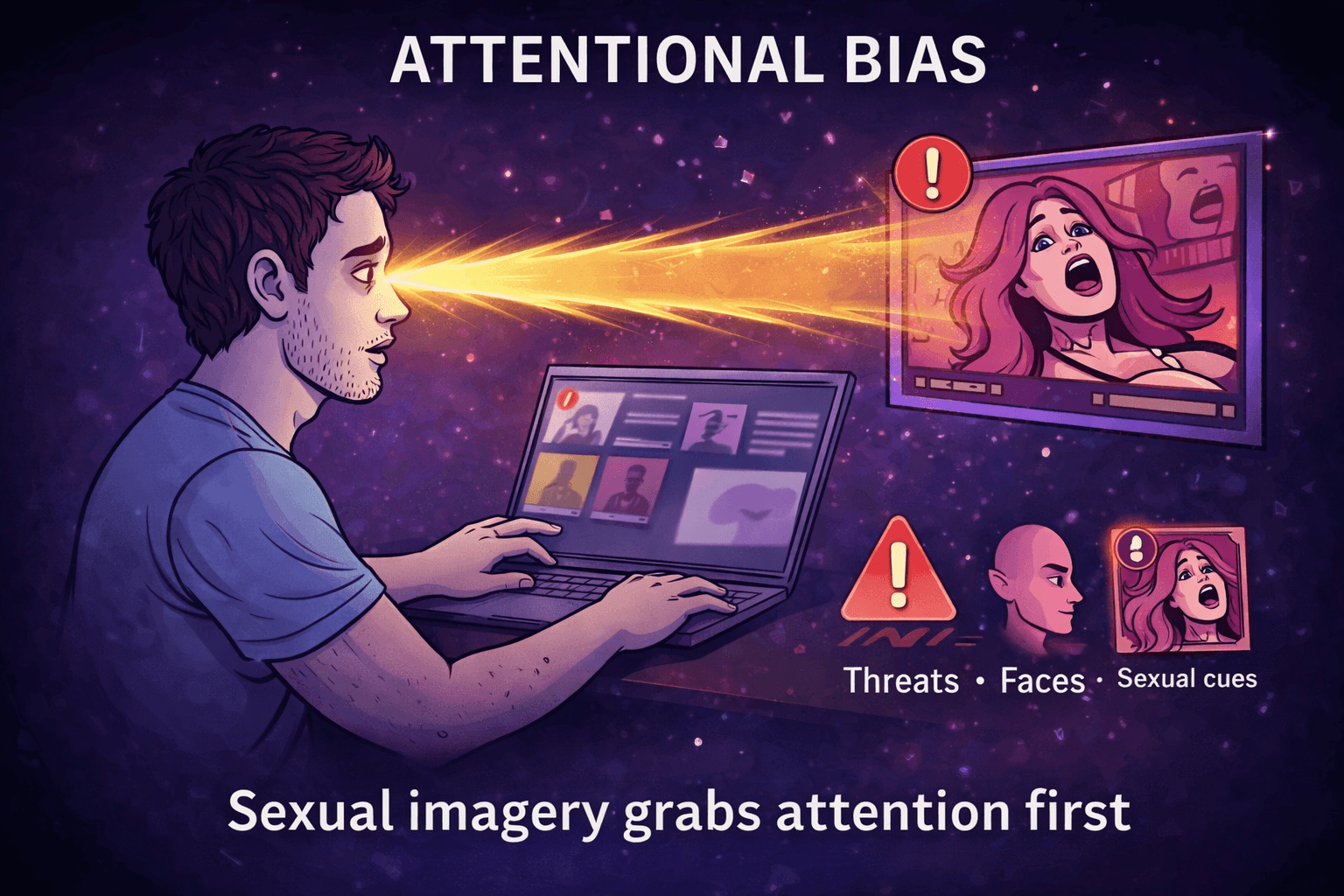
Human attention isn’t neutral. The brain evolved to automatically prioritize certain kinds of information that were important for survival and reproduction. Among the strongest of these signals are:
-
threats
-
faces
-
sexual cues
Long before conscious thought gets involved, your brain is already scanning the environment for these kinds of stimuli.
Sexual imagery is particularly powerful because it activates neural systems tied to reproduction and reward. When the brain detects a sexual cue—even briefly—it automatically pulls attention toward it.
Modern pornography takes advantage of this built-in bias. Porn sites are filled with highly salient visual signals designed to capture attention immediately: provocative thumbnails, exaggerated body cues, and rapidly changing imagery.
The key point is that this happens before you make a deliberate choice.
You don’t first calmly evaluate whether you want to look at the image. Your attention is already drawn to it. Only afterward does the conscious mind attempt to decide whether to keep looking.
That sequence—automatic attention first, conscious control second—makes resisting pornography far harder than it might seem. By the time willpower enters the picture, the stimulus has already grabbed your brain’s attention.
3. Availability Heuristic
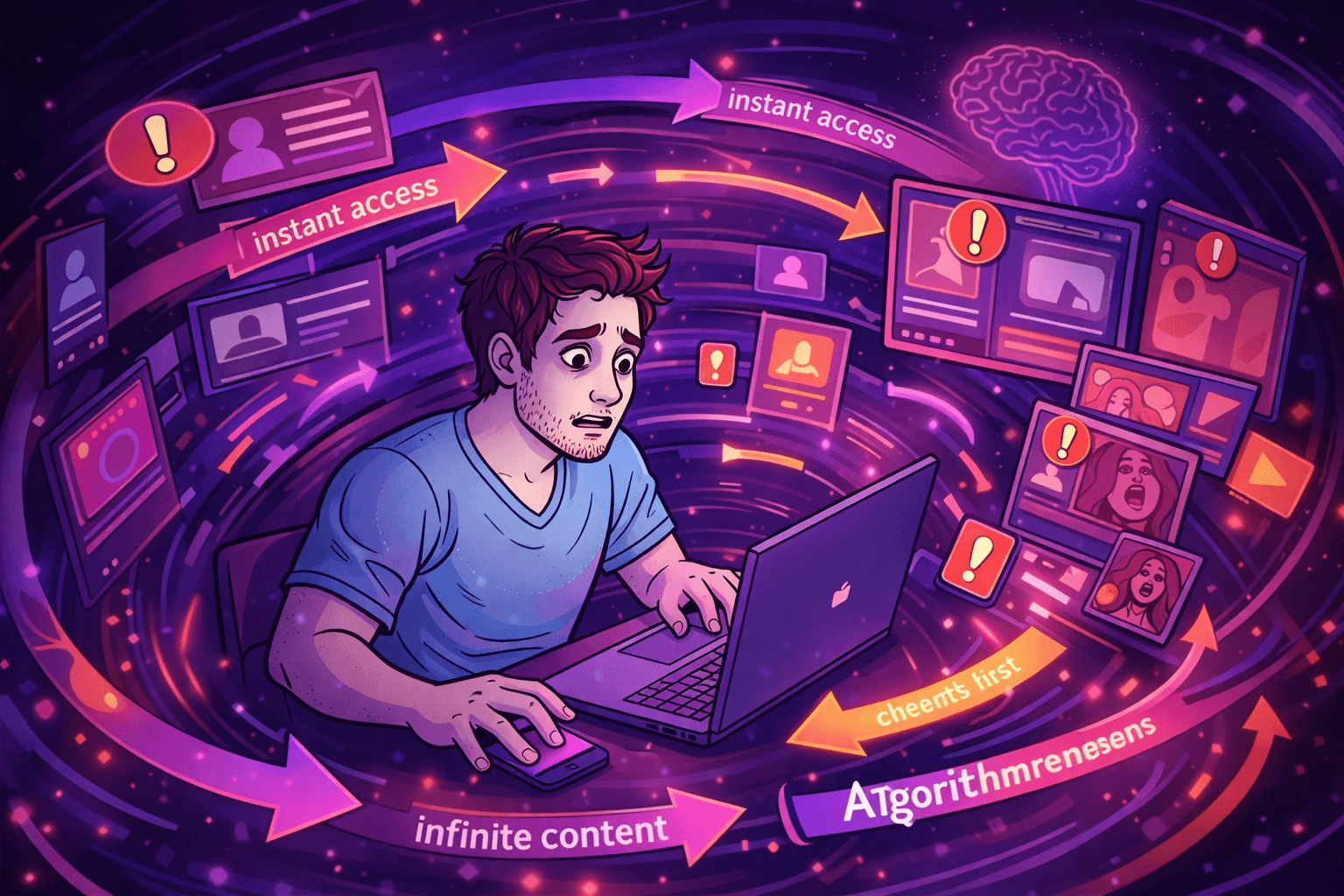
The easier something is to access, the more likely we are to think about and use it.
The availability heuristic describes our tendency to judge how common or tempting something is based on how easily it comes to mind. When a behavior is constantly visible, accessible, and easy to recall, the brain treats it as more relevant and more worth considering.
Modern internet porn is almost perfectly designed to exploit this bias.
Unlike older forms of pornography that required effort to obtain, today’s porn offers:
-
an effectively infinite supply of content
-
instant access through smartphones and computers
-
algorithmic recommendations that constantly suggest new material
Because the content is always available, it stays mentally available as well. The brain learns that sexual stimulation is only a few clicks away, which makes the idea of watching porn surface more frequently during moments of boredom, stress, or curiosity.
In other words, the easier something is to access, the more often it appears as an option in your mind.
With porn, that option is almost always just a few seconds away.
How Evolutionary Biology Makes It Hard To Stop Watching Porn
4. Coolidge Effect
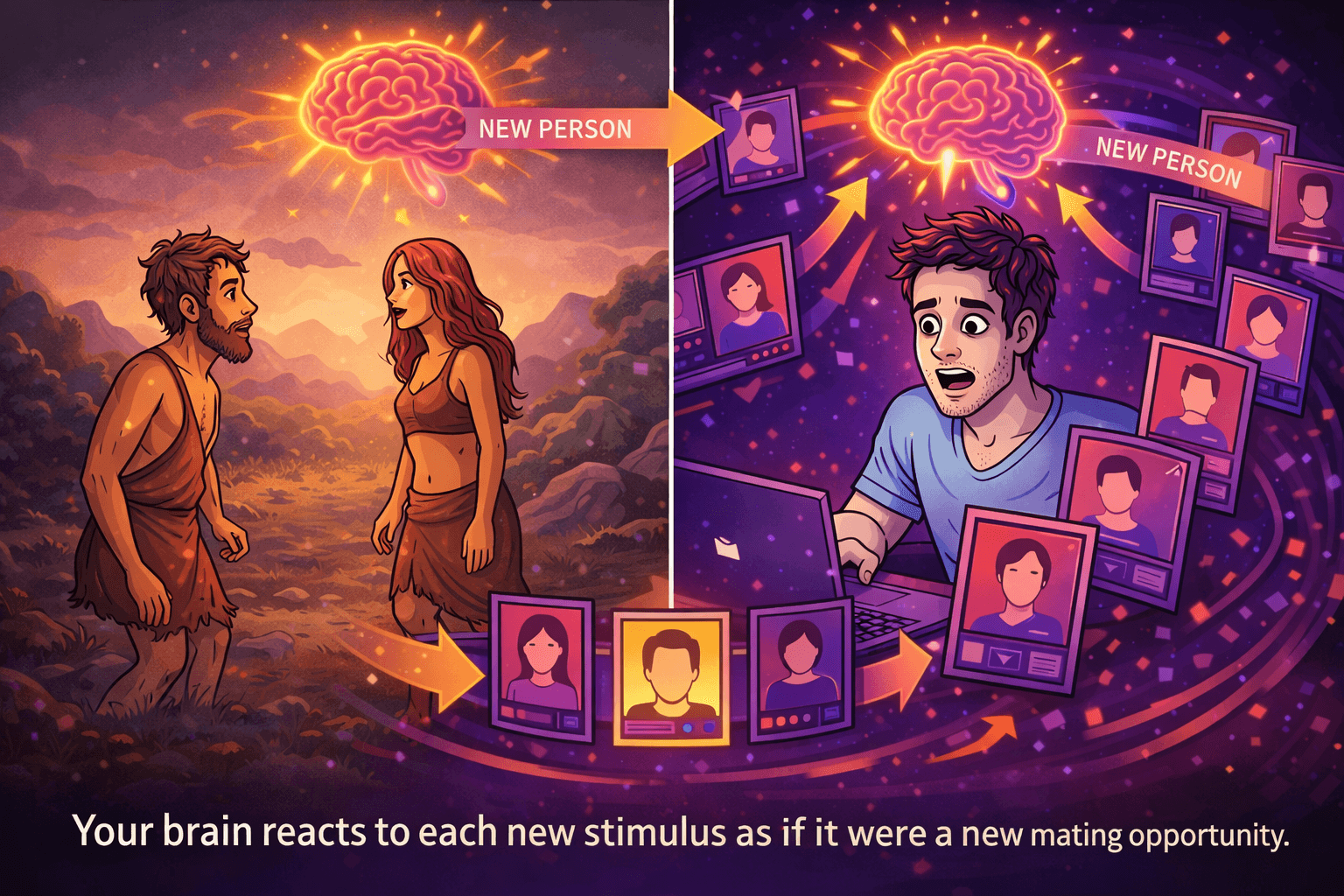
One of the most powerful biological forces driving porn consumption is known as the Coolidge Effect. This term describes a well-documented pattern in sexual behavior: male sexual motivation increases when exposed to new partners.
Researchers first observed this phenomenon in animal studies. When a male was introduced to a female, sexual interest gradually declined after repeated encounters. But when a new female was introduced, motivation and arousal quickly returned—even if the male had just mated moments earlier.
The brain appears wired to respond strongly to sexual novelty.
From an evolutionary perspective, this makes sense. Seeking new mating opportunities increases the chances of passing on genes. The human brain evolved in environments where encountering multiple novel partners was rare and unpredictable.
Internet pornography completely removes those natural limits.
Instead of a small number of potential partners, porn offers endless performers, categories, and novelty
Every new image or video presents the brain with what appears to be a new mating opportunity. Each time novelty appears, sexual motivation spikes again.
This means porn browsing doesn’t behave like watching a single piece of media.
Instead, it becomes a constant sequence of novelty triggers, repeatedly activating the brain’s evolutionary drive for new sexual stimuli.
In effect, modern porn delivers far more sexual novelty than the human brain evolved to handle.
See how long it can take to deal with this issue on the no fap timeline benefits page.
5. Supernormal Stimulus
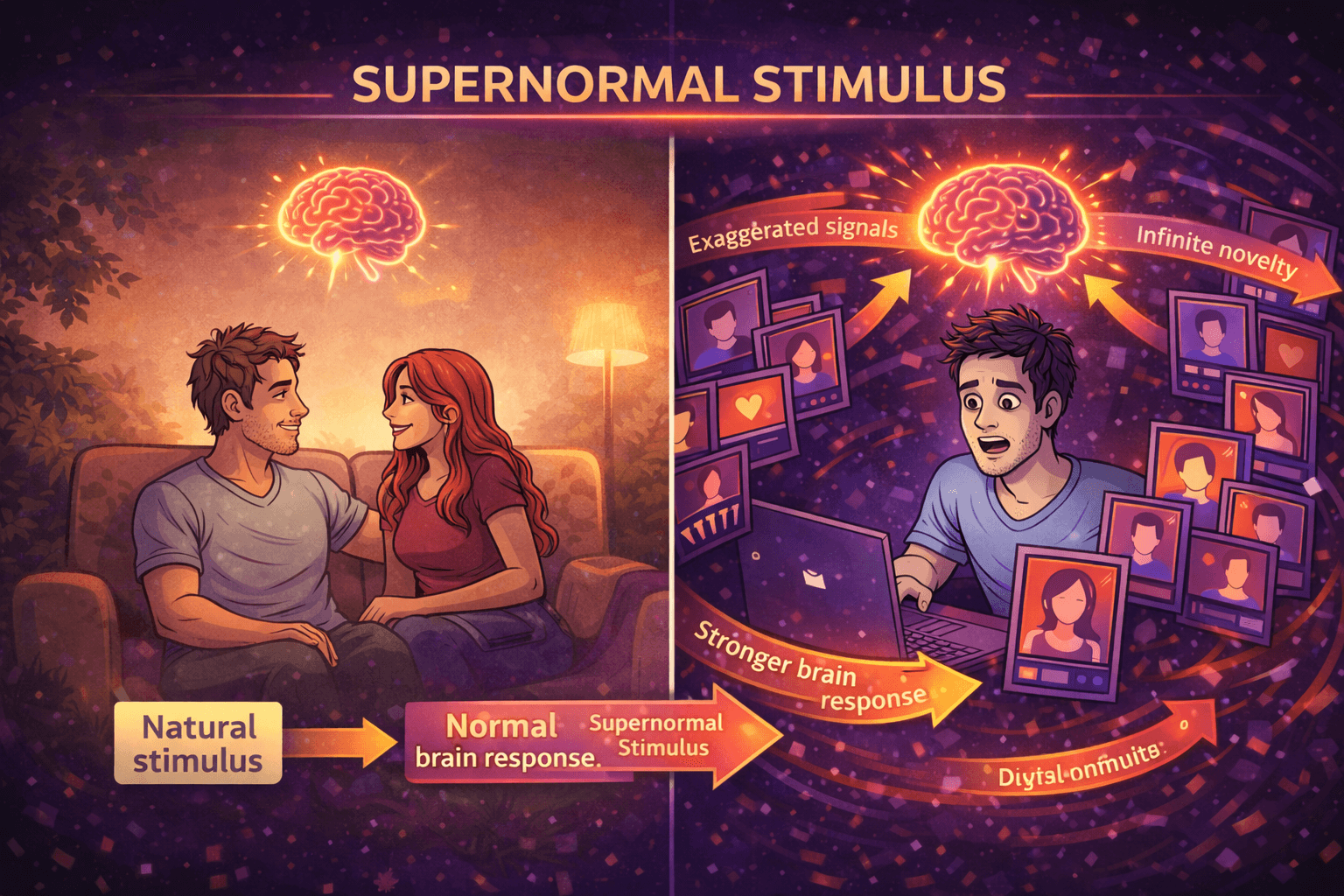
The concept was first described by Nobel Prize–winning ethologist Nikolaas Tinbergen while studying animal behavior. Tinbergen discovered that animals often respond more strongly to exaggerated versions of natural signals than to the real thing.
For example, certain birds will prefer to sit on oversized artificial eggs rather than their own. The exaggerated stimulus triggers the instinct even more strongly than the natural version it evolved to detect.
Human psychology works in similar ways.
Pornography amplifies the visual and behavioral cues the brain associates with sexual attraction. Compared to normal real-world encounters, porn often presents:
-
exaggerated bodies designed to maximize visual sexual signals
-
extreme or highly stylized scenarios that intensify stimulation
-
infinite novelty, with a constant stream of new faces and situations
These exaggerated signals can activate sexual motivation systems more strongly than typical real-life experiences.
In other words, porn is not just another form of sexual imagery. It is an engineered exaggeration of sexual cues, designed to push the brain’s natural attraction mechanisms far beyond what they evolved to handle.
This especially true in dealing with something like hentai.
Learning and Conditioning Pathways to Porn Addiction
6. Pavlovian Conditioning
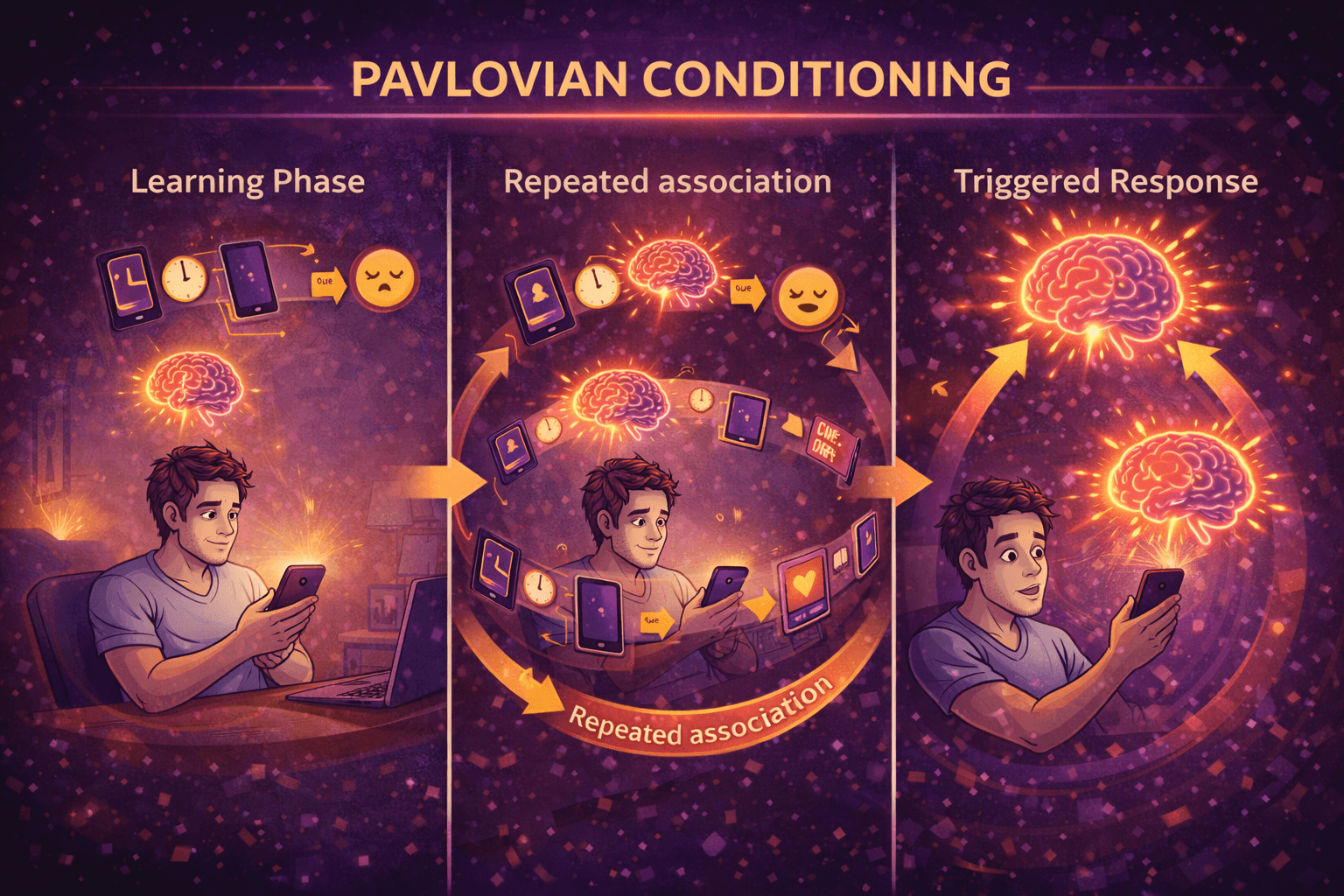
Another reason porn habits become difficult to break is Pavlovian conditioning, a form of learning first studied by Ivan Pavlov.
Pavlov discovered that the brain learns to associate certain cues with specific outcomes. In his famous experiments, dogs began salivating when they heard a bell that had previously been paired with food. Eventually, the bell alone was enough to trigger the response.
The same type of learning can occur with behaviors like watching porn.
Over time, the brain begins linking pornography with specific environmental cues, such as:
-
being alone
-
using a phone late at night
-
boredom or idle time
-
stress or emotional discomfort
After enough repetition, these cues become triggers. The brain learns that certain situations predict sexual stimulation, and it automatically begins preparing for that reward.
At that point, the urge to watch porn doesn’t always start with a conscious decision. Instead, the situation itself activates the craving.
Someone might pick up their phone late at night, feel bored while scrolling, or sit alone with a laptop—and suddenly feel the impulse to watch porn before they’ve even thought about it.
That’s conditioning at work: the cue appears, and the learned response follows.
Further reading: How to use urge surfing to to quit porn addiction faster
7. Habit Loop
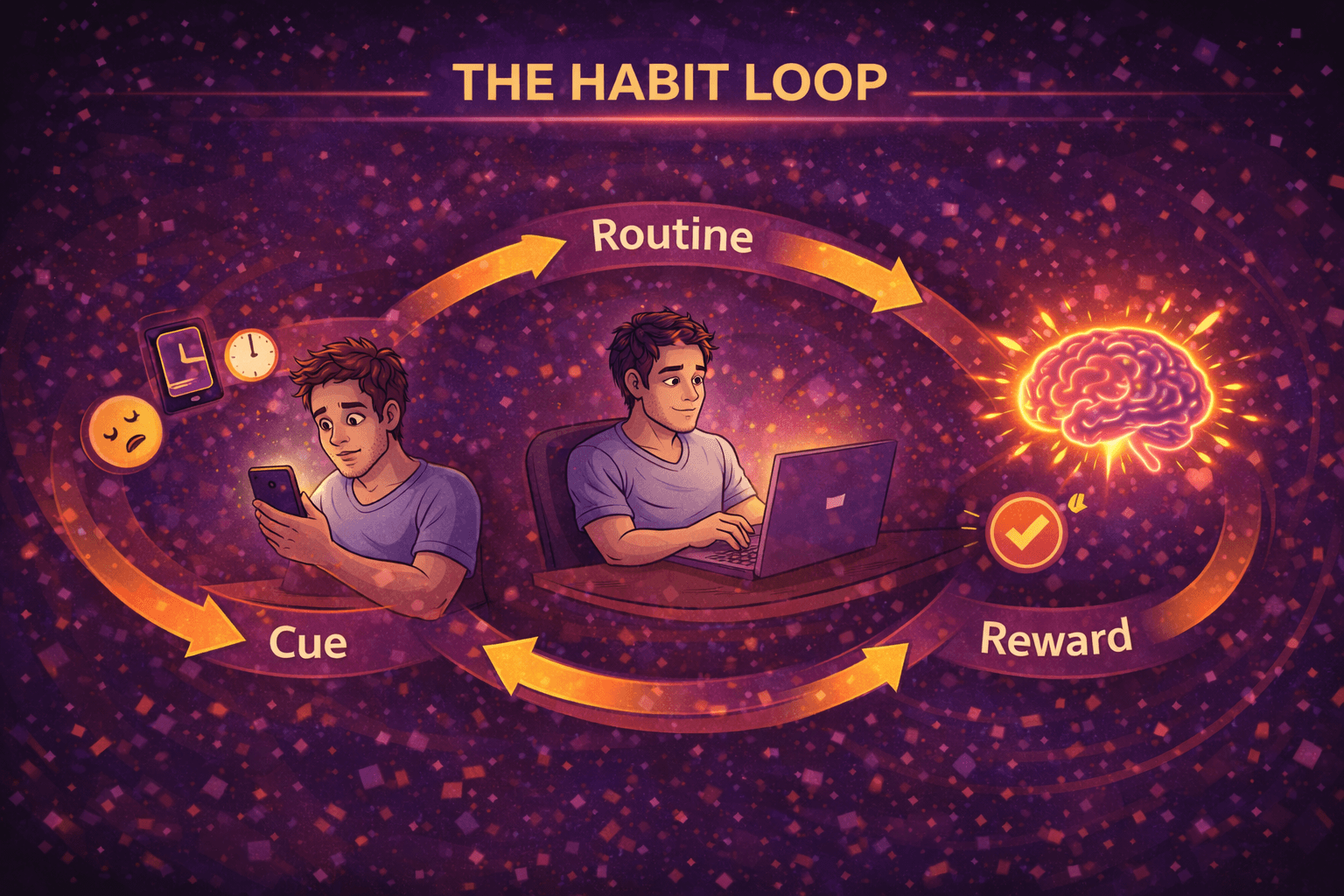
Researchers studying habits have found that many automatic behaviors follow a predictable three-part pattern:
Cue → Routine → Reward
A cue triggers the behavior. The routine is the behavior itself. The reward reinforces it, making the brain more likely to repeat the cycle in the future.
Porn use frequently follows this exact structure.
For example:
-
Cue: boredom, loneliness, stress, or being alone with a phone
-
Routine: opening a browser and browsing porn
-
Reward: sexual stimulation, dopamine release, and orgasm
Each time the loop runs, the brain strengthens the connection between the cue and the reward. Over time, this repetition turns the behavior into a habit.
Eventually, the cue alone can trigger the urge to begin the routine. Someone might feel bored or stressed and find themselves opening a porn site almost automatically, without consciously deciding to do it.
At that point, the behavior isn’t just a choice anymore. It’s a learned habit loop, and habits are notoriously difficult to break once they become ingrained.
8. Sexual Script Theory
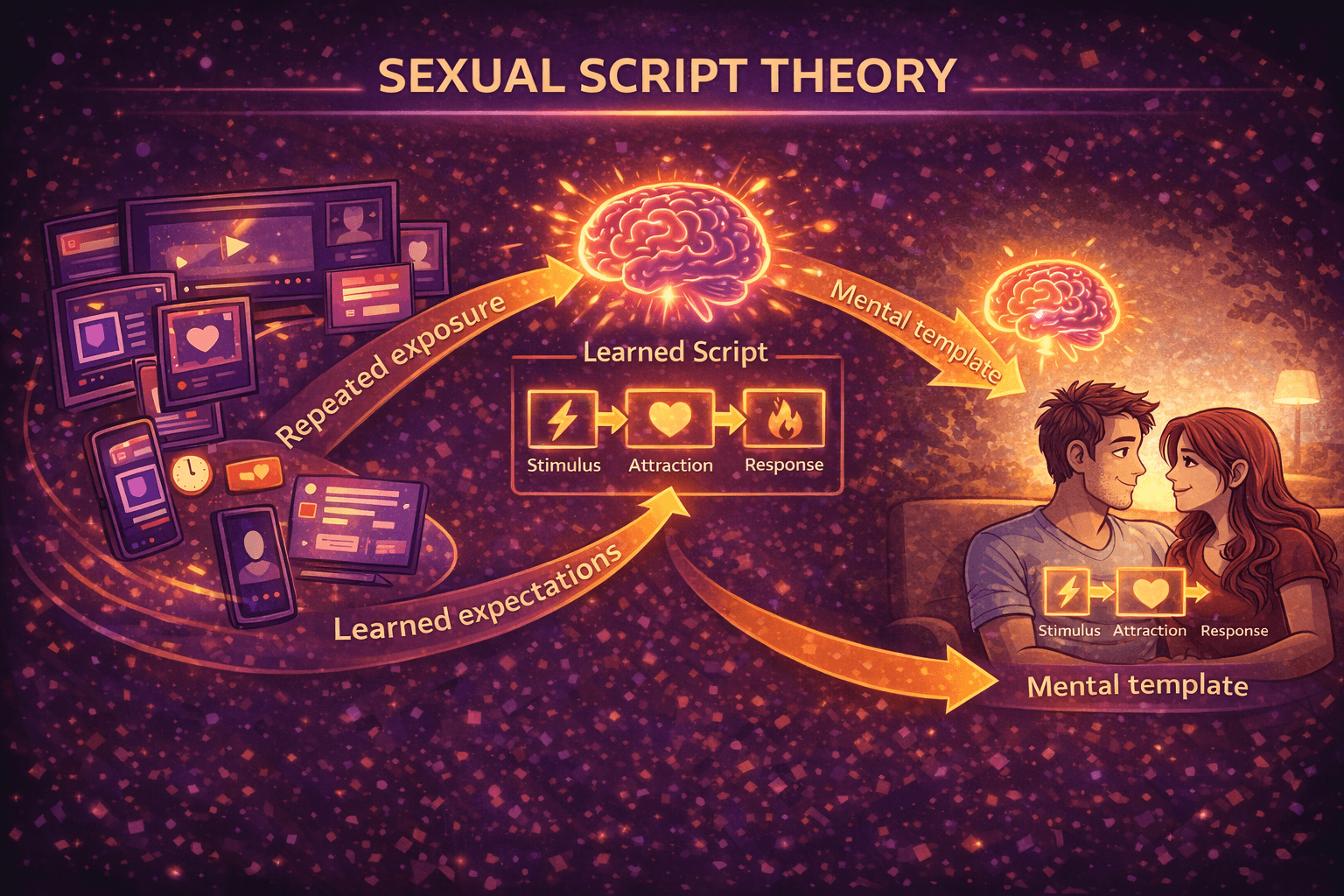
Human sexuality is not driven by biology alone. It is also shaped by learned expectations about how sexual situations are supposed to unfold. Psychologists refer to these learned expectations as sexual scripts.
According to Sexual Script Theory, people develop mental templates for what sex looks like, how attraction should work, and what kinds of behaviors lead to arousal. These scripts are learned over time through culture, relationships, media, and personal experience.
Pornography can play a powerful role in shaping those scripts.
With repeated exposure, the brain begins to associate sexual arousal with certain patterns that appear frequently in porn, such as:
-
constant novelty and rapidly changing partners
-
visual stimulation as the primary driver of arousal
-
exaggerated or highly stylized sexual behaviors
Over time, these repeated patterns can become part of the brain’s learned template for sexual excitement.
Instead of arousal being tied mainly to real-world intimacy or emotional connection, it may become linked to the pornographic script itself—the specific sequence of visual cues, novelty, and stimulation that pornography consistently provides.
This is one of the primary reasons one of 5 battles you'll in trying to break a porn addiction is your inner wounds, and why therapy is so powerful when trying to quit.
When that happens, the brain begins to expect those patterns in order to trigger strong arousal, which can make porn especially difficult to give up.
Reinforcement and Addiction Mechanisms
9. Variable Ratio Reinforcement Schedule
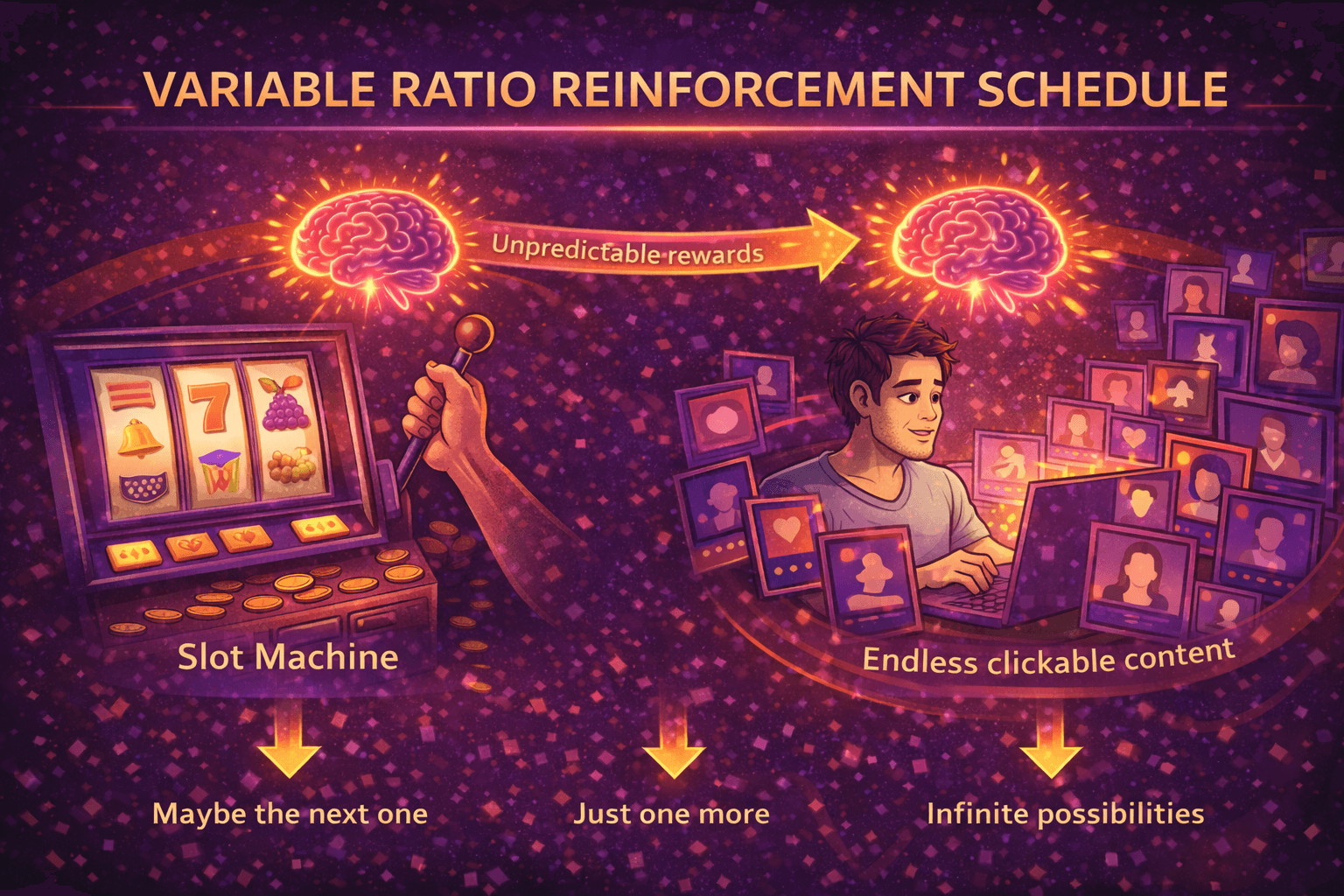
One of the most powerful forces keeping people on porn sites comes from a principle in behavioral psychology known as a variable ratio reinforcement schedule.
This type of reward system was first studied by psychologist B. F. Skinner, who researched how rewards shape behavior. In a variable-ratio schedule, rewards occur unpredictably after a variable number of actions. Because the next reward could arrive at any moment, this pattern produces extremely persistent behavior.
It’s the same system used in slot machines.
A gambler never knows which pull of the lever will produce a win, so they keep playing. The unpredictability is exactly what keeps people engaged.
Porn sites operate in a very similar way.
When someone browses porn, each click carries the possibility of finding something more stimulating than what they just saw. A user might think:
-
Maybe the next video is better.
-
Let me try one more category.
-
Just one more click.
Because the reward is unpredictable, the brain keeps searching. The anticipation of a potentially better stimulus becomes part of the reward itself.
Among all reinforcement systems studied in psychology, variable ratio schedules are known to produce the most persistent and hardest-to-extinguish behaviors.
When pornography is delivered through endless clickable content, it effectively turns browsing into a slot machine for sexual stimulation.
10. Incentive Sensitization
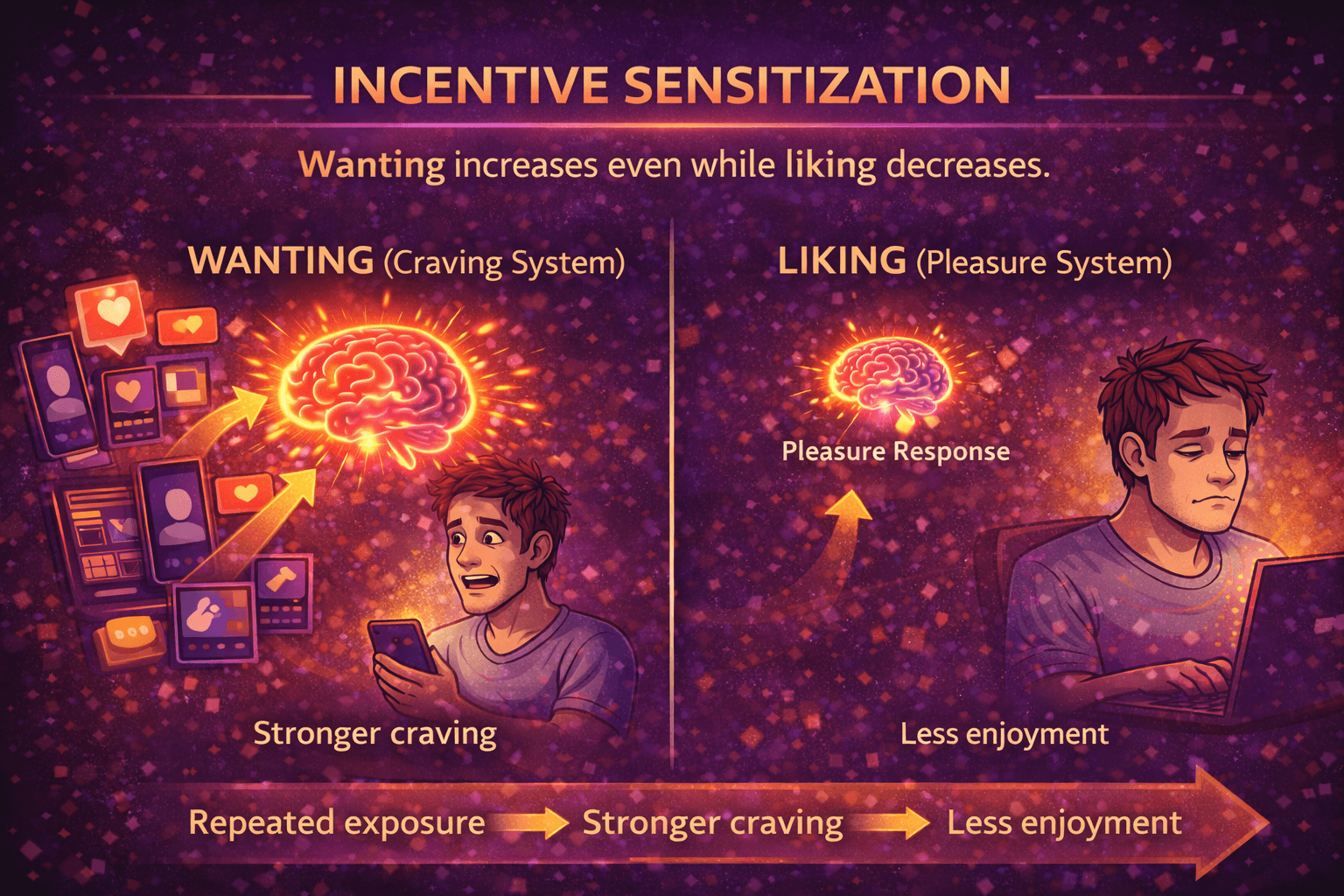
One of the most important insights from modern addiction research is that wanting and liking are not the same thing.
According to the theory of incentive sensitization—developed by neuroscientists Kent Berridge and Terry Robinson—repeated exposure to a rewarding stimulus can make the brain increasingly sensitive to the cues associated with that reward.
Over time, the brain’s motivational systems become “sensitized.” This means that triggers linked to the behavior—such as certain websites, images, or situations—begin to produce stronger and stronger urges.
Importantly, this process affects craving, not necessarily enjoyment.
Someone might find that the:
-
excitement or pleasure they once felt has diminished
-
content itself feels less satisfying than it used to
Yet the urge to seek it out can still become stronger.
In other words, the brain may begin to want the stimulus more even while liking it less.
This separation between craving and pleasure is one of the defining features of many addictive behaviors. The behavior continues not because it is consistently enjoyable, but because the brain’s motivational system has learned to react intensely to the cues associated with it.
11. Reward Prediction Error
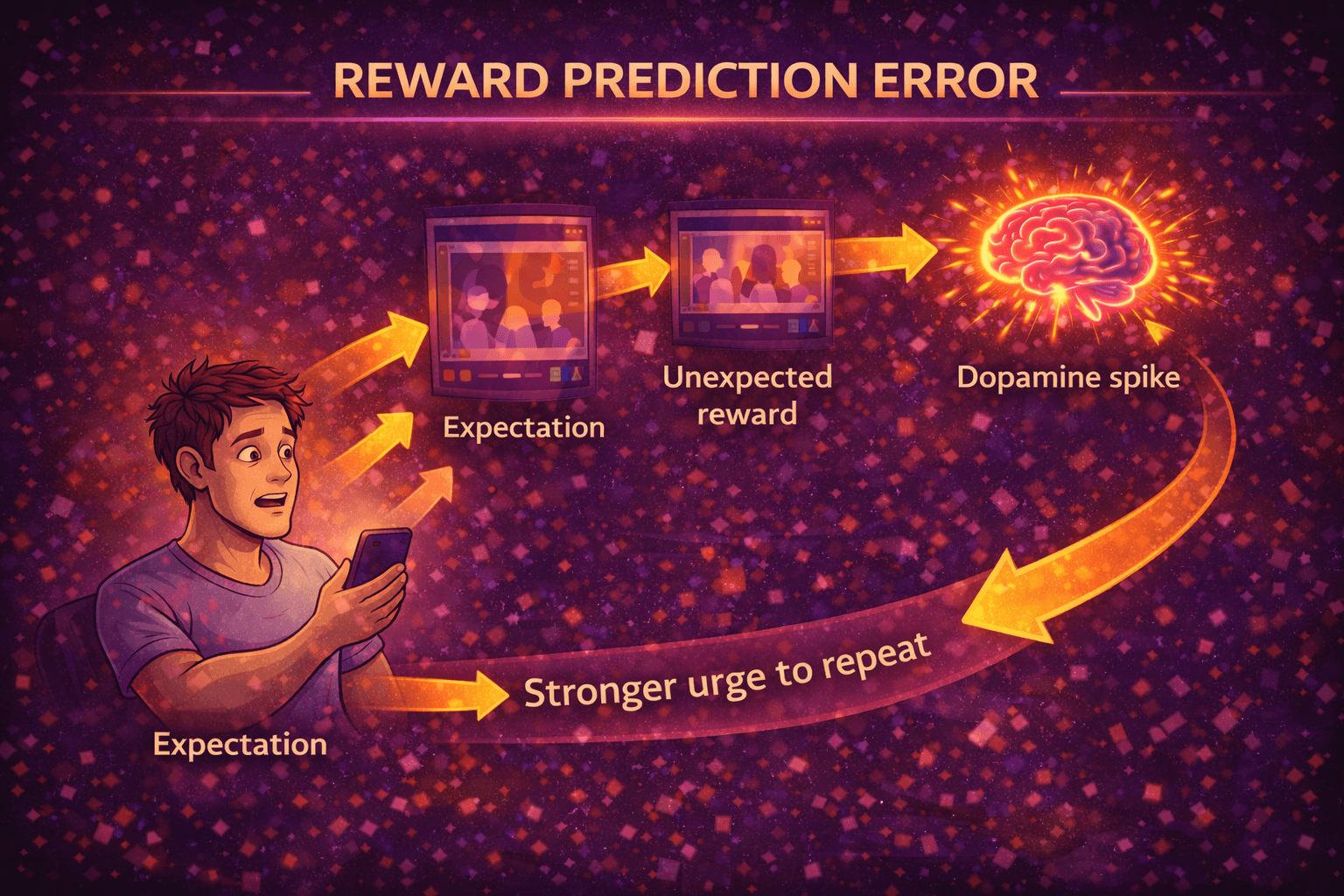
The brain constantly tries to predict the rewards it expects from an action. When the outcome is better than expected, the brain releases a surge of dopamine. That spike signals that something important just happened and prompts the brain to repeat the behavior that led to the reward.
This learning signal helps the brain figure out which actions are worth repeating.
Porn browsing creates the ideal environment for reward-prediction errors. Each new click carries the possibility that the next image or video will be more stimulating than the last one. When that happens, the brain experiences a small burst of dopamine that reinforces the behavior.
Because porn sites present endless options—new thumbnails, new performers, new categories—the brain is constantly exposed to the possibility of unexpected rewards.
That unpredictability keeps the brain engaged in the search. The user isn’t just consuming content; they’re repeatedly experiencing the possibility that the next click might deliver something even better than what they’ve already seen.
12. Hedonic Adaptation
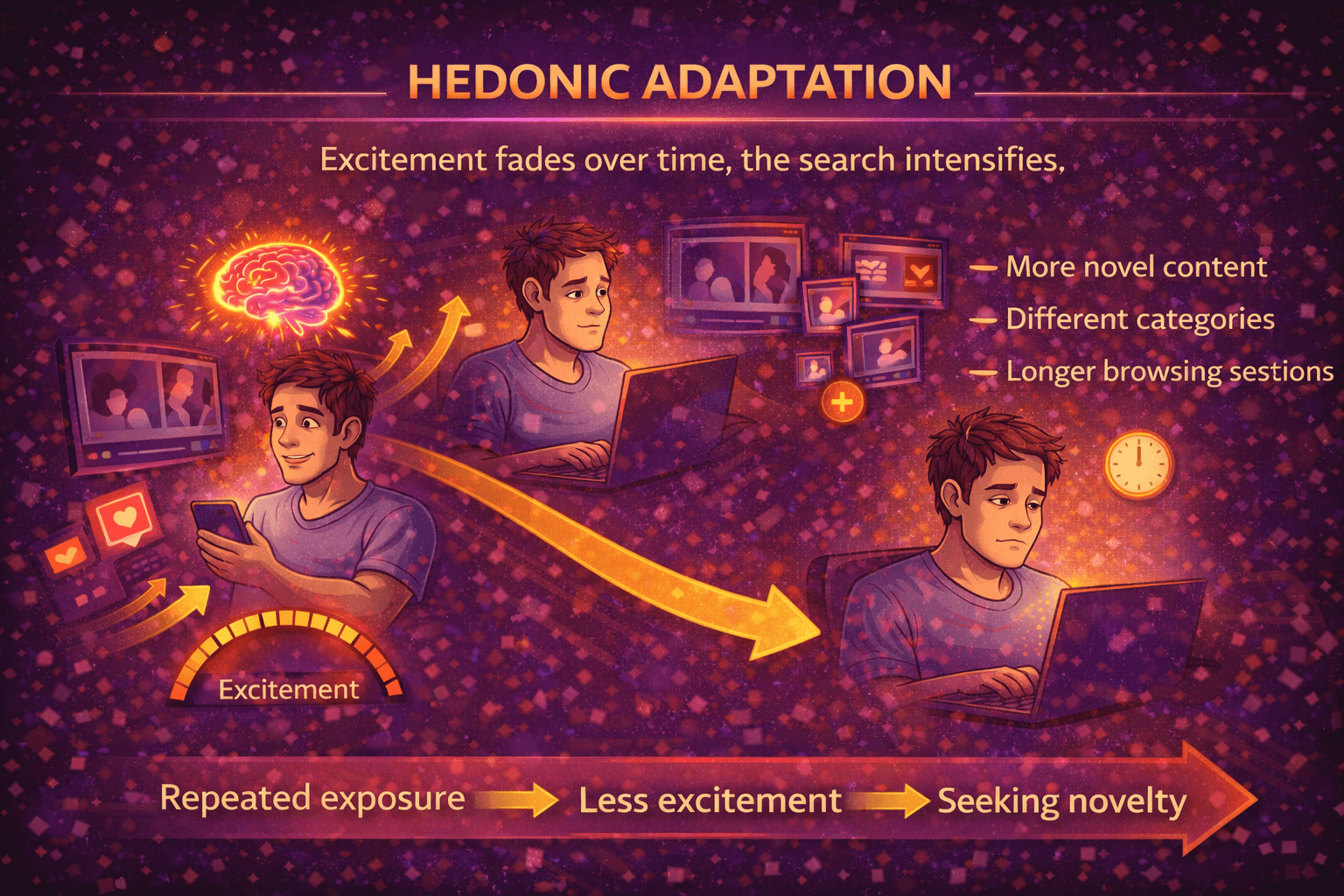
Humans naturally adapt to repeated pleasurable experiences. When the brain encounters the same stimulus repeatedly, its emotional response gradually weakens. What once felt exciting eventually becomes normal or less stimulating.
This adaptation happens with many kinds of rewards—food, entertainment, shopping, and even major life events. Over time, the brain adjusts to the stimulus and returns toward its baseline level of excitement.
Pornography is no exception.
With repeated exposure, the same kinds of images or videos may produce a smaller response than they once did. To recreate the original level of excitement, people often begin seeking:
-
more novel content
-
different categories or performers
-
longer browsing sessions
This doesn’t necessarily happen consciously. The brain is simply trying to restore the level of stimulation it experienced before adaptation occurred.
As a result, porn consumption can gradually shift toward greater novelty and more time spent searching, not because someone intends to escalate their behavior, but because the brain has adapted to what it has already seen.
Decision-Making and Self-Control
13. Delay Discounting
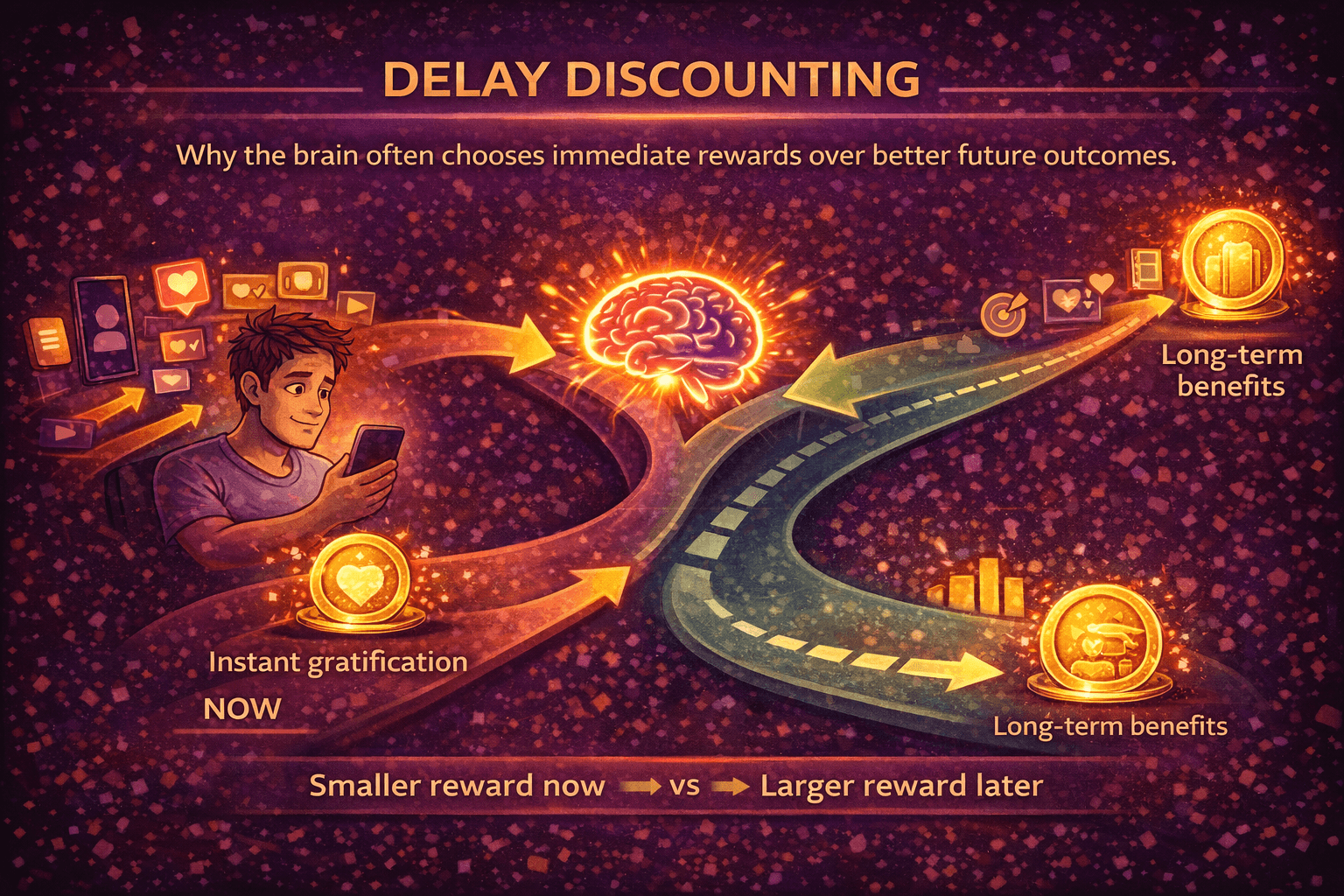
Another reason quitting porn can be difficult comes from a well-known principle in behavioral economics called delay discounting.
Humans tend to prefer smaller rewards that arrive immediately over larger rewards that arrive later. In other words, the farther away a benefit is in time, the less valuable it feels in the moment.
Psychologists and economists have repeatedly demonstrated this tendency in studies of decision-making. Even when people know a delayed reward is objectively better, the immediate option often wins because it feels more tangible and certain.
Pornography exploits this bias perfectly.
Watching porn offers instant gratification. Within seconds, a person can experience stimulation, distraction, and sexual pleasure. The reward is immediate and predictable.
The benefits of quitting, on the other hand, are long-term and abstract. Improvements like better focus, healthier relationships, stronger self-discipline, or changes in mood and motivation unfold gradually over time.
When someone is deciding in the moment—especially while tired, stressed, or bored—the brain tends to favor the immediate reward.
This gap between short-term temptation and long-term benefits helps explain why people often choose to watch porn even when they genuinely want to stop.
Further reading: 9 Positive benefits of quitting pornography
14. Ego Depletion
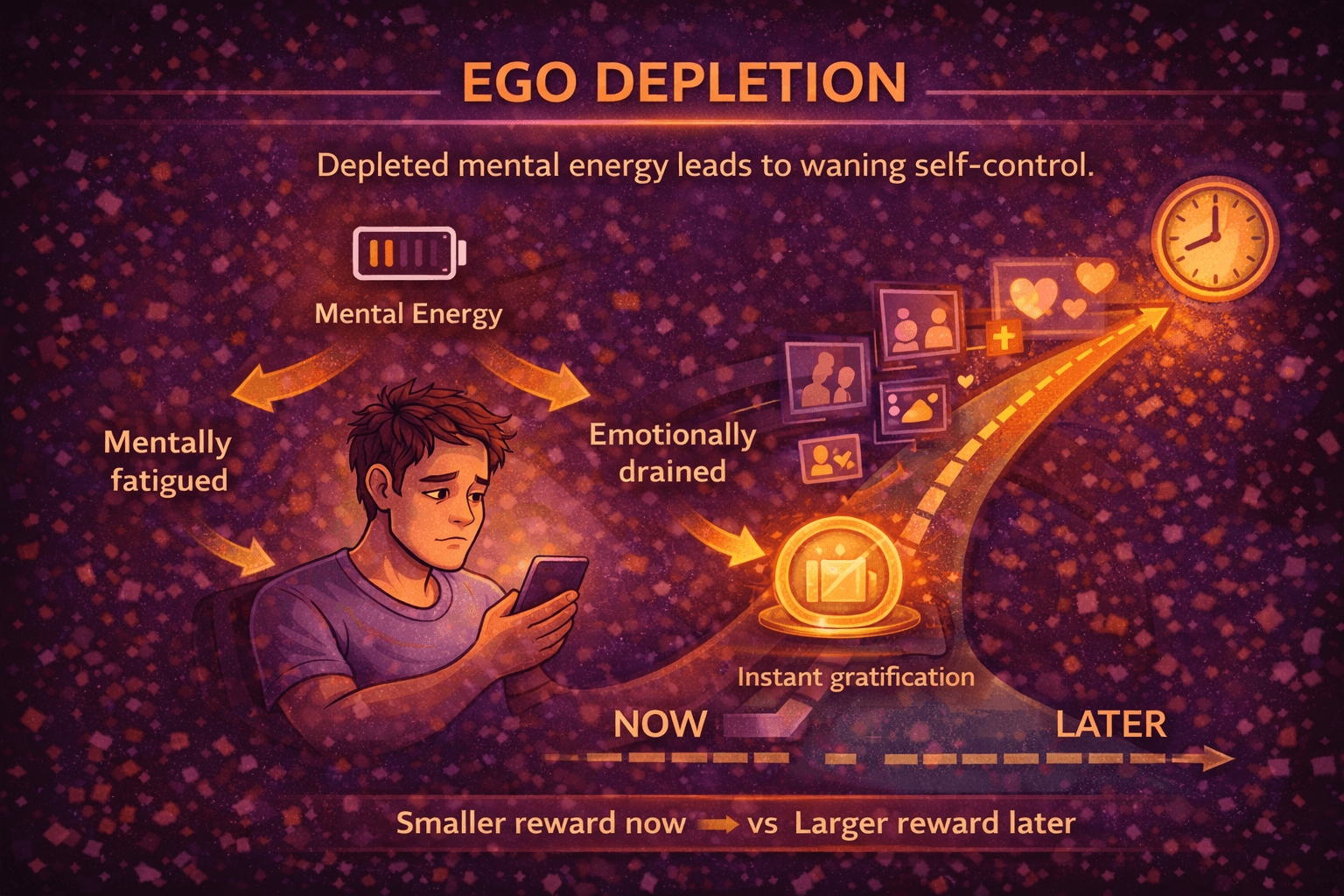
Throughout the day, people constantly rely on self-control to manage their behavior. They resist distractions, make decisions, handle stress, regulate emotions, and push themselves to complete tasks. Each of these efforts requires a certain amount of mental energy.
As the day progresses, that resource becomes gradually depleted.
After hours of work, responsibilities, and decision-making, the brain becomes less effective at resisting temptation. In this state, behaviors that provide quick relief or gratification become much harder to ignore.
This helps explain why porn consumption often happens late at night.
By that point in the day, many people are:
-
mentally fatigued
-
emotionally drained
-
alone and unsupervised
-
looking for an easy way to relax or escape stress
When self-control is already worn down, resisting an easily available source of stimulation becomes significantly more difficult.
15. Hot–Cold Empathy Gap
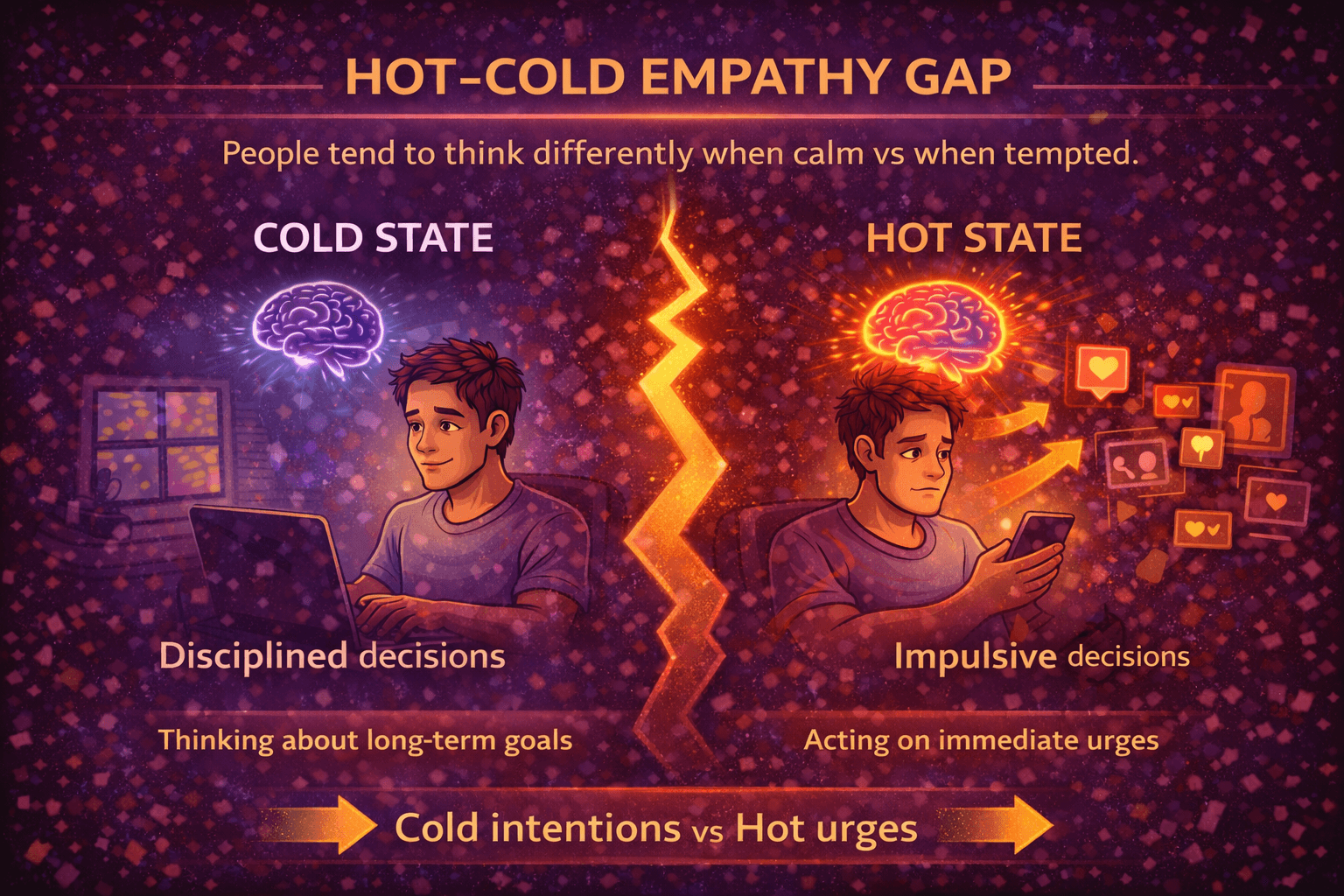
Another reason people struggle to follow through on their intentions to quit porn is something behavioral economists call the hot–cold empathy gap.
The idea, developed by researcher George Loewenstein, describes how differently people think and behave depending on their emotional or physiological state.
When someone is in a “cold state”—calm, rational, and not experiencing strong urges—they tend to believe they will make disciplined decisions in the future. From this perspective, quitting porn may seem straightforward.
But decisions change dramatically in a “hot state.”
A hot state occurs when someone is experiencing strong emotions or drives, such as:
-
sexual arousal
-
stress
-
boredom
-
loneliness
In these moments, immediate urges begin to dominate decision-making. The brain prioritizes short-term relief or gratification, while long-term goals lose influence.
This gap between calm intentions and emotionally driven behavior helps explain why someone might sincerely decide to stop watching porn during the day, only to find themselves making a completely different decision later that night.
The hot–cold empathy gap reveals an uncomfortable truth about human behavior: the person making the plan and the person facing the temptation are not always thinking the same way.
Relapse and Binge Dynamics
16. Abstinence Violation Effect
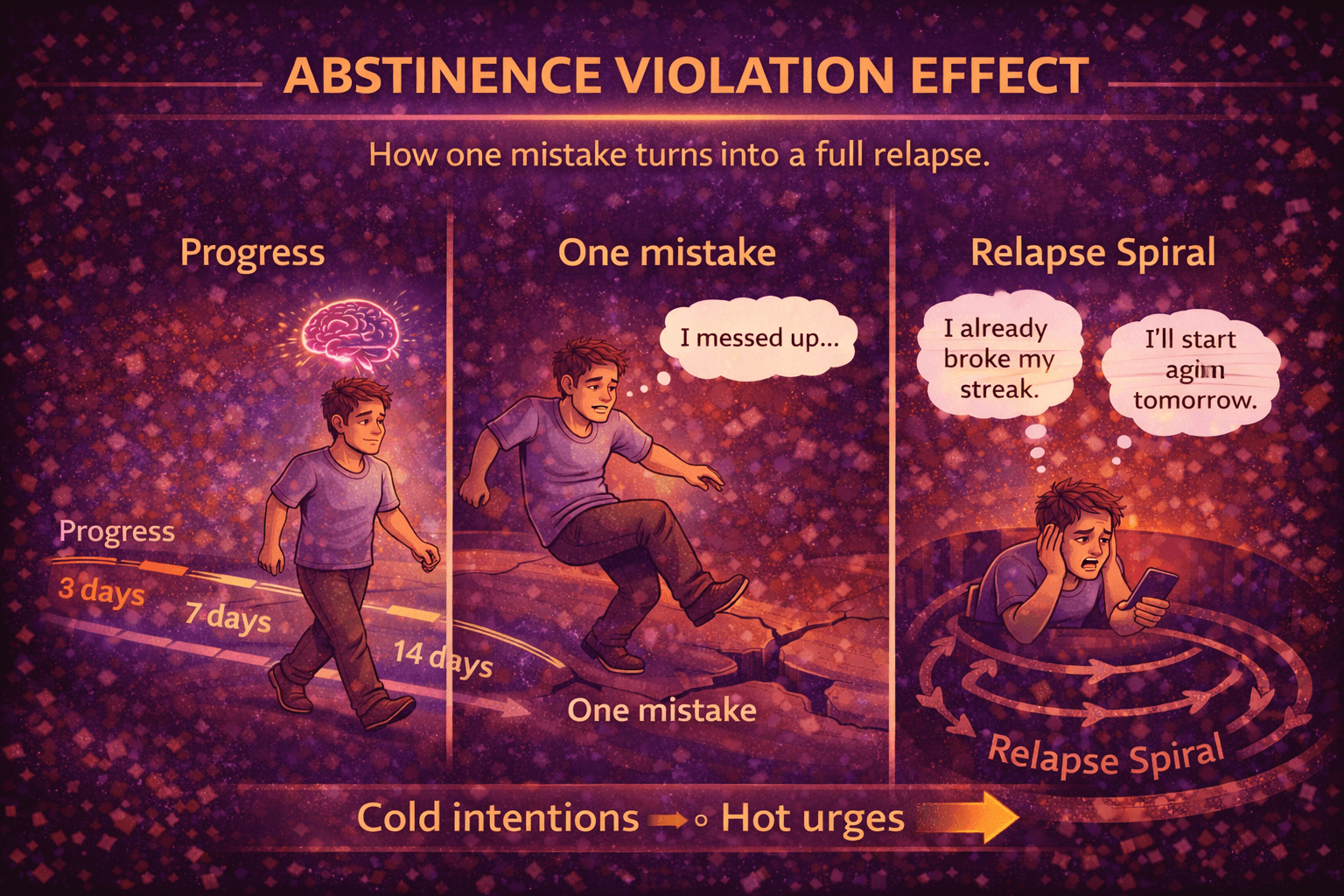
This concept was described by psychologist G. Alan Marlatt while studying relapse in addictive behaviors. He observed that people trying to abstain from something often respond to a single lapse in a very specific way.
Instead of viewing the lapse as a temporary mistake, they interpret it as proof that they have already failed.
Once that mindset takes hold, thoughts often shift toward something like:
-
I already broke my streak.
-
I messed up anyway.
-
I’ll start again tomorrow.
At that point, the psychological barrier against the behavior collapses. What might have been a brief slip can turn into a full binge.
In the context of porn use, this means someone might watch a single video after days or weeks of abstaining. But because they interpret that moment as a failure, they may continue watching far longer than they originally intended.
Ironically, the belief that they have already failed often becomes the very thing that magnifies the relapse.
Further reading: Dealing with a porn relapse
17. Chaser Effect
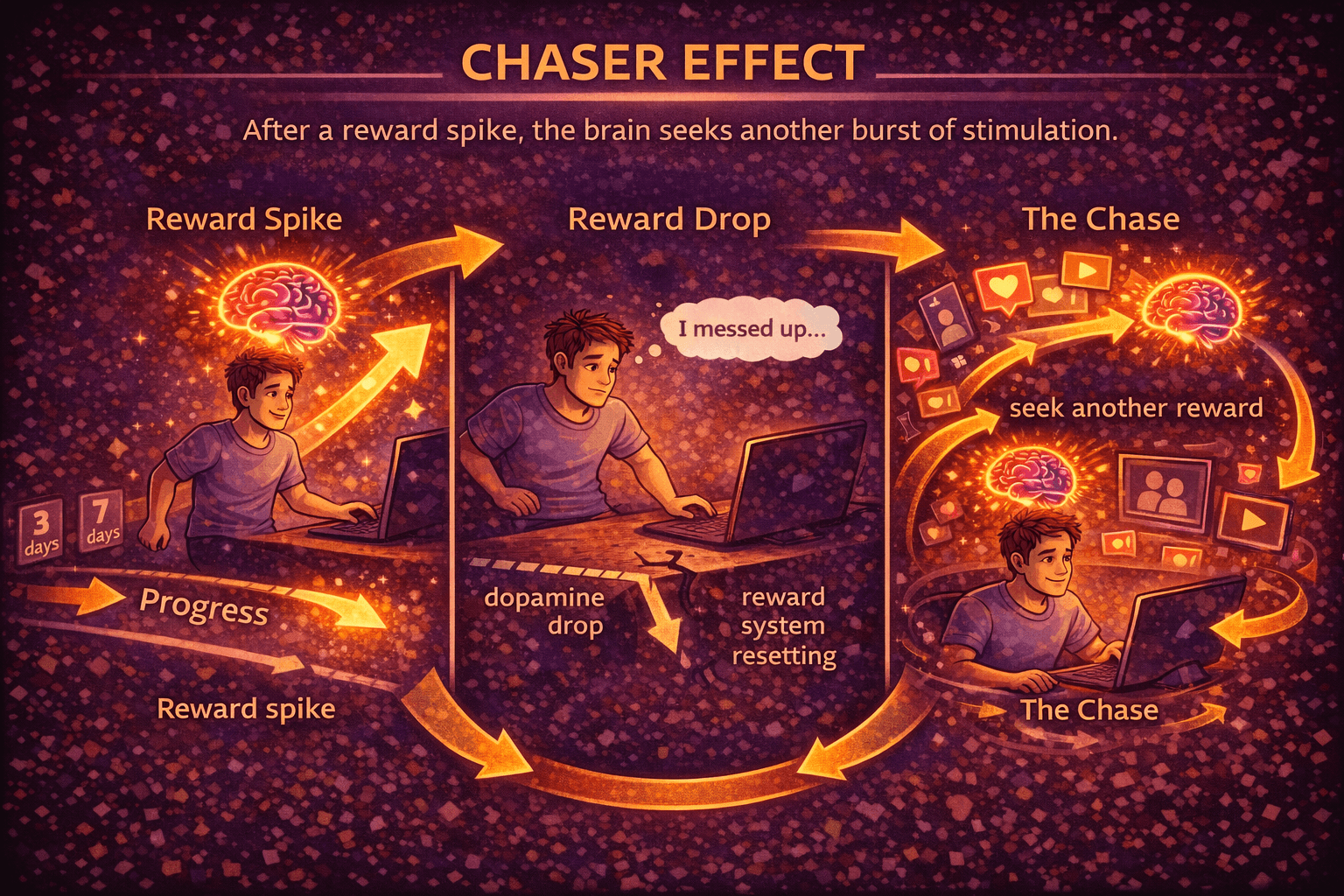
After orgasm, the brain undergoes a temporary shift in several neurochemicals involved in arousal and reward. Dopamine levels drop, prolactin rises, and the brain’s reward system begins resetting after the intense stimulation that just occurred.
Paradoxically, this shift can sometimes create the urge to seek another burst of stimulation.
Instead of feeling satisfied and moving on, a person may feel drawn to continue browsing in search of another spike of excitement. Thoughts like these are common:
-
Just one more video.
-
Let me see if there’s something better.
-
I’ll stop after the next one.
Because porn sites provide endless novelty and constant suggestions for new content, it becomes easy to keep chasing another moment of stimulation.
This pattern helps explain why porn sessions often last much longer than intended. Even after orgasm, the brain may continue seeking another reward, turning what was meant to be a quick experience into a cycle of repeated viewing.
Further reading: Porn addiction withdrawal symptoms
Why Porn Can Be So Hard to Stop
Taken individually, each of these psychological mechanisms is powerful. Together, they form a system that makes modern pornography unusually difficult to resist.
Internet porn taps into ancient evolutionary drives for sexual novelty, exploits conditioning that links it to everyday situations, and delivers rewards through systems that resemble gambling. At the same time, cognitive biases push the brain toward immediate gratification while self-control weakens under fatigue and emotional stress.
Add unlimited access, constant novelty, and algorithm-driven recommendations, and the result is a behavioral loop that can be surprisingly persistent.
This doesn’t mean quitting porn is impossible. But it does explain why many people struggle with it despite genuine intentions to stop. The difficulty isn’t simply a matter of willpower. It’s the result of several well-understood psychological and biological forces working together.
Understanding these mechanisms is the first step toward breaking the cycle. For more help, you should check out Relay.
References
Krikova K, Klein S, Kampa M, Walter B, Stark R, Klucken T. Appetitive conditioning with pornographic stimuli elicits stronger activation in reward regions than monetary and gaming-related stimuli. Hum Brain Mapp. 2024 Jun 1;45(8):e26711. doi: 10.1002/hbm.26711. PMID: 38798103; PMCID: PMC11128778.
Wang J, Li H. Neural Correlates of the Attentional Bias Towards Subliminal Pornographic Cues in Individuals with Tendencies Toward Problematic Pornography Use: An ERP Study Using a Dot-Probe Task. Arch Sex Behav. 2024 Oct;53(9):3365-3378. doi: 10.1007/s10508-024-02965-8. Epub 2024 Aug 12. PMID: 39134733.
Gola M, Wordecha M, Marchewka A, Sescousse G. Visual Sexual Stimuli-Cue or Reward? A Perspective for Interpreting Brain Imaging Findings on Human Sexual Behaviors. Front Hum Neurosci. 2016 Aug 15;10:402. doi: 10.3389/fnhum.2016.00402. PMID: 27574507; PMCID: PMC4983547.
Robinson TE, Berridge KC. The Incentive-Sensitization Theory of Addiction 30 Years On. Annu Rev Psychol. 2025 Jan;76(1):29-58. doi: 10.1146/annurev-psych-011624-024031. Epub 2024 Dec 3. PMID: 39094061; PMCID: PMC11773642.
Hendershot CS, Witkiewitz K, George WH, Marlatt GA. Relapse prevention for addictive behaviors. Subst Abuse Treat Prev Policy. 2011 Jul 19;6:17. doi: 10.1186/1747-597X-6-17. PMID: 21771314; PMCID: PMC3163190.
Corlett PR, Mollick JA, Kober H. Meta-analysis of human prediction error for incentives, perception, cognition, and action. Neuropsychopharmacology. 2022 Jun;47(7):1339-1349. doi: 10.1038/s41386-021-01264-3. Epub 2022 Jan 11. PMID: 35017672; PMCID: PMC9117315.
Bailey AJ, Romeu RJ, Finn PR. The problems with delay discounting: a critical review of current practices and clinical applications. Psychol Med. 2021 Aug;51(11):1799-1806. doi: 10.1017/S0033291721002282. Epub 2021 Jun 29. PMID: 34184631; PMCID: PMC8381235.
Wood W, Neal DT. A new look at habits and the habit-goal interface. Psychol Rev. 2007 Oct;114(4):843-63. doi: 10.1037/0033-295X.114.4.843. PMID: 17907866.
Ventura-Aquino E, Fernández-Guasti A, Paredes RG. Hormones and the Coolidge effect. Mol Cell Endocrinol. 2018 May 15;467:42-48. doi: 10.1016/j.mce.2017.09.010. Epub 2017 Sep 12. PMID: 28912031.
Wiederman MW. Sexual script theory: Past, present, and future. In: DeLamater J, Plante RF, eds. Handbook of the Sociology of Sexualities. Springer International Publishing; 2015:7-22. doi: 10.1007/978-3-319-17341-2_2
MacLeod CM. Zeigarnik and von Restorff: The memory effects and the stories behind them. Mem Cognit. 2020 Aug;48(6):1073-1088. doi: 10.3758/s13421-020-01033-5. PMID: 32291585.
Loewenstein G. Out of control: Visceral influences on behavior. Organ Behav Hum Decis Process. 1996;65(3):272-292. doi: 10.1006/obhd.1996.0028
Tversky A, Kahneman D. Availability: A heuristic for judging frequency and probability. Cogn Psychol. 1973;5(2):207-232. doi: 10.1016/0010-0285(73)90033-9
Frederick S, Loewenstein G. Hedonic adaptation. In: Kahneman D, Diener E, Schwarz N, eds. Well-Being: The Foundations of Hedonic Psychology. Russell Sage Foundation; 1999:302-329.
Ferster CB, Skinner BF. Schedules of Reinforcement. Appleton-Century-Crofts; 1957. doi: 10.1037/10627-000
Goodwin BC, Browne M, Rockloff M. Measuring Preference for Supernormal Over Natural Rewards: A Two-Dimensional Anticipatory Pleasure Scale. Evol Psychol. 2015 Dec 1;13(4):1474704915613914. doi: 10.1177/1474704915613914. PMID: 37924197; PMCID: PMC10480800.
Baumeister RF, Bratslavsky E, Muraven M, Tice DM. Ego depletion: Is the active self a limited resource? J Pers Soc Psychol. 1998;74(5):1252-1265. doi: 10.1037/0022-3514.74.5.1252